Looking for a Shorter Overview?
AI Summary
Key Moments
Challenges of generic feedback requests
Broad or multi-objective feedback requests overwhelm clients and lead to unhelpful, vague answers.Structure drives effective feedback
Using one focused question tied to a specific deliverable and providing one clear response method improves feedback quality.Positive feedback needs specificity
Recognizing concrete contributions and outcomes in client replies reinforces positive collaboration.Constructive feedback should be actionable
Separating situation, behavior, and impact with a clear next step helps frame criticism constructively.A client opens your carefully written feedback email between meetings. It asks how the project went, whether the process was smooth, what could improve, and whether they'd recommend you. The client wants to help, but they're unsure where to start. By the end of the day, you receive: “Everything looks good, thanks.”
That response is polite, but it doesn't tell you what to repeat, what to change, or what your client valued enough to mention to someone else. A useful feedback for client sample does more than sound professional. It gives the recipient one clear task, captures a specific experience, and turns the answer into something your team can act on.
Why Most Client Feedback Requests Fall Flat
A marketing consultant once finished a website project for a growing service business. The client had been enthusiastic during the launch, so the consultant sent a familiar message: “We'd love to hear how we did. What worked well, and is there anything we could improve?”


The reply arrived quickly: “You did a great job. The team was happy with everything.”
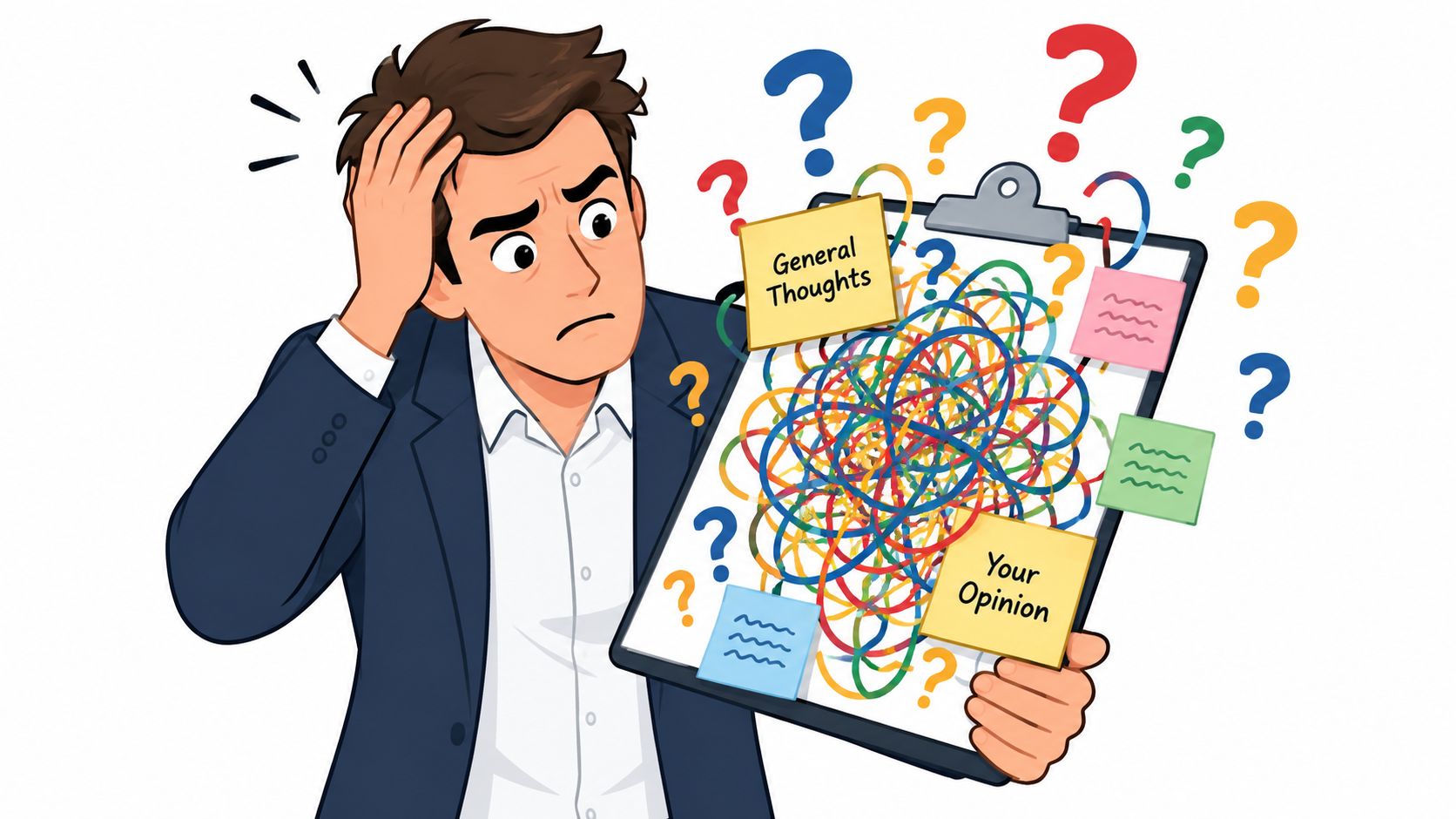
The client wasn't being evasive. The request had placed too much work on them. They had to decide whether to comment on communication, design, speed, strategy, results, or the relationship itself. With no priority and no example to trigger memory, they chose the safest answer.
Politeness isn't the same as usefulness
Generic requests fail for three common reasons:
- They ask for a general impression: “How did we do?” encourages a general answer.
- They mix several objectives: A single email may ask for praise, criticism, a testimonial, a rating, and a referral.
- They leave the response format open: The client doesn't know whether you want a sentence, a detailed review, a call, or a completed form.
A broad question can also produce feedback that sounds positive but carries little evidence. “The process was smooth” doesn't reveal which part of the process worked. “The presentation was helpful” doesn't identify the decision it enabled.
Practical rule: If your team can't convert the answer into a decision, a process change, or a reusable proof point, the request was probably too broad.
The issue isn't a lack of goodwill. It's poor design. Feedback collection should follow the same principle as a good client conversation, where careful listening helps you win more business with active listening. You need to direct attention toward a moment that matters, then make it easy for the client to describe what happened.
Replace courtesy with a useful prompt
Instead of asking, “What did you think of the project?” ask, “Which part of the onboarding process made it easiest for your team to get started?”
The second question narrows the subject, points to a real experience, and encourages a specific answer. It can reveal an effective document, meeting format, or handoff that deserves to become standard practice.
Building Feedback Requests That Actually Work
Effective feedback begins with structure, not elegant wording. A concise request with one question and one response path will usually outperform a longer email that offers several ways to participate. The client should understand what you want, why you're asking, and how to answer without making another decision.
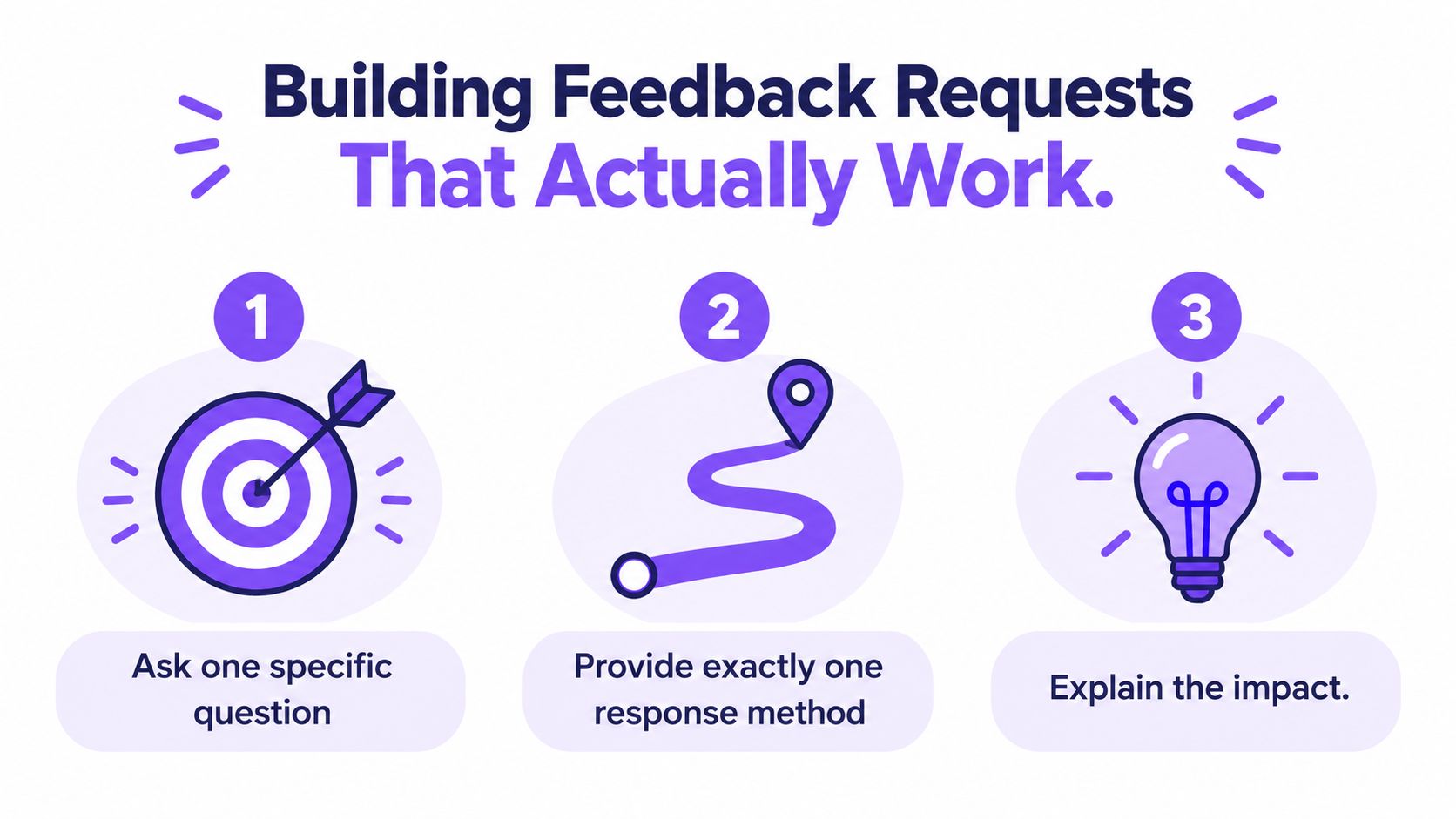
Use the three-part request
Start with one specific question. Anchor it to a deliverable, interaction, or outcome that the client can remember.
- “Which part of the reporting dashboard helped you make a decision faster?”
- “What changed most in your weekly workflow after the training session?”
- “What was unclear in the proposal before we revised it?”
Then provide exactly one response method. If you want a written answer, ask them to reply to the email. If you want structured responses, send one form. Don't place an email address, scheduling link, survey, and open invitation in the same request. Each additional option adds friction and weakens the signal about what matters.
Finally, explain the impact. “Your answer will help us improve the next onboarding project” gives the client a reason to spend time responding. It also shows that their comment won't disappear into an unused spreadsheet.
Adapt the channel to the moment
Channel and timing affect participation. A practical collection formula is reviews received divided by requests sent, and reported benchmarks place automated email requests at 10% to 15%, SMS at 18% to 28%, and face-to-face asks at 30% to 45% in service businesses, with suggested timing windows of 2 to 4 hours for SMS and 1 to 3 days for email (review-response benchmarks).
Those figures aren't a reason to send every client a text. They're a reminder to match the method to the relationship. Use a short email when the client needs time to reflect on a completed deliverable. Use a direct conversation when the work is complex or sensitive. Use an embedded form when you need consistent answers across many projects.
For a structured request, a tool such as the review request generator can help you create a focused starting point. Edit the wording so it reflects the client's actual project, not a generic transaction.
A dependable template looks like this:
Hi [Name], which part of [specific deliverable or interaction] created the most value for your team? Please reply with one example. We'll use your answer to improve how we handle similar projects.
That request is short because the thinking happened before the email was written.
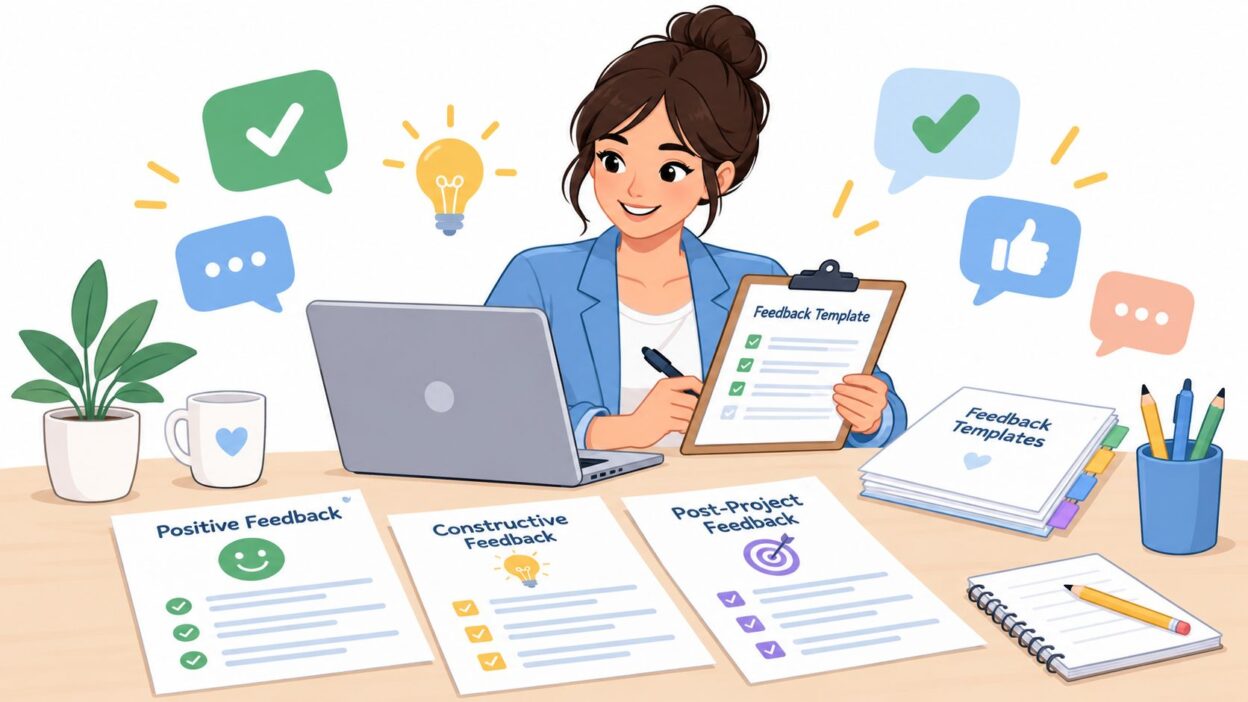
Positive Feedback Examples for Every Context
Positive feedback deserves more than “Thanks, glad you liked it.” A good response identifies the contribution the client noticed, connects it to an outcome, and reinforces the kind of collaboration you want to repeat.
For a quick win
Use a warm, brief reply when the client praises a specific task:
Thanks, [Name]. I'm glad the revised campaign structure made the approval process easier for your team. Your quick answers during review helped us keep the recommendations practical, and we'll carry that same clarity into the next sprint.
This works because it acknowledges both sides. You don't take sole credit for the result, and you remind the client that their participation helped.
For a completed project
A formal completion message should preserve useful evidence:
Thank you for the thoughtful feedback on the website project. You mentioned that the clearer service-page structure helped your team explain the offer with more confidence. That was the central goal of the work, and we appreciate the time you invested in reviewing each page carefully.
The phrase “you mentioned” keeps the message grounded in the client's actual words. It also creates a record that can later inform a testimonial, with permission.
For a milestone or ongoing partnership
Long-term clients need recognition that reflects continuity:
We appreciate your feedback after this quarter's planning cycle. Your note about faster decisions in the weekly meetings shows how the new agenda is supporting the wider partnership, not just one project. We're looking forward to building on that progress in the next planning round.
Avoid exaggerated praise. A client who says the handoff was clear doesn't necessarily want to hear that your entire company is “exceptional.” Match the tone to the relationship and the evidence.
Specific appreciation feels personal because it proves you listened.
Positive comments can also become internal guidance. Tag them by theme, such as communication, speed, strategic clarity, or implementation support. Over time, those themes reveal what clients consistently value and give account managers language for future conversations.
Constructive Feedback Templates That Drive Action
Constructive feedback becomes easier to accept when it separates what happened from what you assume about the person. “The account team was disorganized” attacks identity. “The revised timeline arrived after the approval meeting, so the client couldn't confirm the production slot” describes an event and its impact.
A useful structure is Situation, Behavior, Impact, followed by a clear next step. The situation establishes context. The behavior names the observable action. The impact explains why it matters. The next step turns criticism into a shared solution.

Missed deadlines
Weak version:
The project timelines weren't managed well.
Actionable version:
During the final review week, two requested updates arrived after the agreed approval window. That compressed the production schedule and left less time for quality checks. For the next phase, let's confirm one owner for approvals and set a short checkpoint before the final deadline.
The revised version avoids blame while making the operational problem impossible to miss. It also proposes a correction that both parties can evaluate.
Scope misunderstandings
Weak version:
The brief wasn't followed.
Actionable version:
In the first design round, the proposed layouts included additional functionality that wasn't part of the approved scope. Reviewing those options took time away from the core page work. Before the next round, let's confirm the must-have elements and label any optional ideas separately.
This wording protects the relationship because it focuses on alignment rather than competence. It also gives the client a concrete role in preventing a repeat.
Quality concerns
Weak version:
The deliverable needs to be much better.
Actionable version:
The report communicates the main recommendation clearly, but several supporting figures use different labels from the source data. That makes the findings harder to verify. Please standardize the labels and add a source note before the next review.
The structure works because the recipient can act immediately. It acknowledges what is sound, identifies the defect, and defines the required change.
The stakes are especially clear when feedback affects public reviews. Independent review research in 2026 found that 77% of Americans say online reviews are important in purchasing decisions, one in three will not buy without reading them first, and 80.2% say reviews have influenced them not to purchase a product or service (ConsumerAffairs review research). A vague response to a negative review can therefore leave a serious concern unresolved.
For public replies, use the review response templates as a starting point, then personalize the response around the actual issue. Don't argue with the reviewer, repeat private details, or promise a fix your team can't deliver.
Post-Project Feedback Approaches for Different Scenarios
The right post-project method depends on the work's complexity, the relationship's maturity, and the kind of decision you need the feedback to support. A short engagement usually needs immediate delivery feedback. A long partnership needs room for a broader conversation about communication, priorities, and trust.
| Project Type | Feedback Method | Timing | Focus Areas |
|---|---|---|---|
| Short, defined engagement | One-question email reply | Shortly after handoff, once the client has used the deliverable | Clarity, usefulness, missing details |
| Recurring service | Brief form followed by account review | At a natural planning or renewal checkpoint | Reliability, communication, value, priorities |
| Complex transformation | Conversational retrospective | After the client has experienced the new process | Adoption, decision-making, obstacles, outcomes |
| Sensitive or troubled project | Private conversation with written follow-up | After immediate tension has eased, but while details remain clear | Expectations, ownership, recovery actions |
Match the method to the risk
A form creates comparable answers, which helps an agency identify recurring issues across accounts. It can also feel impersonal when the project involved difficult decisions or a close working relationship. A conversation reveals nuance, but the client may soften criticism in real time, and your team may fail to record the details accurately.
For a reluctant client, don't send a larger survey. Ask one low-effort question by the channel they already use, such as, “What's one part of the handoff that would have been easier with more context?” If the response identifies a serious concern, follow up privately rather than forcing the client through a formal evaluation.
A measurement tool such as the NPS calculator can support a consistent relationship check, but a score shouldn't replace the reason behind it. A low rating without context tells you that something is wrong, not what to repair.
Teams building a repeatable account process may also benefit from practical guidance on how to grow your agency with this system. The essential discipline is simple: record the feedback, assign an owner, make a change, and tell the client what happened.
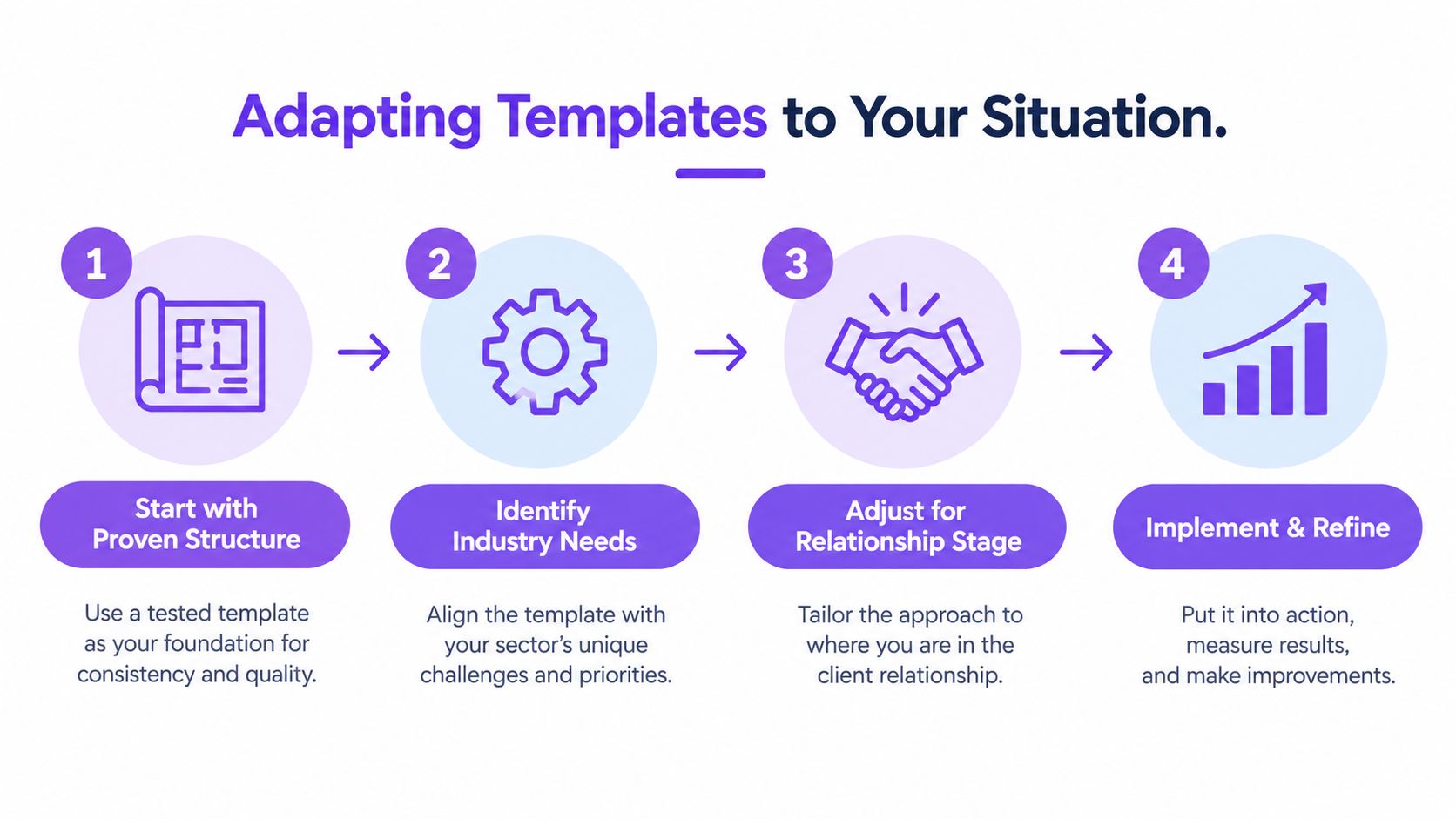
Adapting Templates to Your Specific Situation
A template should provide a reliable skeleton, not a finished personality. Keep the structural elements that make responses useful, then change the subject, tone, timing, and channel to fit the client.
A useful adaptation framework has four decisions:
- Keep the question narrow. Ask about one moment, deliverable, or outcome.
- Use the client's vocabulary. A SaaS buyer may discuss onboarding and adoption, while a local service client may care about scheduling and confidence.
- Respect relationship stage. A new client may prefer a concise formal request. A long-standing partner may respond better to a direct message tied to a recent conversation.
- Choose one response path. Keep the reply, form, call, or embedded prompt clearly separate. Don't offer every option at once.
Three practical adaptations
For a new client after onboarding:
What was the first step that made the process feel clear, and what could we explain better next time? Please reply with one example so we can improve the onboarding guide.
For a repeat client after a successful campaign:
Which recommendation had the strongest effect on your team's decisions this month? A short reply with the specific meeting or task would help us focus future reporting.
For a client after a difficult delivery:
Which part of the handoff created the most friction for your team? Please reply with one moment, and we'll use it to define a concrete improvement before the next phase.
These examples preserve the same mechanics while changing the emotional temperature. The first invites orientation feedback. The second looks for evidence of value. The third creates a safe route for criticism without pretending the project went smoothly.
Most content about a feedback for client sample treats the challenge as an email-writing exercise. The more important design choice is usually narrower, namely selecting one specific question and one delivery channel, a gap also identified in current customer feedback email guidance. Good wording can't rescue an unfocused process.
After collecting responses, tag them by theme and record the action attached to each one. Separate praise, requested changes, and process failures. Then close the loop with a short note: “We changed the approval checklist based on your comment.” That sentence demonstrates that feedback has a destination.
Bragly helps teams collect, organize, and display customer reviews and testimonials through structured forms, centralized management, no-code widgets, and review-source syncing. Visit Bragly to turn useful client feedback into organized social proof your team can manage and publish.