

Looking for a Shorter Overview?
AI Summary
Key Moments
Strategic Review Placement Boosts Conversion
Placing relevant reviews near key decision points increases buyer confidence and lifts conversion rates.Multi-Platform Aggregation Builds Credibility
Combining reviews from multiple sources creates a coherent, authoritative proof system to enhance trust.Segmented Widgets Target Buyer Personas
Tailoring review content by buyer persona addresses specific objections and accelerates qualification.Review Analytics Inform Product Roadmap
Using tagged, contextual feedback and AI analysis helps prioritize product improvements based on real user insight.A client success story isn't persuasive because a customer says positive things about your business. That popular advice produces polished content with little decision-making value. The strongest stories connect a real customer problem to a specific intervention, credible evidence, a representative quote, and the place or format where a buyer needs reassurance.
That distinction matters because reviews already sit inside mainstream buying behavior. Pew Research Center found that 82% of U.S. adults in 2016 at least sometimes read online ratings or reviews before buying something for the first time, while 40% said they always or almost always did so, according to Pew's research on online reviews. Yet 48% of review readers said it was hard to tell whether reviews were truthful and unbiased. Proof must therefore be relevant, specific, contextual, and repeatable.
The eight examples below examine client success stories by their strategic job: conversion support, credibility, review operations, agency scale, rich media, persona relevance, local trust, and product intelligence. Widget examples focus on placement, format, tagging, syncing, and collection strategy, not generic praise or competitor promotion.


1. E-Commerce Brand Increases Conversion Rate Through Strategic Review Widget Placement
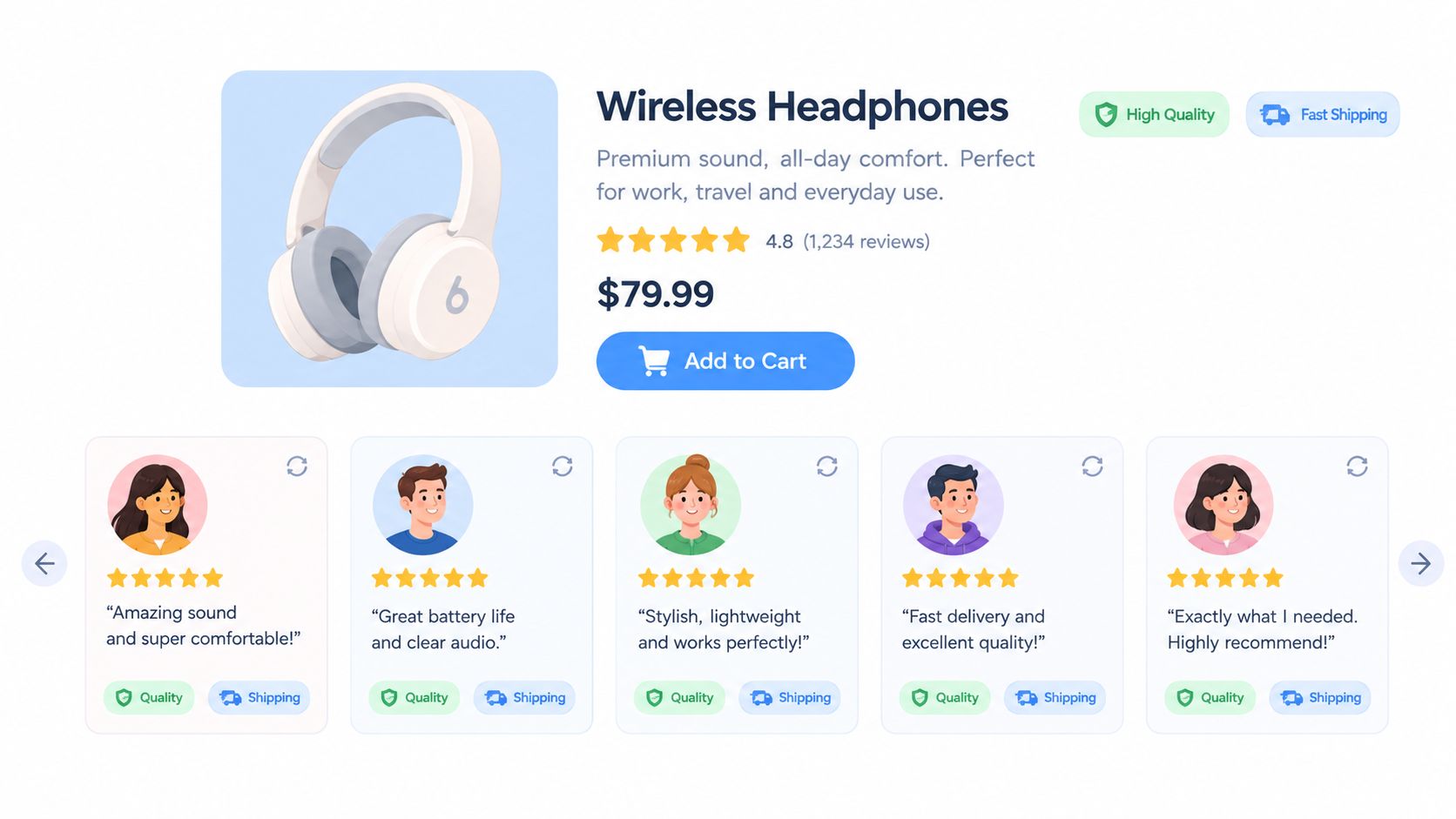
An online retail brand selling wireless headphones had plenty of customer feedback, but shoppers encountered it too late. Reviews sat on a separate page, while product pages concentrated on technical specifications. The fix wasn't another paragraph about battery life. The brand placed relevant customer proof beside the purchase decision.
A carousel beneath the product description can surface four- and five-star reviews that mention sound quality, comfort, or durability. On category pages, a grid can show review volume and recurring sentiment across several products. A small block near checkout can reinforce confidence with recent verified purchases, provided the display doesn't distract from payment.
The story structure should stay tight:
- Customer problem: Shoppers couldn't quickly judge whether the headphones delivered the benefits they cared about.
- Intervention: The brand connected Google, Trustpilot, and its native collection form, then displayed the most relevant reviews through a carousel widget.
- Evidence: Track widget views, review expansion, add-to-cart activity, and conversion rate by placement. Don't claim a lift unless the analytics support it.
- Customer voice: Use a quote that names a concrete benefit, such as comfort during long listening sessions, rather than “great product.”
- Trade-off: Curating highly relevant reviews improves clarity, but hiding all criticism can reduce credibility.
Bragly's social proof conversion guidance is useful here because placement is part of the story, not a decorative afterthought. Auto-sync keeps connected reviews current, while tags such as “quality,” “shipping,” and “durability” help the team match proof to each product category.
Practical rule: Put the review closest to the objection it answers, then use analytics to determine whether shoppers engage with it.
2. SaaS Startup Builds Credibility With Multi-Platform Review Aggregation
A B2B SaaS startup faced a familiar credibility problem. Its strongest customer comments were scattered across G2, Capterra, Product Hunt, and the company website, so prospects saw fragments instead of a coherent record. The success story should show how the team turned fragmented proof into a usable authority system.
The homepage can carry an aggregate star rating and review count in a hero or proof band, while the pricing page uses a grid to place selected reviews beside plan comparisons. An About page can use a testimonial carousel featuring leadership or customer-operator perspectives, but those quotes should explain the customer's situation and decision criteria.
Bragly's review syncing workflow supports the operational side of this model by bringing feedback from multiple sources into one dashboard. The company can then tag reviews by segment, such as SMB or enterprise, and identify recurring benefits for messaging and sales enablement. Separate collection forms make it easier to ask each segment questions that produce useful context rather than interchangeable praise.
Build authority without flattening the evidence
Badge widgets can establish third-party recognition near the homepage proof area, but a badge isn't a substitute for customer language. The pricing page should show what changed for a customer, how implementation worked, and which limitation or trade-off the buyer should understand.
A useful evidence stack includes:
- Aggregate signal: A rating or badge establishes broad credibility.
- Specific quote: A customer explains the problem solved or benefit gained.
- Context: The story identifies company type, team needs, and implementation conditions.
- Internal use: AI summaries can reveal product differentiators that belong in sales decks, provided the team validates the interpretation against the source reviews.
For a concrete review reference, VideoTour.ai feedback from agents illustrates how customer feedback can be presented as a dedicated proof resource rather than buried in general marketing copy. The startup's job isn't to make every review sound identical. It's to make the evidence easy to find and interpret.
3. Local Service Business Manages Reviews Across Google, Yelp, and Facebook From One Platform
A plumbing and HVAC company doesn't need a cinematic case study to build local trust. It needs a dependable process that asks for feedback after the job, displays it on the homepage, and turns recurring praise into operational standards.
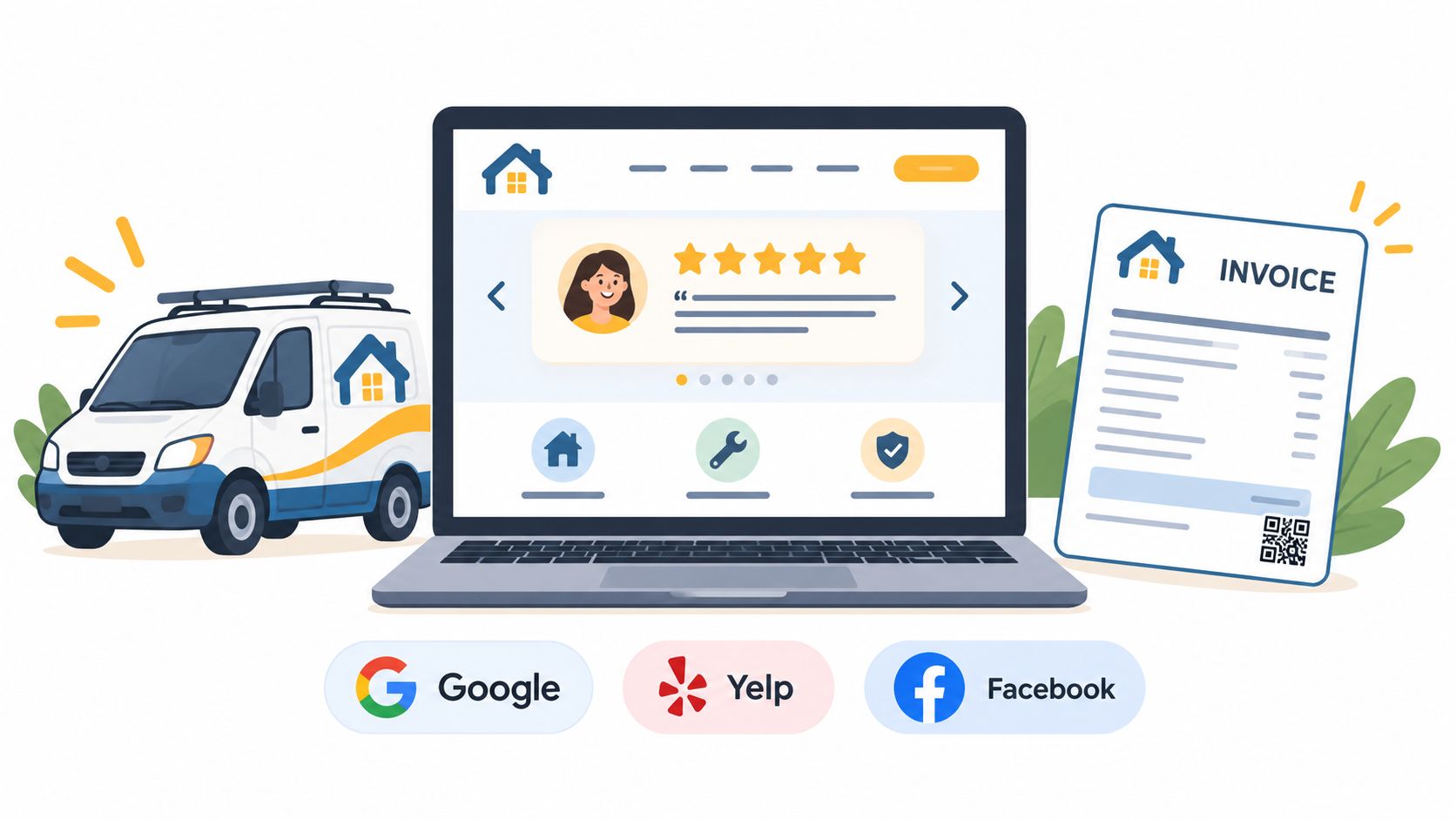
The business can connect Google, Yelp, and Facebook reviews to a homepage slider that rotates customer names, photos, and service-specific comments. A post-service email should link directly to a collection form while the experience is still fresh. For customers who prefer mobile action, a QR code on the invoice can take them to the same form without requiring technical knowledge.
The strongest story includes the messy operational detail. A technician arrives on time, explains the repair, completes the work, and leaves the property clean. The customer quote should preserve that sequence. “Professional and reliable” is useful, but “arrived when promised and explained the replacement before starting” gives a prospective homeowner something they can evaluate.
Turn feedback into team coaching
Separate forms for plumbing and HVAC work can reveal differences between service lines. Tags can organize comments around punctuality, reliability, communication, and professionalism. Monthly review analysis can then inform staff discussions, while webhook notifications can alert a team lead when new high-rated feedback appears.
A local testimonial works hardest when it answers the homeowner's immediate fear, not when it merely praises the company.
The business should also monitor negative feedback and respond visibly. Industry-cited findings reported that 88% of people were more likely to choose a business that responds to every review, while 45% were more likely to visit a business that responds to negative reviews, according to customer trust statistics from SHNO. The lesson isn't to hide criticism. It's to show that the business listens, responds, and improves.
4. Marketing Agency Scales Client Review Management Across Multiple Brands
An agency serving more than 25 clients needs review management to function as a service system, not a series of manual account tasks. The success story should show how the agency keeps proof current across different brands, assigns ownership, and connects review activity to client reporting.
Start with the operating model. A multi-account dashboard can show widget status, connected sources, collection activity, and performance data in one place. The agency can keep the underlying structure consistent while choosing formats that fit each business. An e-commerce client may need a product carousel, a professional-services firm may suit a grid, and a local business may benefit from a slider. Consistent operations do not require identical presentation.
The agency's team can apply a shared workflow:
- Template by business model: Set baseline layouts for retail, local service, and professional-services sites.
- Tag by campaign: Sort reviews by service line, launch, location, or customer segment.
- Automate notification: Use webhooks to alert the account team when reviews arrive or a selected threshold is reached.
- Report the work: Include widget engagement, review growth, source coverage, and recurring themes in monthly client reports.
- Train the client: Give staff a simple process for requesting first-party feedback after meaningful customer interactions.
The trade-off is delivery speed versus brand relevance. A shared template reduces production effort, while an unchanged widget can make client sites feel interchangeable. Standardize the data structure, tagging logic, and reporting cadence. Customize which reviews appear, where widgets sit on the page, and which customer concerns the proof addresses.
A useful agency case study shows both outcomes and mechanics. The client quote can explain how visible reviews support demand. The account lead can describe how automation reduces manual updates and clarifies responsibility. Pair those statements with screenshots of the dashboard, examples of industry-specific widget layouts, and a report excerpt showing recurring review themes. This format proves that the agency manages an ongoing review operation, rather than adding testimonials during a site launch.
5. E-Commerce Marketplace Displays Seller Ratings Using Video Highlights and Multiple Widgets
A marketplace has two trust problems. Shoppers must believe the platform, and they must judge individual sellers who may differ in reliability, communication, and fulfillment. One generic marketplace testimonial can't answer both questions.
The right structure gives each seller a visible proof layer. Category pages can feature video highlights from strong sellers, while individual seller profiles use a grid to show a broader sample of customer comments. The marketplace homepage can carry a rotating video carousel that introduces the quality standard without forcing shoppers to leave their buying path.
Video adds context that text often removes. A seller can explain how products are packed, how quickly questions receive answers, or why a particular item is sourced. The marketplace should request video from sellers with consistently strong ratings, but it shouldn't script every word. Human detail matters more than polished production.
Match each widget to the shopping task
- Category page: Use a short video highlight to establish seller credibility while shoppers compare options.
- Seller profile: Use a grid to show review volume, recurring strengths, and varied customer experiences.
- Homepage: Rotate selected clips to communicate marketplace standards and humanize the platform.
- Listing page: Keep proof compact, with a link or expandable element for shoppers who want more detail.
Admins may need to manually add text reviews when a seller submits valuable feedback outside a connected source. Auto-sync keeps connected reviews current, while analytics can reveal which testimonials earn attention or drive profile exploration. The team can rotate featured videos based on engagement, but it shouldn't select content solely for entertainment.
One Ruokaboksi test found that visitors exposed to video reviews converted at 81.4%, compared with 75.4% for text reviews, an 8% relative lift, according to the published Ruokaboksi case study. That result doesn't guarantee the same outcome for every marketplace. It does justify testing video where shoppers need richer evidence.
6. B2B Software Company Targets Different Buyer Personas With Segmented Review Widgets
A C-suite buyer, an IT administrator, and an everyday user judge the same software against different risks. Showing one identical success story to all three audiences leaves objections unanswered. Segmentation works when it changes the evidence, page placement, and widget view, not merely the headline.
For executive buyers, structure the story around the business problem, measurable outcome, decision risk, and strategic value. Place a short quote and outcome-focused widget near pricing, comparison, or contact content. IT pages should feature implementation, security, integrations, governance, and operational trade-offs. Put the relevant review beside technical requirements or deployment details. End-user pages need adoption evidence, workflow context, and practical usability, with customer language that shows how daily work changed.
The same case can support all three pages, but each version should preserve its own limits. An executive may explain why the buying committee approved the investment. An administrator can describe migration effort and support requirements. An end user can show how the product fits into routine work. Avoid turning one persona's result into a promise for every buyer.
Collect evidence by persona
Use different prompts during collection. Ask executives about the business problem and decision criteria, technical teams about deployment and ongoing support, and users about adoption and workflow. Tag imported reviews with labels such as Executive, IT, and End-User. Those labels can filter widgets, landing-page modules, and sales materials without creating separate evidence systems.
A focused publishing setup might include:
- Executive page: A concise testimonial with a defensible outcome and brief implementation context.
- IT page: A review naming integration work, security considerations, and operational trade-offs.
- User page: A usability quote supported by specific workflow details.
- Sales deck: An evidence card connecting the quote to its persona and use case.
AI-generated summaries can surface recurring themes, but marketing teams should inspect the underlying comments before presenting any pattern as a claim. Keep a broader customer view available alongside segmented widgets. Relevance improves conversion support, while excessive filtering can hide limitations that buyers need to assess.
7. Real Estate Agency Aggregates Reviews Across Zillow, Google, and Facebook for Trust Building
Real estate decisions involve high perceived risk, long consideration periods, and strong dependence on personal confidence. A regional agency with more than 15 agents needs to prove both collective capability and individual fit. An agency-wide rating alone can't tell a seller whether a particular agent communicates well or understands a specific neighborhood.
The agency can aggregate Zillow, Google, and Facebook reviews, then place badges on the homepage and grids on individual agent pages. Each agent page should pair a review with a bio, market focus, and service context. A customer quote about negotiation may belong near seller services, while a quote about communication may work better near buyer consultation content.
Capture proof at the right moment
The collection process should begin shortly after closing, while the customer can still recall the stressful parts of the transaction. An automated request within 48 hours of closing is a practical workflow choice in this model, not a performance claim. Agent email signatures can include a review link throughout the relationship, but the request should remain respectful and optional.
Feefo's cited findings report that 44% of customers only trust reviews showing the reviewer's name, and 50% are more likely to trust a brand when reviews are authenticated by a reputable third-party feedback platform, as documented in Feefo's customer statistics resource. That makes attribution and verification important choices for an agency. A named, authenticated review with transaction context is generally more useful than an anonymous sentence with no background.
AI analysis can surface recurring strengths for coaching and promotional messaging. The agency might discover that clients repeatedly mention responsiveness, negotiation clarity, or calm communication. Those themes should guide training and page copy, but the team must preserve the original customer language and avoid turning a pattern into an unsupported promise.
8. SaaS Product Team Uses Review Analytics and AI Insights to Inform Product Roadmap
A SaaS review can do two jobs: support a buying decision and expose a product problem. Product teams get useful signals when they request feedback after onboarding milestones, completed workflows, or support interactions, rather than relying on one generic survey.
Tag each response by feature, integration, pain point, and customer type. A review that mentions a confusing setup flow should be connected to onboarding data, while praise for an integration may belong in product messaging and a relevant comparison page. Monthly analysis can identify repeated requests and strengths, but product usage data should determine how much weight each theme receives.
Bragly's review analytics features can support this workflow through review analysis, basic analytics, and visible widgets. A product meeting might examine AI-generated themes, feature-level review views, and anonymized excerpts, then compare them with usage analytics before changing roadmap priorities. For a complementary framework, see this customer feedback strategy with Formbricks.
Turn review themes into product decisions
Volume is only a starting point. A frequently repeated request may come from a narrow customer segment, describe a workaround, or reflect unclear onboarding rather than a missing capability.
Use a review-to-roadmap workflow:
- Capture context: Request feedback after a meaningful action, such as completing a key workflow.
- Tag consistently: Apply feature and persona labels so themes remain comparable over time.
- Inspect source comments: Use AI summaries to find patterns, then check the original wording.
- Validate behavior: Compare review themes with usage data, support conversations, and churn signals.
- Record the trade-off: Bring significant requests into planning with affected customers, expected value, and competing priorities.
Quote selection requires judgment. A customer comment can strengthen a marketing claim, while another can reveal friction that belongs in internal planning. Publish verified outcomes on decision pages, and keep sensitive or unresolved feedback inside the product process. The widget should show relevant proof, not every available comment.
8-Case Client Success Comparison
| Case | Implementation complexity | Resource requirements | Expected outcomes | Ideal use cases | Key advantages |
|---|---|---|---|---|---|
| E-Commerce Brand Increases Conversion Rate Through Strategic Review Widget Placement | Medium, requires tagging and placement strategy | Moderate, review tagging, analytics monitoring, widget configuration | 20–35% conversion lift on product pages | Product pages, checkout pages, category pages | Boosts purchase confidence at decision point; auto-sync keeps proof current |
| SaaS Startup Builds Credibility With Multi-Platform Review Aggregation | Medium–High, multi-source integration and verification | Moderate, platform verifications, AI setup, badge assets | Increased qualified leads by establishing early credibility | Homepage, pricing pages, sales enablement | Cross-platform validation; AI summaries inform messaging |
| Local Service Business Manages Reviews Across Google, Yelp, and Facebook From One Platform | Low, no-code WordPress integration and slider embed | Low–Moderate, collection form setup, basic admin time | +60% review volume and faster response management | Local service homepages, post-service follow-up | Non-technical setup; centralized review capture and AI insights for operations |
| Marketing Agency Scales Client Review Management Across Multiple Brands | High, multi-account dashboard, templates, webhooks | High, client onboarding, template creation, Business plan limits | Reduced client admin overhead by ~40%; new service offering | Agencies managing 25+ client sites | Centralized multi-client management and automated client notifications |
| E-Commerce Marketplace Displays Seller Ratings Using Video Highlights and Multiple Widgets | Medium–High, video collection and multi-widget strategy | Moderate, seller outreach, curation, video assets | ~25% increase in average order value via improved seller trust | Marketplaces, seller profiles, category pages | Video testimonials increase authenticity; multiple widget layouts for context |
| B2B Software Company Targets Different Buyer Personas With Segmented Review Widgets | Medium–High, persona tagging and custom forms per audience | Moderate–High, strategic persona mapping, Business plan for forms | Improved qualification and deal velocity through targeted proof | Persona-specific landing pages (C-suite, IT, end users) | Persona-targeted social proof increases relevance and conversion |
| Real Estate Agency Aggregates Reviews Across Zillow, Google, and Facebook for Trust Building | Low–Medium, source integration and agent-level pages | Moderate, agent onboarding, collection workflows | Increased lead generation and conversion via visible agent credentials | Agency homepages and individual agent profile pages | Agent-level aggregated ratings; AI insights for coaching and marketing |
| SaaS Product Team Uses Review Analytics and AI Insights to Inform Product Roadmap | Medium, embed forms in onboarding and run regular analysis | Moderate, process discipline, tagging, monthly review cadence | Better product-market fit and prioritized roadmap informed by reviews | Product teams seeking qualitative feedback for prioritization | AI-extracted feature requests and themes; saves manual analysis and validates decisions |
Turn Proof Into a Repeatable Story System
The best client success stories are systems for reducing buyer uncertainty. They don't merely announce that a customer was satisfied. They show what the customer needed, what changed, what evidence supports the outcome, and why the experience is relevant to the next buyer.
Start by defining the customer problem in operational terms. “Needed better growth” is weak. “Shoppers couldn't see product-specific proof before adding an item to the cart” gives the story a clear setting. Next, document the intervention, including the source connections, collection process, widget format, page placement, and any trade-off the team accepted.
Choose one or two defensible metrics when you have them. Conversion rate, review engagement, form completion, profile exploration, or response time can all help, but only if your analytics define the measurement clearly. Don't force a number into a story that can't support one. A specific quote can carry substantial weight when it explains the customer's situation, selection criteria, implementation experience, or result.
Credibility also depends on balance. Pew Research Center found that 51% of review readers believed reviews generally gave an accurate picture of quality, while 48% found it difficult to tell whether reviews were truthful and unbiased, according to BrightLocal's summary of the Pew review findings. That tension is why named customers, third-party verification, recent feedback, and visible responses matter. A polished story without context can look like advertising.
Match the format to intent:
- Carousel or grid: Use these for browsing, product comparison, and broader review discovery.
- Badges: Use them for authority signals near homepage, pricing, or agency-level proof.
- Video highlights: Use them when shoppers need richer context or want to see a real person explain the experience.
- Segmented widgets: Use them when different personas evaluate different risks and outcomes.
- Review analytics: Use them to identify which stories earn attention and which themes deserve further investigation.
The implementation sequence is straightforward. Collect and centralize reviews, add first-party feedback through relevant forms, tag the evidence by audience or outcome, publish the strongest proof where decisions occur, then use analytics and AI analysis to refine selection and messaging. Bragly can support this workflow through review aggregation, collection, auto-sync, tagging, analysis, webhooks, and no-code display widgets. For teams exploring adjacent customer-content workflows, ShortGenius AI UGC ad platform is another resource to evaluate separately.
Build the first story around one customer problem and one decision point. Then create a reusable template your team can apply across product pages, pricing pages, agent profiles, sales decks, and roadmap reviews. That is how client success stories become an operating asset rather than a one-time piece of content.
Use Bragly to collect and centralize customer reviews, tag them by audience or outcome, and publish them through no-code widgets where buyers make decisions. Visit Bragly to turn scattered testimonials into current, measurable client success stories your marketing, sales, and product teams can use.