Looking for a Shorter Overview?
AI Summary
Key Moments
Trust through reciprocal feedback
Airbnb’s dual review system builds mutual trust by enabling both buyers and providers to evaluate each other transparently.Verified reviews boost authenticity
Amazon’s Verified Purchase badges help customers trust product feedback and drive meaningful product improvements.Customer storytelling drives relevance
Slack and HubSpot use detailed, metric-backed case studies to show how their solutions solve real problems for specific audiences.Transform feedback into operational change
Companies must tag, respond to, and act on recurring customer themes to continuously refine experiences and demonstrate accountability.Memorable customer experience isn't created by impressive gestures alone. It's built through repeatable systems that collect feedback, make trust visible, respond when something goes wrong, and turn customer stories into guidance for the next buyer. A handwritten note may delight one person, but a review request, a clear response process, and an updated help path can improve the experience for everyone who follows.
That distinction matters because 52% of consumers stopped using or buying from a brand after a bad product or service experience, while 29% stopped because of poor online or in-person customer experience, according to PwC's 2025 Customer Experience Survey coverage. The strongest customer experience examples therefore aren't just stories about delight. They show how a company gathers evidence, earns confidence, handles criticism, and makes the useful parts repeatable.
The examples below span hospitality, retail, software, media, apps, marketplaces, and commerce platforms. Don't copy an entire brand. Look for the mechanism behind each experience, then adapt it to your team, your customers, and the page or interaction where trust matters most. You can also see how businesses are using customer stories and social proof to strengthen their own customer journeys.


1. Airbnb's Host Review System and Guest Testimonials
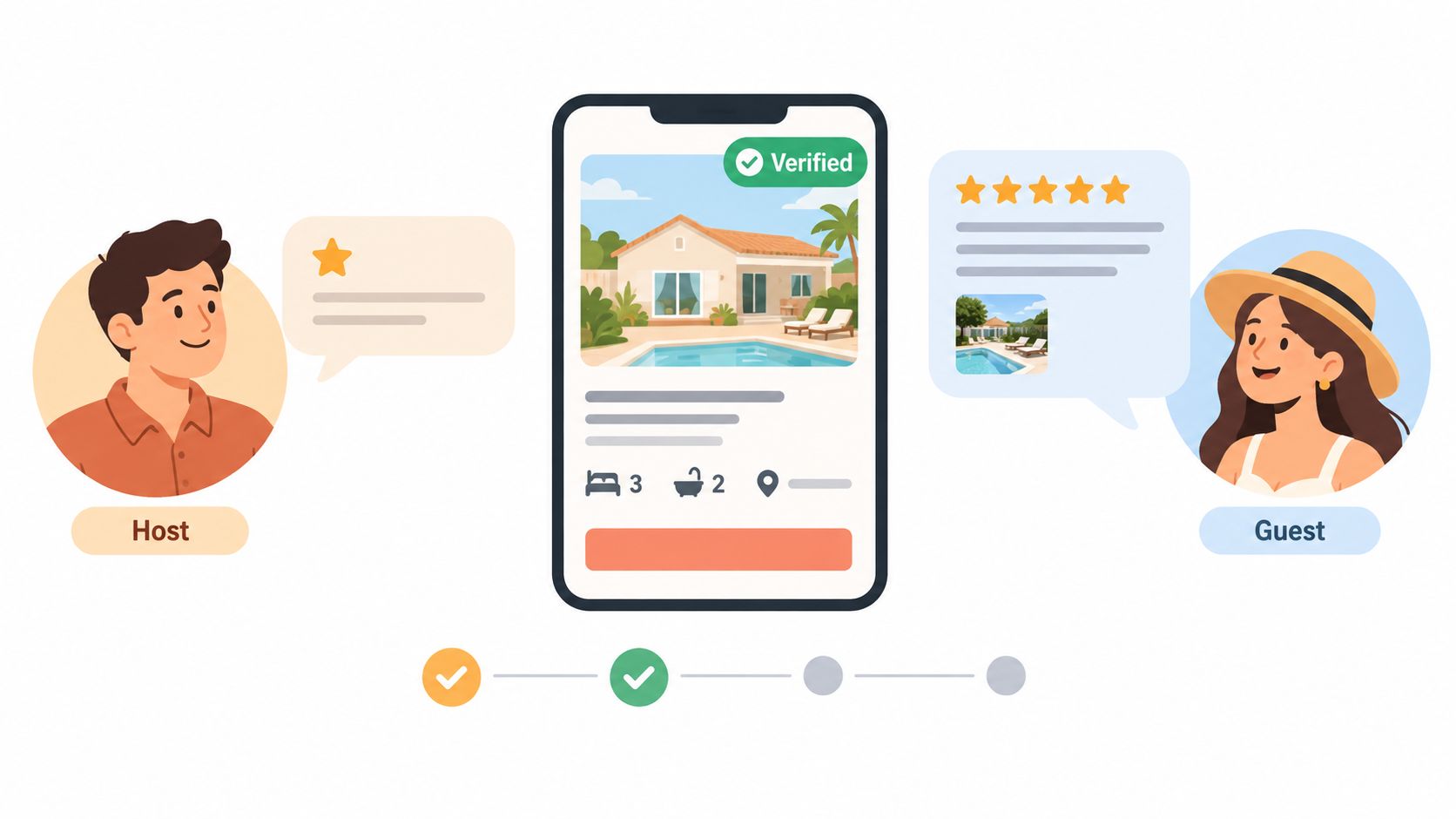
Airbnb's review model works because trust runs in both directions. Guests evaluate stays, and hosts evaluate guests, creating a feedback exchange that gives each side more information before the next transaction. Reviews, property photographs, host responses, and listing details work together as a decision system rather than as decorative testimonials.
The practical lesson is simple: place customer feedback where uncertainty is highest. A traveler wants to know whether a property matches its description, whether the host communicates clearly, and whether previous guests encountered problems. A generic statement such as “great location” helps less than a specific account of check-in, cleanliness, noise, or responsiveness.
Airbnb also demonstrates why review collection needs a defined moment. A follow-up message after checkout can ask guests to comment on particular parts of the stay, which encourages useful detail instead of a vague rating. Hosts should respond to criticism with context and a concrete correction, not a defensive explanation.
Practical rule: A review system earns trust when it helps both the buyer and the provider make a better next decision.
Small hospitality teams can adapt the mechanism without building a marketplace. Ask one or two focused questions after delivery, publish relevant feedback beside the offer, and respond consistently. If you manage listings across channels, an Airbnb integration for review management can help keep customer proof organized. Hosts experimenting with visual storytelling can also explore AI Airbnb videos, but video shouldn't replace honest reviews or accurate property information.
2. Amazon Customer Reviews With Verified Purchase Badges
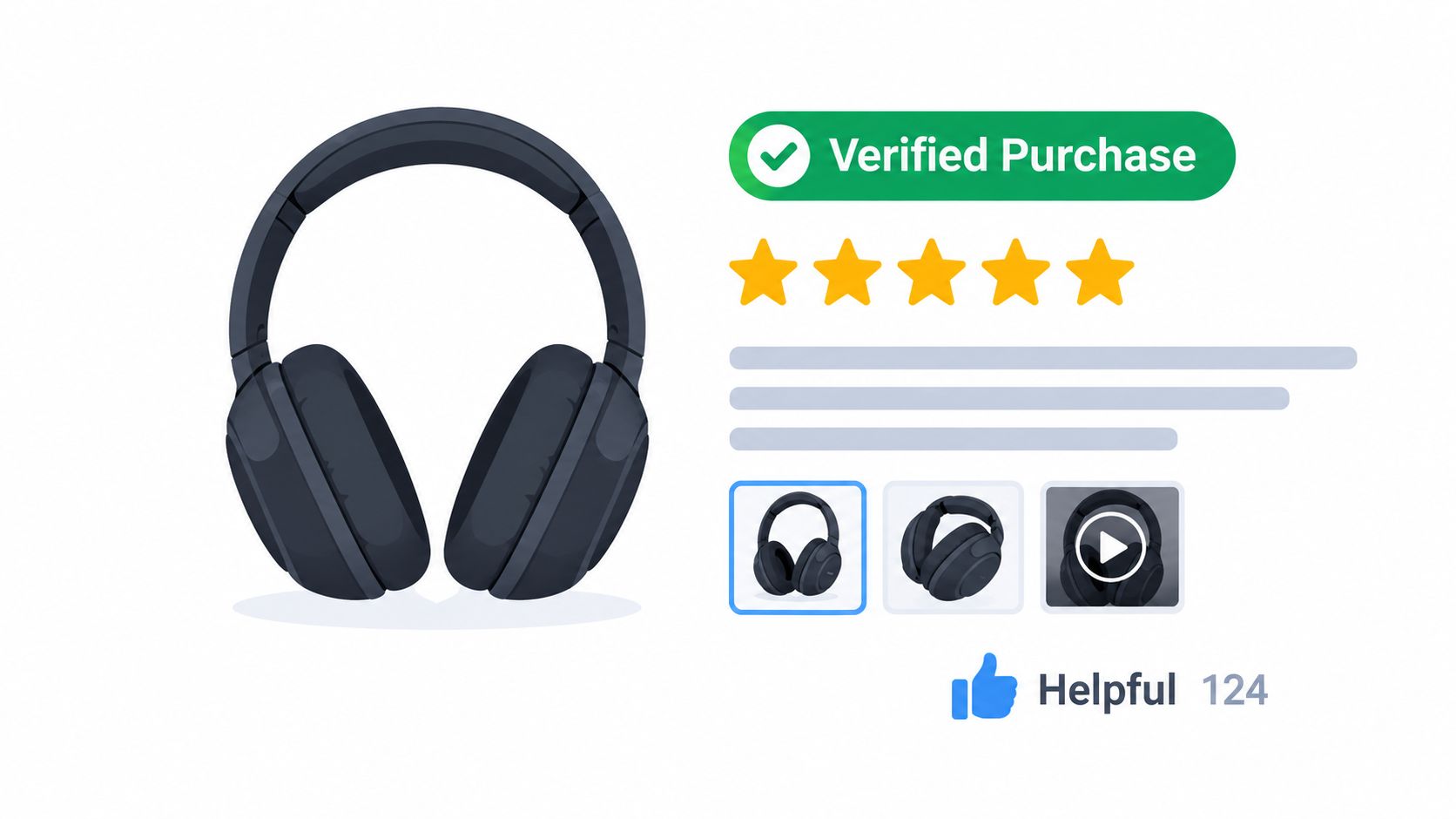
Amazon made product feedback useful at enormous scale by combining ratings, written reviews, customer photographs, videos, helpful votes, and purchase-status signals. The Verified Purchase badge gives readers context about the reviewer's relationship with the product. It doesn't prove that every opinion is correct, but it helps shoppers distinguish firsthand use from unsupported commentary.
That structure solves a common e-commerce problem. Product pages often make promises, while customers want evidence about fit, durability, setup, packaging, and performance in real conditions. A review library gives shoppers access to those practical questions before they commit.
The strongest adaptation isn't just adding a star widget. It's turning recurring complaints into product and content improvements. If customers repeatedly ask whether headphones fit small ears, the product page should answer that question clearly. If buyers struggle with installation, add a short guide before requesting another review.
Businesses can build a useful review loop by:
- Requesting honest feedback: Contact verified purchasers after they've had enough time to use the product.
- Mining recurring themes: Tag comments about quality, delivery, fit, setup, and support.
- Answering visibly: Respond to questions and criticism where future shoppers will see the answer.
- Improving the listing: Update specifications, images, instructions, and expectations based on repeated feedback.
The Amazon review integration can help teams bring marketplace feedback into a broader social-proof workflow. The principle remains more important than the tool: reviews should inform both conversion content and operational fixes.
3. Slack's In-App Customer Success Stories and Case Studies
Slack's customer storytelling is effective when it connects a recognizable customer problem with a specific way of working. A buyer doesn't only want to know that another company “loves Slack.” They want to understand how teams communicate, coordinate projects, reduce scattered conversations, or bring information into a shared workspace.
That makes a detailed case study more useful than a logo wall by itself. Logos create familiarity, but a story provides relevance. A startup may care about team alignment, while a larger organization may care about adoption, governance, or cross-functional collaboration. Both need to see a path from their current problem to a plausible outcome.
The best software testimonials also explain the customer's starting point. Without that context, an outcome can sound promotional. A strong story includes the old workflow, the change introduced, the people involved, and the evidence the customer uses to judge success. Use customer-approved metrics when they're available, but don't manufacture precision to make a case study sound impressive.
Make proof useful at the decision stage
Place short customer quotes near relevant product claims, then link to deeper stories for buyers who need more evidence. Segment case studies by industry, company size, role, and use case. A prospect should be able to find a story that resembles their situation without searching through an undifferentiated archive.
“A testimonial should answer the buyer's next question, not merely praise the product.”
Small SaaS teams can start with one customer interview and turn it into a landing-page quote, an implementation story, a sales enablement document, and an onboarding example. Keep the customer's language specific. “We saved time” is a starting point. “The operations team stopped searching across separate channels for launch updates” gives readers something they can recognize.
4. Zappos' Culture-Driven Customer Service Testimonials
Zappos is often associated with generous, human customer service, but the more transferable lesson is how service stories reinforce internal behavior. A customer's account of a thoughtful response can become external proof of the brand promise and an internal example of what good judgment looks like.
That creates a useful feedback loop. The support team resolves an unusual problem, the customer shares the experience, the company preserves the story, and managers use it to teach future representatives. The testimonial isn't just marketing content. It becomes a cultural artifact that helps employees understand how policies should work in real situations.
The approach has a trade-off. A memorable recovery can't compensate for a consistently broken process. If customers need extraordinary intervention because delivery, returns, or account access fail repeatedly, the stories may conceal an operational problem rather than solve it. Service recovery should therefore sit alongside root-cause analysis.
Teams can adapt the model by collecting feedback immediately after a meaningful support interaction and asking permission before publishing the customer's story. Capture the employee's decision, the customer's original problem, and the resolution. Then share the account in training, internal recognition, and appropriate public channels.
- Reward judgment, not theater: Recognize employees who remove genuine friction.
- Track repeated failures: Group service stories by underlying issue, not only by emotional impact.
- Publish with consent: Protect customer privacy and preserve the customer's actual meaning.
- Close the loop: Tell the team when a recurring complaint led to a policy or product change.
The result is stronger than a promise to “go above and beyond.” It gives employees boundaries, examples, and permission to solve problems thoughtfully.
5. Netflix's Personalized User Ratings and Watch History as Social Proof
Netflix addresses a different CX problem: too much choice. A viewer may not need another content catalog. They need confidence that a particular show is worth their limited attention. Ratings, viewing history, recommendations, and personalized match signals reduce that decision burden by combining personal behavior with broader audience feedback.
The important mechanism is not personalization alone. It's relevant validation. A recommendation based on previous viewing can feel useful, while a general popularity signal can show that other people are watching. Together, those signals help the viewer choose without requiring a long search.
There's a risk, however. Recommendation systems can become opaque or repetitive. If customers don't understand why something appears, the experience may feel narrow rather than helpful. Ratings can also flatten nuance. A viewer may dislike a series overall but still value it for a particular mood, language, or viewing group.
Use feedback to guide the next action
Businesses outside streaming can borrow the structure by showing customers what people with similar needs selected, reviewed, or completed. A B2B site might recommend implementation guides by role. An online retailer might connect product reviews with use cases. A membership business might suggest the next resource based on previous engagement.
Make feedback visible at the moment of choice, not buried in a separate research area. Let customers correct the system when recommendations miss the mark. Most importantly, measure whether the guidance helps customers complete their task, not whether it merely increases clicks.
Better personalization reduces effort. It doesn't prove how much data a brand can collect.
That distinction matters as personalization becomes more intrusive. Recent CX research found that 64% of consumers have experienced personalization that felt too invasive or creepy, and only 11% are very willing to share personal data even for more relevant experiences, according to Acxiom's CX trends report. Use the least sensitive information that can produce a useful recommendation.
6. Trustpilot's Independent Review Aggregation for Multi-Vertical Trust
Trustpilot's value comes from portability. A customer can encounter the same third-party review identity while evaluating different companies, which makes the signal feel separate from a brand's own marketing. For businesses, aggregated reviews provide a way to show broader customer sentiment across a website, campaign, or sales conversation.
Independence is also the central trade-off. A public review platform gives customers a voice that the company can't fully control. That can expose service weaknesses, inconsistent delivery, or unclear promises. Hiding criticism may make a page look cleaner, but responding to recurring themes gives future buyers more useful information.
A company should treat its public profile as a service channel, not a badge to display and forget. Thank customers for specific praise, acknowledge the actual complaint, explain what has changed, and avoid copying the same generic response to every review. Readers can tell when a business is answering for optics rather than understanding the problem.
Turn aggregation into operational intelligence
Review volume alone won't tell a team what to fix. Tag comments by product, channel, delivery issue, onboarding stage, or support question. Compare those themes with CSAT, NPS, customer effort, response time, and first-contact resolution. Qualtrics' CX benchmarking guidance recommends comparing results with your own historical performance, competitors, or industry benchmarks, then segmenting by channel, cohort, or market before acting.
A small business can begin with a weekly review of new feedback and one documented action. A larger organization may route themes to product, operations, and service owners. In both cases, the goal is the same: make public feedback change the experience that generates future feedback.
7. Apple App Store's Review and Rating System for App Credibility
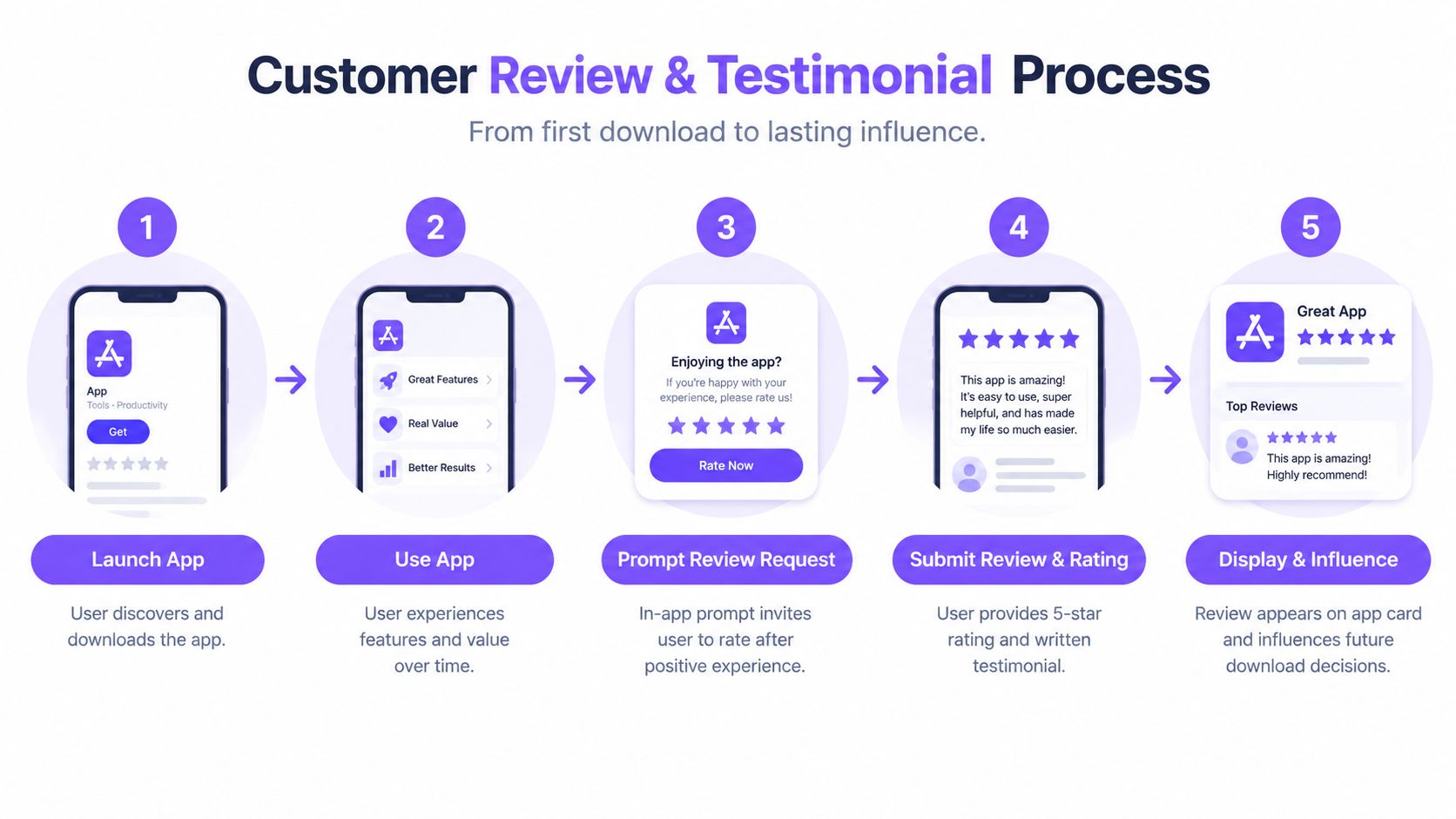
The Apple App Store places ratings and written reviews close to the download decision. That placement matters because an app is intangible before installation. Customers can't inspect the full product in advance, so they use reviewer experiences, update notes, screenshots, and developer responses to estimate quality and risk.
For app teams, the review area is also a public issue log. Customers often reveal broken flows, confusing permissions, failed payments, device-specific bugs, or missing features in language that product teams can understand. A thoughtful response can show that the team has read the complaint, while release notes can demonstrate that feedback influenced the next version.
Timing matters. Asking for a review immediately after an error or before the user reaches value can create frustration. A better prompt follows a successful action, while a support path handles dissatisfaction privately and quickly. The app store shouldn't become the only place customers can report problems.
Developers can create a stronger loop with a few deliberate habits:
- Choose the right moment: Request ratings after a completed task or positive outcome.
- Answer the substance: Address the reported issue instead of repeating a thank-you.
- Connect fixes to releases: Mention relevant improvements in version notes.
- Watch patterns: Review feedback by device, feature, subscription status, and release.
- Escalate serious problems: Move account or security issues into a protected support channel.
The broader lesson applies to any product with a public rating surface. Feedback is part of the interface. Treat it as a visible extension of product quality rather than a marketing ornament.
8. HubSpot's Customer Testimonial Video Library and Case Study Hub
HubSpot's organized customer story library shows why discoverability matters. A testimonial can be persuasive and still fail if the right prospect never finds it. Segmenting stories by industry, company size, use case, and outcome lets buyers choose evidence that matches their situation.
Video adds human detail, but it isn't automatically better. A polished interview with broad praise may feel less credible than a short, specific account of a difficult workflow and how the customer changed it. The strongest videos identify the speaker, their responsibility, the original constraint, the implementation experience, and the evidence they use to judge success.
A centralized hub also helps internal teams. Marketing can reuse approved assets, sales can find relevant proof during conversations, and customer success can share stories during onboarding. Without a clear taxonomy, however, a large library quickly becomes another content archive that nobody uses.
Build a story library in layers
Start with written interviews if video production is too heavy. Ask customers to describe the before-and-after journey in their own words, then request permission to edit for clarity. Add video when the customer's voice, demonstration, or emotional context improves understanding.
A practical library might include:
- Problem stories: What made the previous process difficult?
- Change stories: What did the team implement and how did adoption work?
- Evidence stories: What signals show that the new approach helped?
- Audience filters: Which roles, industries, or business models will recognize the situation?
Teams wanting a no-code way to publish customer interviews can use video testimonial tools alongside written reviews. Keep the content honest about effort and limitations. Buyers trust a story more when it explains what required work, not only what looked successful afterward.
9. Yelp's Curated Elite Reviewer Status for Review Quality and Credibility
Yelp's Elite reviewer status tackles a problem that star averages can't solve by themselves: not every review offers the same depth. A detailed account of service, atmosphere, wait time, or product quality can help a future customer far more than a short rating with no explanation.
The badge creates a visible credibility signal for contributors. It encourages reviewers to participate, write with detail, and build a reputation within the community. For businesses, those reviews can reveal specific experience patterns that a simple score hides.
There's a limitation. Status markers can influence attention, but they don't make every opinion universally correct. A reviewer's priorities may differ from another customer's. A restaurant should therefore use detailed feedback as a source of hypotheses, not as an unquestionable verdict.
Businesses can respond constructively by thanking reviewers for the details they provided and addressing the operational point they raised. If several reviews mention slow service at a particular time, investigate staffing or reservation flow. If customers praise a specific employee interaction, identify the behavior behind it and teach that behavior consistently.
Specific feedback is more valuable than flattering feedback. It tells you what to preserve, what to repair, and what to explain better.
Smaller local businesses can invite regular customers to describe their experience without scripting the answer. They can also review comments by theme each week, separate isolated preferences from repeated friction, and publish updates when a meaningful issue has been addressed. The process turns a public review community into a practical listening channel.
10. Shopify's Customer Success Showcase and Merchant Stories
Shopify's merchant stories work because they make an abstract platform easier to imagine. A prospective merchant can see how another business started, which obstacles appeared, and how tools fit into the wider operating model. The story gives the product a context that feature lists can't provide.
The strongest merchant profiles don't present success as magic. They explain the customer's origin, audience, offer, operational decisions, and path through change. That detail helps readers assess fit. A small product business may not share the same resources as a large brand, but it can still recognize a relevant decision or constraint.
There's a risk in publishing only dramatic growth narratives. They can create unrealistic expectations and make ordinary progress seem inadequate. A more credible library includes stories about improved workflows, clearer positioning, better customer communication, or successful launches, not just impressive scale.
Let customer stories improve product communication
Merchant interviews should inform more than the blog. Product teams can identify confusing features. Support teams can see where onboarding breaks down. Marketing teams can learn which customer language explains value without jargon.
Create multiple versions of each story for different audiences. A long interview can become a concise landing-page quote, an onboarding example, a sales conversation asset, and a product education article. Ask the merchant what changed in the customer journey, not only what changed in revenue.
The most useful story answers three questions: What problem existed, what did the merchant change, and what evidence supports the result? If the evidence is qualitative, say so. A clear account of reduced confusion or smoother fulfillment can still help readers, provided it isn't dressed up as a quantified outcome.
Side-by-Side: 10 Customer Experience Examples
| Example | Implementation complexity | Resource requirements | Expected outcomes | Ideal use cases | Key advantages |
|---|---|---|---|---|---|
| Airbnb's Host Review System and Guest Testimonials | Moderate, two-sided review flows, verification, photo support | Moderate, verification, moderation, UI for timelines and responses | High trust, improved booking conversion, abundant UGC | Peer-to-peer marketplaces and booking platforms | Mutual accountability, rich contextual reviews, strong social proof |
| Amazon Customer Reviews with Verified Purchase Badges | High, verified badges, ranking algorithms, media and voting systems | High, fraud detection, storage for media, ranking and moderation infrastructure | High authenticity, increased sales and search visibility | Large-scale e-commerce marketplaces | Verified-purchase trust signal, rich media, helpfulness-ranked reviews |
| Slack's In-App Customer Success Stories and Case Studies | Low–Moderate, collect and feature metrics-driven case studies | Moderate, content production, permissions, design and segmentation | Demonstrated ROI, shorter sales cycles, enterprise credibility | B2B SaaS selling to enterprises and decision-makers | Metric-focused proof, logo trust signals, industry-specific relevance |
| Zappos' Culture-Driven Customer Service Testimonials | Moderate, collect service stories and amplify across channels | Moderate, training, storytelling, content production and social sharing | Strong emotional loyalty, organic word-of-mouth, brand differentiation | Brands competing on service and customer experience | Emotionally resonant stories, culture-led authenticity, shareable content |
| Netflix's Personalized User Ratings and Watch History as Social Proof | High, personalization engines, rating aggregation, UX for matches | High, data science, recommendation infra, monitoring and A/B testing | Improved engagement and retention, reduced discovery friction | Streaming and recommendation-heavy platforms | Personalized social proof, algorithmic recommendations, trending signals |
| Trustpilot's Independent Review Aggregation for Multi-Vertical Trust | Moderate, cross-industry aggregation, verification and widgets | Moderate–High, platform moderation, authentication, widget integration | Portable third-party credibility, industry benchmarking, web-wide visibility | Companies needing unbiased external verification across industries | Third-party neutrality, portable widgets, competitive benchmarking |
| Apple App Store's Review and Rating System for App Credibility | Moderate, versioned reviews, search integration, moderation | Moderate, review prompts, moderation, developer response workflows | Direct impact on downloads and visibility, rapid quality feedback | Mobile app distribution and discovery channels | Visible ratings affect ranking, version-specific feedback, high discoverability impact |
| HubSpot's Customer Testimonial Video Library and Case Study Hub | Moderate, searchable hub, segmentation, video indexing | High, video production, curation, CMS and search UX | Higher conversions, self-serve leads, stronger sales enablement | B2B marketing and long sales cycles where demonstrations matter | Searchable video evidence, segmented relevance, metric-driven stories |
| Yelp's Curated Elite Reviewer Status for Review Quality and Credibility | Moderate, badge system, voting, reviewer profiles and fraud detection | Moderate, community management, events, moderation systems | Higher-quality reviews, increased community engagement, local credibility | Local businesses, hospitality and service industries | Reviewer credibility tiers, gamified quality incentives, highlighted helpful feedback |
| Shopify's Customer Success Showcase and Merchant Stories | Moderate, curate merchant narratives and multimedia integration | Moderate–High, story production, video, ongoing updates and promotion | Inspirational conversions, platform credibility, social sharing | Platforms and marketplaces showcasing merchant success and growth | Founder-led narratives, measurable growth examples, diverse industry appeal |
Turn These CX Examples Into a Feedback System
The common thread across these customer experience examples isn't a particular industry or technology. It's the movement from isolated feedback to a managed system. Companies collect customer input at meaningful moments, make the evidence easy to inspect, identify recurring themes, respond where customers can see the response, and publish relevant stories for people making similar decisions.
Start with one loop, not an enterprise-wide transformation. Choose a high-intent page or interaction, such as a product page, booking flow, onboarding step, support resolution, or app-store listing. Decide what question customers should answer, when to ask it, who owns the response, and which change will follow from the result.
A practical sequence looks like this:
- Collect feedback at the right moment: Ask after a completed purchase, resolved issue, successful setup, or meaningful use event.
- Verify and organize it: Separate firsthand reviews from general comments, tag themes, and record the source and permission status.
- Find repeated patterns: Look for the same friction across reviews, support tickets, surveys, and frontline conversations.
- Respond visibly: Acknowledge criticism with specifics and explain what the customer can expect next.
- Publish relevant proof: Place testimonials beside the claim, feature, or decision they help explain.
- Measure the journey: Track NPS for loyalty, CSAT for interaction quality, CES for friction, plus task completion, response time, and first-contact resolution. Benchmarking guidance from Qualtrics on customer experience measurement also emphasizes using meaningful samples and examining dimensions such as success, effort, emotion, satisfaction, and agent attributes.
Don't judge an example by how memorable it looks. Judge it by whether customers complete tasks more easily, understand the offer more clearly, trust the evidence, and receive better help when something fails. Research from BrightLocal on online reviews found that 98% of people at least occasionally read online reviews for local businesses, 94% have avoided a business because of a negative online review, and 83% say reviews need to be recent and relevant to matter. That makes review freshness and response quality part of the customer experience itself.
The same principle applies to review quantity. One roundup reports that consumers read an average of 7 reviews before trusting a business, while 33% won't trust a business with fewer than 20 reviews, as documented by SocialPilot's review statistics. These figures shouldn't become targets disconnected from service quality. They're reminders to build a steady collection process instead of waiting for occasional praise.
A tool such as Bragly can support that operating model by centralizing reviews, collecting first-party testimonials, syncing connected sources, analyzing themes, and displaying social proof through no-code widgets. Teams can use tagging and analytics to organize evidence, while review forms create a direct feedback channel alongside third-party sources. The platform's free CSAT and NPS calculators can also help teams connect feedback collection with basic CX measurement.
Customer experience became a mainstream business discipline during the 2010s. By 2019, two-thirds of companies said they competed primarily on customer experience, compared with 36% in 2010, and industry coverage reported that companies with a CX mindset drove revenue 4% to 8% higher than others in their industries. The same customer experience statistics overview cites an estimate that poor customer service cost U.S. companies $1.6 trillion, a sign that customer feedback is not merely a brand exercise.
Choose one page, one feedback question, and one accountable owner this week. Review the responses, fix one repeated source of friction, publish the clearest relevant proof, and check whether the next group of customers moves through the experience with less uncertainty.
Bragly helps teams collect, organize, analyze, and display reviews and testimonials from multiple sources through no-code widgets and synced social proof. Visit Bragly to centralize customer evidence and turn feedback into a more measurable experience system.