

Looking for a Shorter Overview?
AI Summary
Key Moments
Match platform to your post-review goals
Choose a Repuso alternative based on what you want to do with reviews after collection, such as display, resell, manage locations, convert leads, or boost local SEO.Bragly for combining public reviews on websites
Bragly unites reviews from 47+ platforms with new collection options, moderation, and flexible widget layouts to make reviews a powerful website asset.Grade.us suits agencies wanting branded resale
Grade.us offers white-label automation, client onboarding, and reporting features that help agencies package review management as a service.Birdeye and Podium support operational needs
Birdeye fits multi-location reputation programs; Podium excels where quick lead response and customer conversations impact bookings.Repuso is a sensible pick when you want to collect reviews, choose the strongest ones, and turn them into website widgets. It also goes further than many widget tools with email and SMS requests, QR and NFC collection, client sub-accounts, and a white-label option for agencies. For a low-cost review program with resale in mind, that is a real combination.
The reason to compare alternatives is not that Repuso misses every feature. It is that a review program can turn into different jobs once it is running. A brand may need to bring public proof from many sources into one website library. An agency may need its own domain and client reporting. A multi-location group may need reputation work tied to location operations. Another team may care more about responding to leads and booking work than curating a review wall.
That distinction matters more than a long feature checklist. A platform can be excellent at collecting a rating and still be the wrong place to manage client accounts, publish proof by page, deal with local visibility, or keep customer conversations moving.


I compared five Repuso alternatives using that next-job test. Bragly is my first pick for turning public reviews and newly collected proof into flexible website assets. Grade.us is built for agency resale. Birdeye is for larger location-based reputation programs. Podium links review work to conversations and bookings. BrightLocal is for teams that want reputation activity inside a local SEO program.
Quick comparison
| Tool | Best for | Core approach | Pricing posture | Choose it when |
|---|---|---|---|---|
| Bragly | Public reviews plus new proof on your own site | Imports, collection forms, moderation, review replies, filtering, and display | Free plan up to 100 reviews; Pro from $14/month | Proof already exists across public platforms and needs to work harder across your website. |
| Grade.us | Agencies selling review management | White-label review requests, monitoring, reporting, and client delivery | Trial-led agency pricing | Client-facing reputation work is a service you want to package and resell. |
| Birdeye | Multi-location reputation operations | Review generation, replies, marketing, reporting, and location-level workflows | Custom pricing | Reviews belong inside a wider operating program across many locations. |
| Podium | Conversations, leads, and booking | Customer messaging, lead response, appointment flow, and review requests | Demo-led pricing | A missed inquiry or slow follow-up costs more than a missing widget layout. |
| BrightLocal | Local SEO tied to reputation work | Local rankings, listings, citations, review requests, replies, and website publishing | Quote-based platform plans | Review work needs to connect to local visibility and Google Business Profile activity. |
Key takeaways
- Start with the job after the review. Showing proof, reselling a service, running locations, converting conversations, and improving local visibility each call for a different replacement.
- Choose Bragly for public proof that needs a home. It brings reviews from 47+ platforms together with fresh text or video collection and flexible website display.
- Choose Grade.us to resell review operations. Its white-label agency model is the closer match for a client-service business.
- Choose Birdeye or Podium when reviews affect operations. Birdeye suits location programs, while Podium fits customer conversations and booking.
- Choose BrightLocal when local search is part of the assignment. It puts reviews beside rankings, listings, and citation work.
1. Bragly
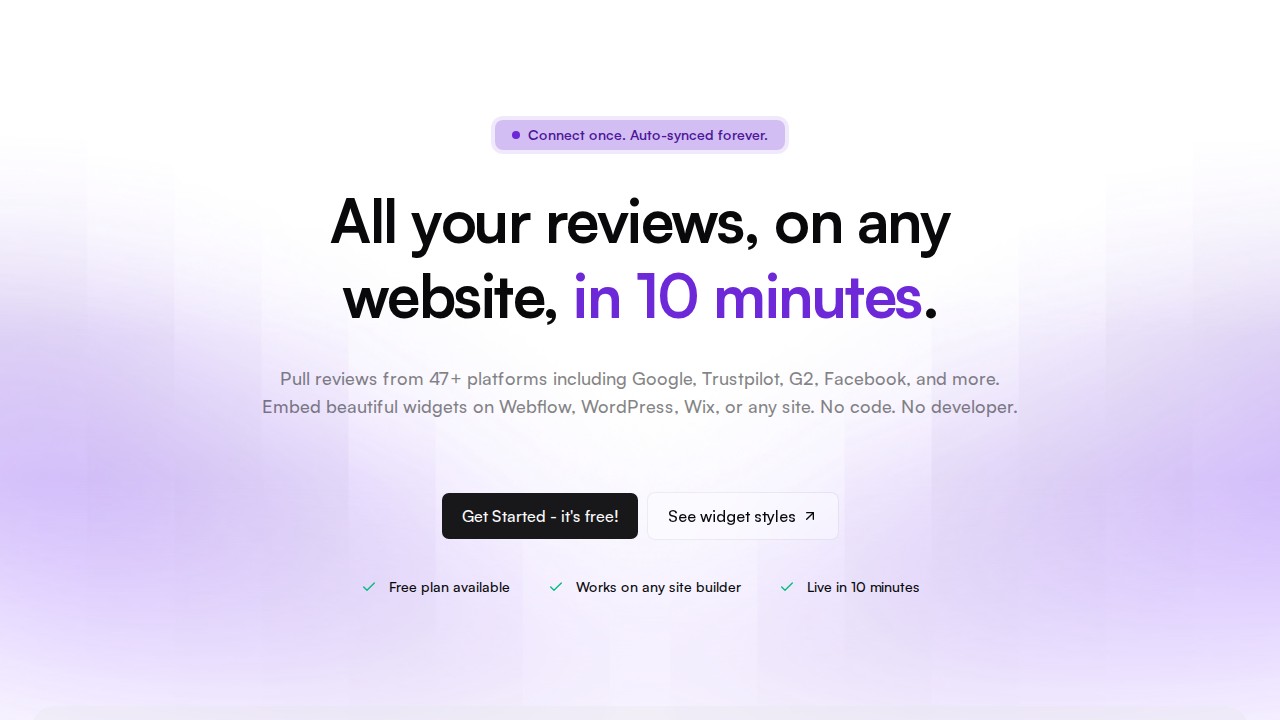
Bragly is the Repuso alternative I would start with when good reviews already live in places customers trust, but the business has not given those reviews a useful home on its website. A software company may have G2 and Capterra feedback. A hospitality brand may have Tripadvisor, Booking, or Google reviews. An e-commerce team may want Amazon, Etsy, Shopify, and Trustpilot proof in one library. Agencies can also set up proof for clients without rebuilding every display from scratch.
Bragly connects with 47+ review platforms and adds text and video collection forms, moderation, tags, analytics, AI-assisted review replies, Wall of Love pages, and 30+ widget layouts. The free plan supports up to 100 reviews, while Pro starts at $14 per month. That makes it useful for a team that wants to combine imported proof with new customer stories, then select the right proof for a homepage, pricing page, service page, or full testimonials page.
Repuso has white-label resale features that Bragly does not claim to duplicate. The better reason to choose Bragly is different: it gives a business or agency a practical workspace for public proof after import. You can sort by source, rating, keyword, or tag and build a testimonial widget around the proof that fits a specific page.
| Where Bragly fits | What it gives you | Where Repuso may still fit better |
|---|---|---|
| Reviews are spread across public platforms | 47+ source connections, filters, tags, moderation, and website displays | You want a branded client portal with your own domain and a resale billing model. |
| A website needs proof matched to each page | 30+ widget layouts, source and rating filters, keyword filters, and Wall of Love pages | You only need a familiar review-widget workflow for a narrow set of client accounts. |
| Teams or agencies share proof work | Collaboration and teams and agency workflows, including project handoff | Your core service depends on a complete white-label experience for every client. |
Bragly also helps when the review library needs attention after import. Teams can collect new text or video proof, approve what appears on the site, and draft consistent responses with AI-assisted review responses. If you want a broader look at this category, see this guide to review management software and the case for a single review dashboard.
2. Grade.us
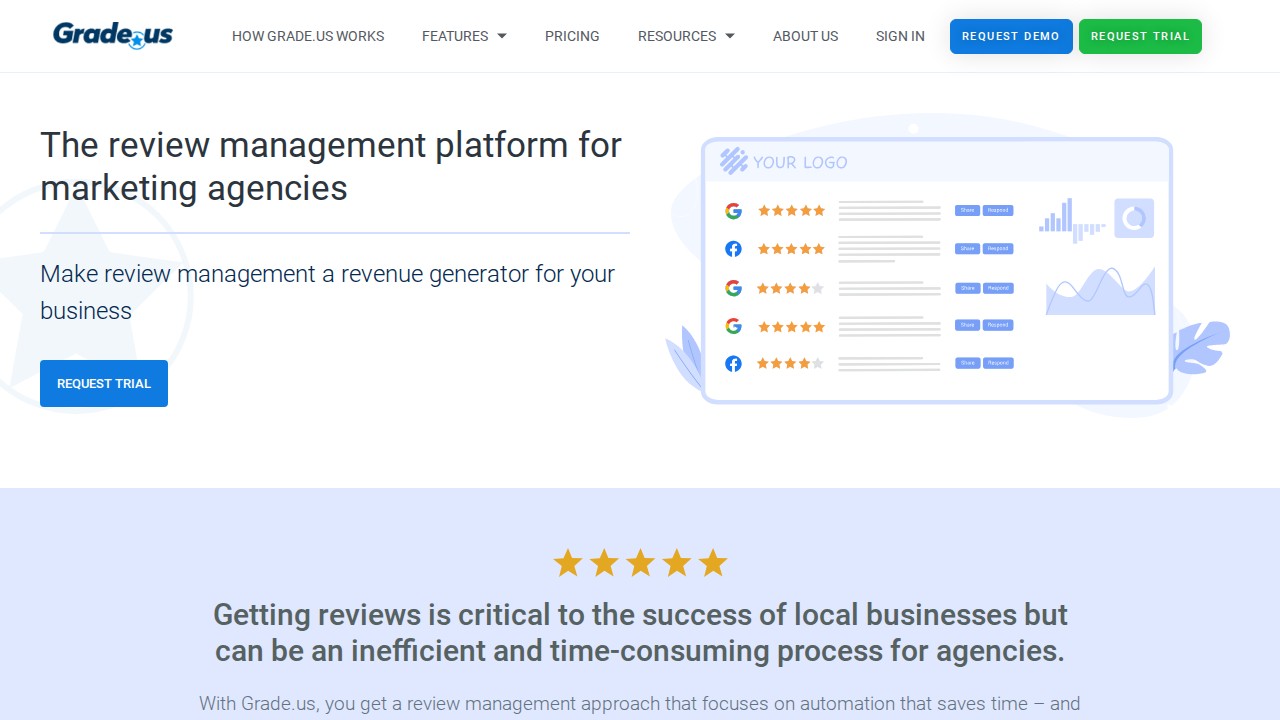
Grade.us is the clearest choice here for an agency that sees review management as a service it can sell. Its product is organized around agency automation, client and location management, review requests, monitoring, reporting, and white-label delivery. That focus makes it closer to Repuso’s agency side than most review-widget products.
The real appeal is not only putting your logo on a dashboard. An agency needs a repeatable way to onboard clients, request reviews, track results, and show the work without asking every client to learn a new system. Grade.us is designed around that operating model. It also puts review marketing and reporting in the same conversation, which can help an agency turn a simple request service into an ongoing monthly deliverable.
It is less compelling when you are a single brand whose main goal is to make existing public proof look better across a website. In that case, you may pay for agency mechanics you will not use. But if resale, client branding, and many accounts drive the decision, Grade.us deserves close attention.
| Where Grade.us fits | What it gives you | Where Repuso may still fit better |
|---|---|---|
| A marketing agency needs a client-ready service | White-label branding, domain options, reporting, and agency-oriented review workflows | You want a lower-cost starting point with simple sub-accounts and widget curation. |
| Review work needs repeatable delivery | Request automation, monitoring, marketing, and onboarding for many brands or locations | You prefer Repuso’s collection page, NFC items, and its compact review-display approach. |
| Client reporting supports monthly retainers | An agency-first view of reputation work and client results | Your service is mostly website proof display, not full review-management delivery. |
3. Birdeye
Birdeye is a different kind of Repuso alternative. It is built for organizations that treat reviews as one part of a wider, location-based customer experience program. Review generation, monitoring, response workflows, reputation tracking, review marketing, competitor tracking, customer communication, and reporting sit inside the same system.
That breadth makes sense for healthcare groups, property brands, automotive networks, home-service operators, retail groups, and other companies where location performance matters every day. A review that arrives at one location can be a signal for a service issue, a response task, a customer recovery conversation, or a marketing opportunity. Birdeye is designed for that larger loop.
The trade-off is scope. A team that needs a low-friction way to collect reviews and display them on a few websites may find a location-operations platform heavier than needed. Birdeye is worth considering when there are enough locations, users, and workflows to justify a broader system and customized pricing.
| Where Birdeye fits | What it gives you | Where Repuso may still fit better |
|---|---|---|
| Many locations need one reputation program | Review requests, responses, reporting, competitor tracking, and location-level visibility | You manage a modest set of client accounts and want a leaner white-label setup. |
| Reviews point to operational work | Review data can connect with customer communication, response rules, and local performance | You only need to curate reviews and turn them into website proof. |
| Marketing teams want to reuse review content broadly | Review marketing alongside the wider reputation program | Your priority is inexpensive client resale rather than a multi-location operating platform. |
4. Podium
Podium makes the most sense when the Repuso replacement decision is really about conversation speed. Its current product direction centers on customer messages, lead response, qualification, appointment booking, follow-up, and re-engagement. Reviews still matter, but they sit inside a bigger question: what should happen when a potential customer contacts the business?
That can be a strong fit for local teams where an unanswered call, text, or web inquiry can turn into a lost booking. An automotive retailer, home-service company, clinic, or retail location may care more about reaching the person who has not become a customer yet than about adding another review widget format. Podium’s review tools can support that journey, but the platform’s center of gravity is revenue-producing customer communication.
It is not the first choice for a web agency trying to offer a branded review product to many clients. Nor is it the first choice for a marketing team that mainly wants public proof organized by page. Choose Podium when fast conversation and booking follow-up are the larger gap.
| Where Podium fits | What it gives you | Where Repuso may still fit better |
|---|---|---|
| Leads arrive through several channels | Customer messaging, fast follow-up, qualification, booking, and review requests | You want a dedicated review collection and display product with client sub-accounts. |
| Reviews are part of a conversion workflow | Reviews can sit beside messages and customer follow-up | You do not need a larger customer-communication product. |
| A local team loses work through slow response | A system focused on keeping inquiries active before and after business hours | Your core work is white-label review management for clients. |
5. BrightLocal
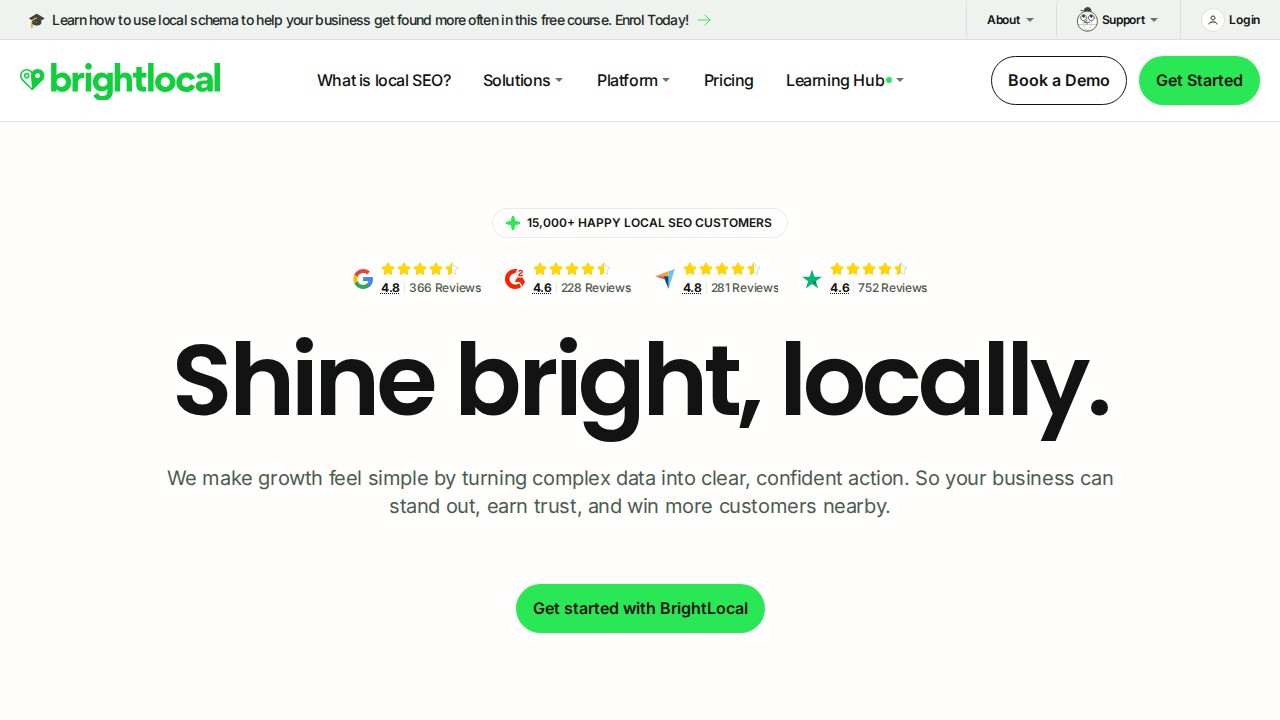
BrightLocal is the right Repuso alternative when review work is tied to the rest of local search. Its platform brings together local rank tracking, listings management, citation work, Google Business Profile checks, review monitoring and replies, review requests, and website publishing. That changes the question from “How do we show reviews?” to “How visible and trustworthy are we when local customers search?”
This is useful for a local brand, consultant, or agency that needs to explain why a location is not appearing in the map pack, whether business details are consistent, and how review activity fits into a larger local SEO plan. Reviews become one source of trust and visibility instead of a standalone website asset.
The downside is that a team focused only on public proof can end up with more local-search tooling than it needs. BrightLocal is strongest when rankings, listings, citations, and reviews need to be discussed together. It is less direct for a creator, SaaS company, or brand that simply wants to collect customer stories and place them across key pages.
| Where BrightLocal fits | What it gives you | Where Repuso may still fit better |
|---|---|---|
| Review work belongs beside local SEO | Rankings, geo-grid views, citations, listings, review requests, and review publishing | You mainly need a review platform and website widgets, not a local-search workspace. |
| Agencies report on search visibility as well as reviews | A shared place to explain local visibility and reputation activity | You want a client-ready white-label reputation service rather than an SEO platform. |
| Google Business Profile performance drives growth | Tools for visibility audits, listings accuracy, and reputation growth | Your business is not location-led and does not need citation or rank-tracking work. |
How to choose the right Repuso alternative
Start with the question that Repuso users often skip: what should your review program produce after collection? The answer changes the shortlist quickly.
| If this is your real need | Start with | Why |
|---|---|---|
| Public reviews need to become credible proof on key website pages | Bragly | It combines imported reviews, new proof collection, moderation, and flexible display. |
| An agency needs a review service under its own brand | Grade.us | Its product model is built for agency resale, reporting, and client delivery. |
| Many locations need review operations tied to customer experience | Birdeye | It brings location-level reputation work, replies, marketing, and reporting together. |
| Slow lead response hurts bookings or revenue | Podium | It puts reviews in a wider communication and conversion workflow. |
| Reviews need to support local rankings, listings, and citation work | BrightLocal | It treats reputation as a part of local search performance. |
Pricing should be the final filter, not the first one. Repuso’s low annual starting price is hard to dismiss if its widgets, collection methods, and agency tools already fit your work. Moving to a broader platform only makes sense when you can name the extra job it will take over. Moving to a proof-display system makes sense when the current review library is not helping the website convert.
The implementation question matters as well. Before switching, list your live widgets, review sources, client accounts, request links, QR materials, and any public pages that depend on your current embed. Then decide what should move first. A page-by-page audit can also help you decide where you are displaying reviews on a website well and where the proof is easy to miss.
Final thoughts
Repuso is not a tool you replace just because another product has more features. Its value is the combination of review collection, curated display, affordable plans, and white-label agency options. If that is the exact job you need, staying put may be the best decision.
Choose Bragly when public proof needs to become more useful across your website. Choose Grade.us when your agency wants reputation management to be a branded client service. Choose Birdeye when location operations are in the picture. Choose Podium when customer conversations and bookings matter most. Choose BrightLocal when reviews need to sit beside local rankings, listings, and citations.
The right switch begins with the work you want a review to trigger next. Once you know that, the comparison becomes much less crowded.
Frequently asked questions
What is the best Repuso alternative for public reviews on a website?
Bragly is a strong fit when reviews already live across Google, G2, Facebook, marketplaces, and other public sources. It brings those reviews into one workspace, supports fresh text and video collection, and gives teams flexible ways to show customer proof where visitors need it.
Is Grade.us better than Repuso for agencies?
Grade.us is the closer fit when an agency wants to package review management as a branded client service. Its product is built around agency automation, white-label delivery, reporting, and multi-client work. Repuso remains worth comparing when low cost, review widgets, collection tools, and a compact resale setup are the better match.
Which Repuso alternative is best for many locations?
Birdeye is worth considering when reviews are part of an organization-wide, multi-location reputation program. It brings review generation, management, responses, marketing, reporting, and location-level workflows into one system. Its pricing is customized, so it suits teams that need that wider operating model.
Does Podium replace a review-widget platform?
Podium can collect reviews, but its main value is broader customer communication. It is a better fit when you need to respond to leads, qualify inquiries, book appointments, and re-engage customers. A dedicated proof-display tool may be a closer match when website reviews are the only priority.
Is BrightLocal a review management platform?
BrightLocal includes review monitoring, replies, requests, and website publishing in its reputation offering. Its larger purpose is local SEO, including rankings, listings, citations, and Google Business Profile work. Choose it when those areas belong in the same workflow as your reviews.