Looking for a Shorter Overview?
AI Summary
Key Moments
Choose by the job after collection
Select an alternative based on the next task after review collection, such as proof publishing, location operations, or lead conversations.Bragly for multi-source public proof
Best for displaying diverse customer reviews across websites, beyond just location-based reputation.Birdeye for enterprise multi-location
Ideal for organizations needing a broad platform that combines reviews with listings, marketing, and reporting.Podium for message-led conversions
Suited for teams focusing on integrating reviews with customer conversations, follow-ups, and payments.GatherUp is built for a real and demanding job: helping local businesses, multi-location organizations, and agencies ask for reviews, monitor reputation, learn from feedback, and turn happy customers into visible proof. Its mix of email and SMS requests, review monitoring, NPS surveys, reporting, and white-label agency options makes sense when reputation operations sit close to the day-to-day work of running locations or clients.
The reasons to look for a GatherUp alternative are usually narrower than “I need different review software.” A team may need a proof system that reaches beyond location operations. An agency may need a client-facing service with a different white-label approach. Another business may care more about local SEO or text conversations than a survey and review workflow. Those are different jobs, and the right replacement depends on which one is now holding you back.
GatherUp’s public plan begins at $99 per month for one location and $60 per location for two to ten locations. It includes monthly SMS and email credits, but listing management is an add-on. That may be a fair structure for the work it does. It may also prompt a closer look if your priority has changed, your team works across more than one kind of website, or your client service needs a different shape.


I sorted this list by the job you need after collecting a review. Bragly is first because it works well when the next move is to bring public reviews and direct customer stories onto the website. The other four tools take over when the next move is enterprise location operations, customer conversations, agency delivery, or local-search management.
Quick comparison
| Tool | Best for | Why it differs from GatherUp | Pricing posture |
|---|---|---|---|
| Bragly | Multi-source proof and website display | Collects and publishes customer voices across a broader website, rather than centering the workflow on location reputation operations | Free plan up to 100 reviews; Pro from $14/month |
| Birdeye | Enterprise multi-location reputation | Expands reviews into listings, customer experience, social, search visibility, marketing automation, and location reporting | Talk to sales |
| Podium | Message-led lead conversion | Pairs review requests with texting, lead inboxes, phones, website chat, payments, and appointment follow-up | Talk to sales |
| Grade.us | White-label agency review services | Focuses on branded review programs, client organization, monitoring, reporting, and resale workflows for agencies | Trial available; check current plan fit |
| BrightLocal | Local SEO operations with review work | Places review collection and monitoring beside rankings, listings, citations, audits, and local-search reporting | Location-based quote pricing |
Key Takeaways
- Choose by the job after collection. GatherUp alternatives make more sense when you know whether the next job is publishing proof, operating locations, talking with leads, serving clients, or improving local visibility.
- Choose Bragly for public proof across the website. It is a strong fit when reviews come from more than one source and need to earn their place on homepages, service pages, pricing pages, and conversion paths.
- Choose Birdeye for a bigger multi-location system. Its wider platform fits organizations that want reviews connected to listings, customer experience, marketing, and location-level reporting.
- Choose Podium when customer conversations drive the decision. It suits local teams that want reviews connected to texting, calls, web chat, payments, and booking follow-up.
- Choose Grade.us or BrightLocal for a focused operating model. Grade.us fits white-label agency delivery; BrightLocal fits local SEO work that includes reputation activity.
1. Bragly: Best for multi-source proof and website display
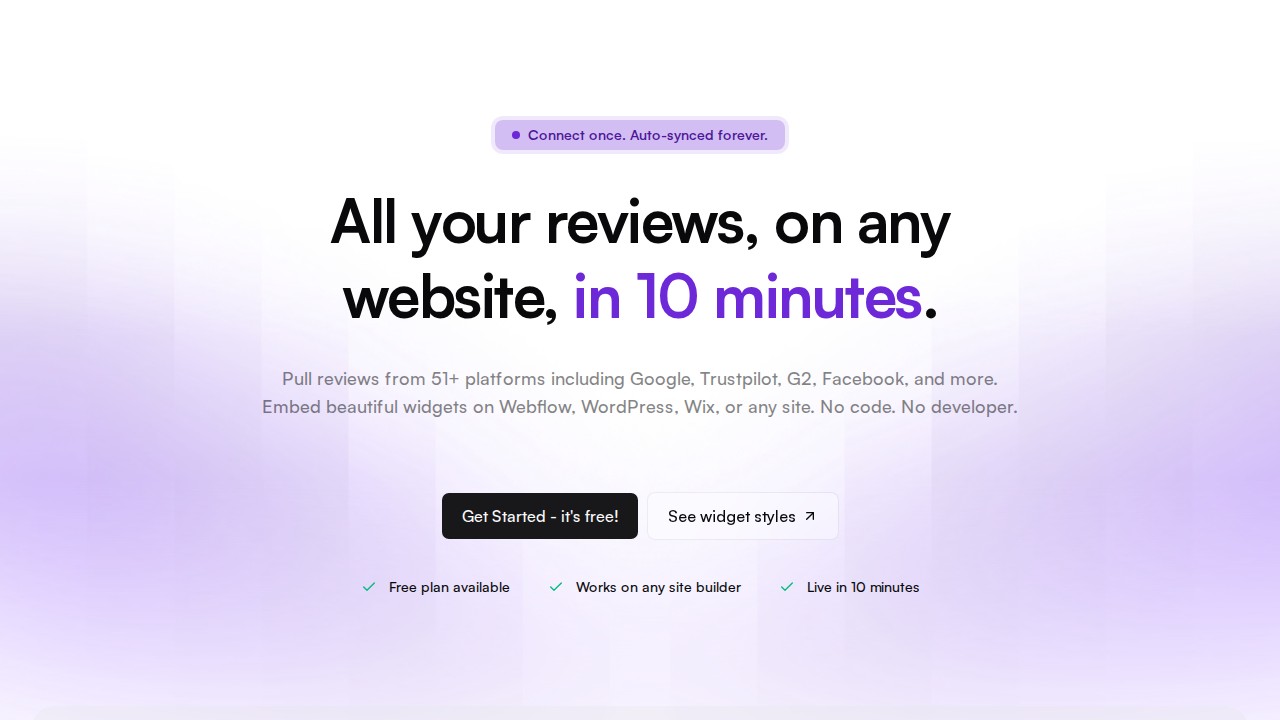
Bragly is the best GatherUp alternative when location-level reputation operations are only part of the work. GatherUp helps teams request and monitor reviews. Bragly helps them bring public reviews, direct testimonials, video submissions, and other customer voices into one place, then publish the right proof where visitors need it on the website.
That is a useful distinction for an agency showing client results on a service page, a SaaS company placing G2 feedback near pricing, a local business using Google reviews on a booking page, or an ecommerce brand adding product proof to a landing page. Teams that need to sync customer reviews into one dashboard can keep the collection work orderly before deciding where each proof item belongs.
Bragly currently connects to 47+ review sources and supports direct collection forms, including video submissions. Its free plan allows up to 100 reviews; Pro starts at $14 per month and Business starts at $67 per month. Its testimonial widgets let a team use a compact trust badge near a call to action, a carousel on a homepage, a review grid on a dedicated proof page, or a single quote in a campaign. The guide to displaying reviews on a website can help map that proof to the pages visitors use.
This is not the closest one-for-one replacement when multi-location listings, NPS programs, and client white labeling are the whole plan. GatherUp, Birdeye, Grade.us, and BrightLocal stay closer to that operating model. Choose Bragly when the problem is bigger than collecting reviews: you want an orderly way to show customer proof across the pages that influence a decision.
Best for: Agencies, SaaS companies, local businesses, ecommerce brands, and enterprises that need to collect proof from several sources and publish it across their websites.
2. Birdeye: Best for enterprise multi-location reputation

Birdeye is the stronger GatherUp alternative when the next requirement is a wider enterprise platform for a large location footprint. Its current product menu spans reviews, listings, social, search visibility, marketing automation, customer-experience insights, messaging, surveys, ticketing, and reporting. That breadth can make sense when reputation is one part of a larger location-marketing and customer-experience program.
The important question is scope. GatherUp already handles serious multi-location reputation work, including review collection, monitoring, feedback, and agency programs. Birdeye makes more sense if the organization needs to join those functions to a larger cross-location stack, especially where listings, messaging, and marketing need to share the same operating view. This online reputation management guide is a useful way to separate review activity from the wider reputation work around it.
It is also a more enterprise-shaped purchase. Birdeye presents its platform through sales conversations and industry packages rather than a simple self-serve price card. That is worth keeping in mind before treating it as a cheaper alternative. The value lies in fewer disconnected systems and more location-level coordination, not in a lighter version of GatherUp.
Choose Birdeye when the team is ready to move from review management into a broader multi-location customer-experience system. If you mainly want review requests, public proof, or a compact client service, its breadth may be more than you need.
Best for: Multi-location organizations that need reviews, listings, customer experience, messaging, and reporting to work from a shared enterprise platform.
3. Podium: Best for message-led local lead conversion
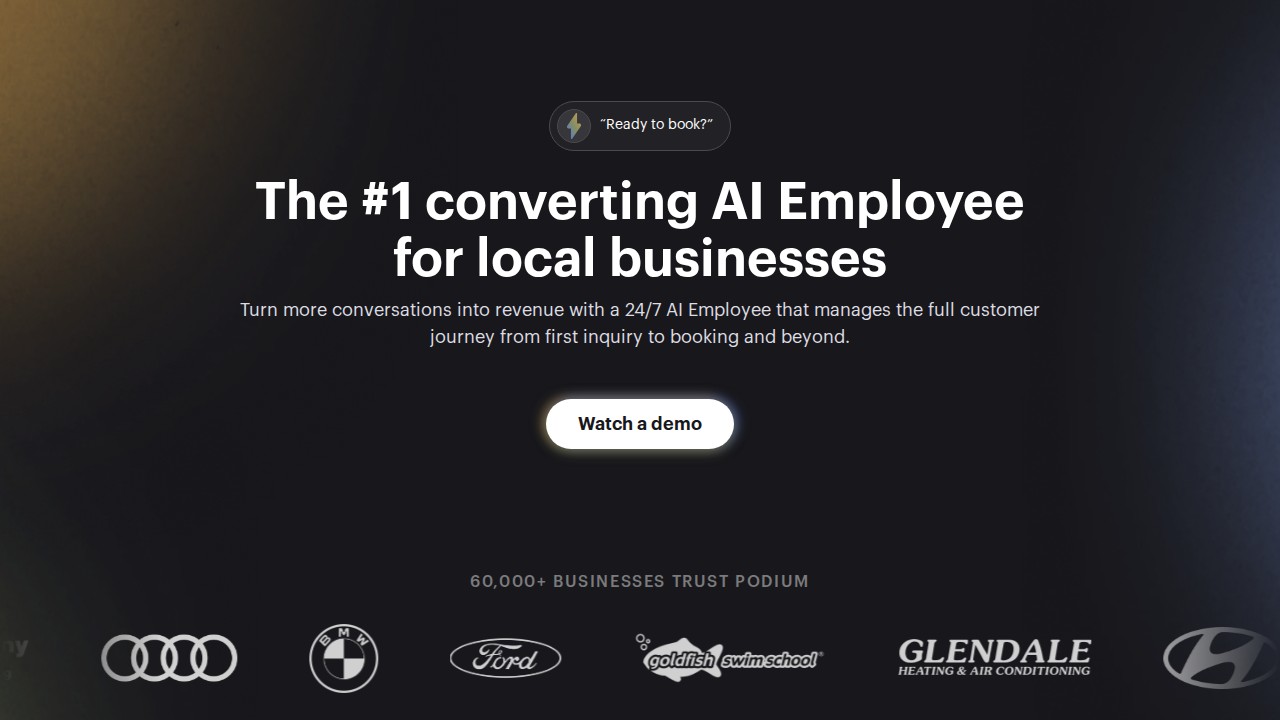
Podium is a different sort of GatherUp alternative. It is most useful when the reason for asking for more reviews is tied to a bigger customer-conversation problem: missed calls, slow follow-up, unbooked appointments, payments waiting on a response, or leads split across too many inboxes.
Its current platform places reviews next to texting, phones, a shared inbox, website chat, payments, text campaigns, and an AI Employee built around customer conversations. That puts a review request inside a communication workflow, rather than treating review management as the main operating category. For a home-service team, retailer, dealership, or appointment-based business, that shift may fit the way customers actually move from a question to a purchase.
Podium is not the obvious pick for an agency that needs a white-label reputation service for many client brands. It is also not a specialist local SEO toolkit. Its advantage is the chance to make review generation part of a faster response and conversion process.
Choose Podium when the team is trying to reduce missed conversations and create more repeatable follow-up around reviews, appointments, payments, and lead intake. Ask sales for a current plan proposal, since its public pricing page does not list fixed package prices.
Best for: Local and appointment-driven teams that want reviews connected to texting, phone calls, web chat, payments, and lead follow-up.
4. Grade.us: Best for white-label agency review services
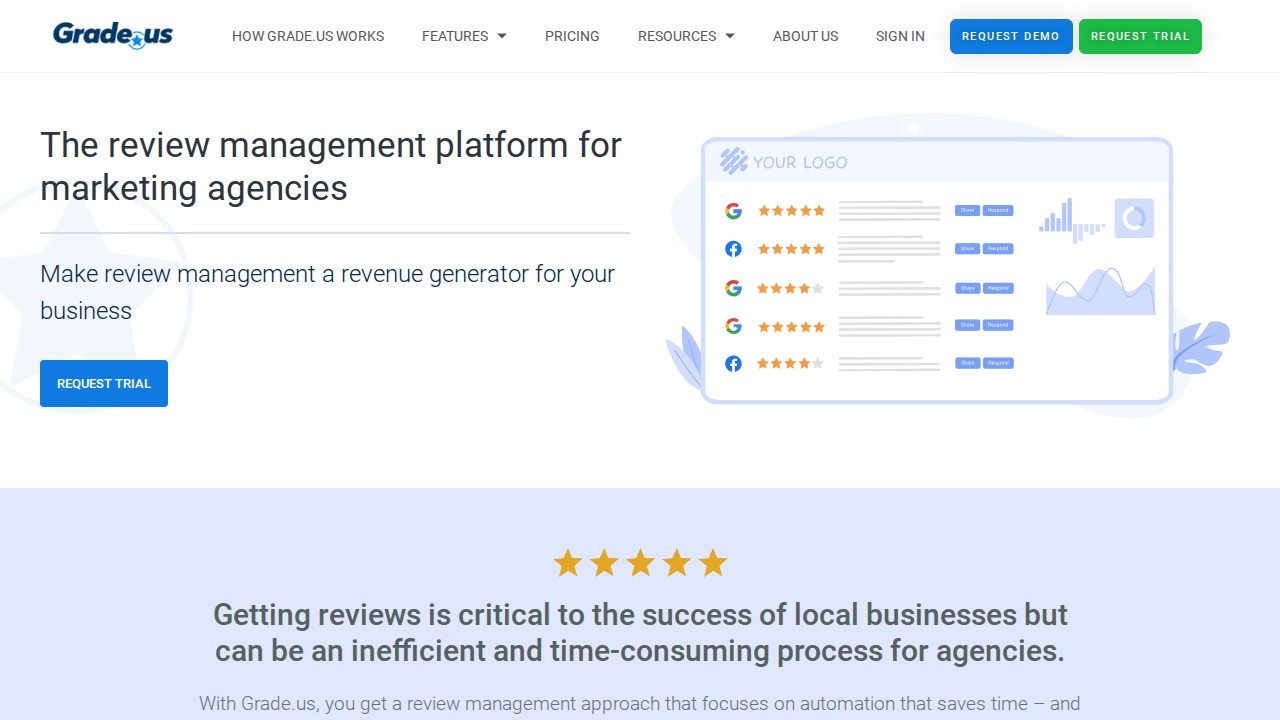
Grade.us is the clearest GatherUp alternative for an agency that wants review management to be a branded client service. Its site describes a platform for marketing agencies, with white-label reporting, custom domains and branding, client and location organization, review generation, monitoring, reporting, review marketing, and automation.
That focus changes the buying decision. A local business buying for its own location may prefer a product that puts daily customer communication or location visibility first. An agency needs a system that is easy to onboard, easy to report on, and credible when a client sees it under the agency’s brand. Grade.us is designed around that commercial relationship.
GatherUp also serves agencies and offers white-label options, so the choice should come down to the service you plan to sell. Compare the client setup flow, reporting format, brand-control limits, number of locations, request channels, and review-display needs before switching. An agency review upsell needs a process that is easy to repeat without making the client experience feel generic. Tools built for teams and agencies can also matter when several people need clear access and client ownership.
Current Grade.us pricing details should be confirmed directly before purchase because the public plans page is in transition. Its site does offer a 14-day trial, which gives an agency a reasonable way to test its white-label workflow with a real client configuration before committing.
Best for: Agencies and consultants that want a dedicated, branded review-management service for several clients and locations.
5. BrightLocal: Best for local SEO operations with review work
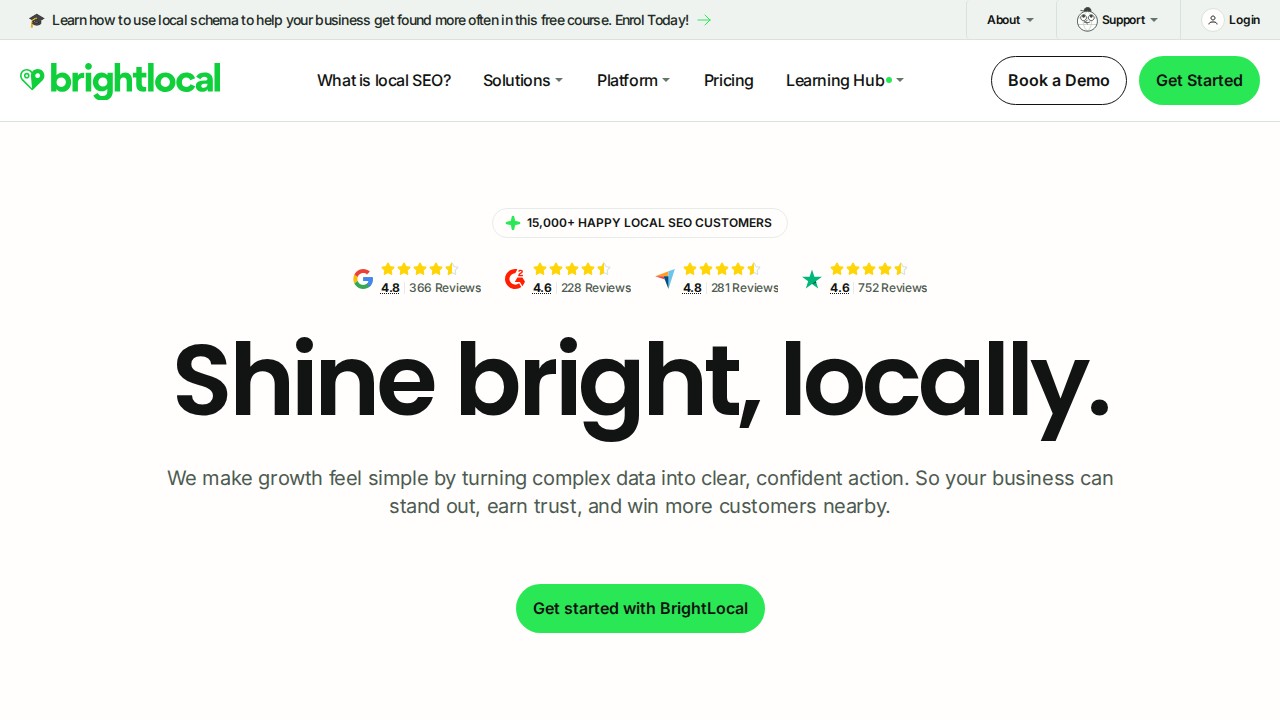
BrightLocal is the best GatherUp alternative when the real problem is local search performance, not reputation management alone. Its current Grow plan includes review monitoring and responses across multiple sites, email, SMS, and in-store review requests, and website publishing. Those features sit alongside local rank tracking, search grids, Google Business Profile work, listings, citations, audits, and local SEO reporting.
That combination fits a local marketer who needs to explain why visibility moved, where a location ranks, whether business details are accurate, and how review activity is affecting local search. GatherUp provides a deeper reputation-centered workflow. BrightLocal brings reputation into a wider local SEO operating view.
The trade-off is focus. If the team needs a large review-request program, NPS surveys, detailed reputation reporting, and agency white-label delivery, GatherUp or Grade.us may stay closer to the brief. If review activity is only one lever in a location’s search-performance program, BrightLocal is easier to justify.
BrightLocal now uses location-based pricing that is shown through a plan configurator and sales conversation. Test the plan against the number of locations and the reporting needs you actually have, rather than assuming an old entry price will apply.
Best for: Local SEO teams, agencies, and location-based organizations that want to manage rankings, listings, citations, and review work in the same operating view.
How to choose a GatherUp alternative
Start with the source of the friction. If review collection is working but the proof never makes it onto the pages where visitors decide, choose a public-proof platform such as Bragly. If the pressure comes from a large location network, customer experience, listings, and cross-location reporting, look at Birdeye. If lost text conversations or slow follow-up are costing leads, Podium is the more relevant category.
Agencies should make a separate decision. Do not choose on the basis of a review-request feature list alone. Map the client onboarding steps, number of managed locations, white-label controls, recurring reporting, review-display needs, and ownership of client assets. Grade.us is designed around that agency delivery job. GatherUp may still be right if its existing workflow is already familiar and the team needs its survey, feedback, or review-defense features.
Local SEO teams should look at BrightLocal when rank tracking, listings, citations, and review work have to tell one story in a client report. The aim is not to find the tool with the longest list of features. It is to remove the extra handoffs in the workflow you run every week.
Before a migration, test one live location or client. Send a review request, connect the key review source, check a response workflow, export a report, and place a widget or proof block on a real page. That short test often exposes a mismatch that a feature grid does not.
Also check the handoff details that become painful later: who owns the connected review accounts, whether existing templates can be recreated, how old review data is exported, and what happens when a client or location leaves the account. A platform can look right in a demo and still create work if those answers are unclear.
Final Thoughts
GatherUp remains a capable choice for teams that want review generation, feedback, monitoring, surveys, and agency or multi-location reputation work in one product. The better alternative depends on what comes next. Bragly fits teams turning customer proof into a broader website asset. Birdeye fits a larger enterprise location program. Podium fits a conversation-led conversion model. Grade.us fits a white-label agency service, while BrightLocal fits local SEO operations that include review activity.
Pick the platform that makes your next recurring task easier. Then use the trial or demo to prove that it works with the review sources, locations, client roles, and web pages you already have.
What is GatherUp used for?
GatherUp is a reputation-management platform used for automated review requests, review monitoring, feedback and NPS surveys, review replies, reporting, widgets, and related local-business or agency workflows. Its public plans also include email and SMS request credits, review-site monitoring, and integrations.
Does GatherUp offer a free plan?
No. GatherUp offers a 14-day trial, while its current public monthly plan starts at $99 for one location. Multi-location pricing starts at $60 per location for a two-to-ten-location account. Check its pricing page before buying because location count and add-ons affect the final cost.
What are the best GatherUp alternatives for agencies?
Grade.us is the focused pick for an agency that wants branded review-management delivery, client organization, reporting, and white-label controls. Bragly also fits agencies that need to collect and display public proof across client sites. The right choice depends on whether the central job is client reputation operations or website proof.
What are the best GatherUp alternatives for multi-location businesses?
Birdeye is the stronger fit for an enterprise multi-location platform that reaches into reviews, listings, customer experience, marketing, messaging, and reporting. BrightLocal is useful when locations need review work tied closely to rankings, listings, citations, and local SEO reporting.
Can a GatherUp alternative show reviews on a website?
Yes. Bragly is built around collecting, organizing, and displaying reviews and testimonials across a website. GatherUp, Grade.us, and BrightLocal also have website review-display options, while the best choice depends on whether website proof, agency delivery, or local-search operations is the main goal.