

Looking for a Shorter Overview?
AI Summary
Key Moments
Bragly excels at aggregating reviews
It imports public reviews from 51+ platforms and offers 30+ widgets for flexible website display.Senja prioritizes testimonial organization
It collects text and video testimonials with tagging, transcription, and searchable reuse features.Trustmary integrates feedback programs
It combines reviews with surveys, NPS, CSAT, and analysis for deeper customer insight.Socialjuice focuses on video-first sharing
It captures video testimonials designed for social media reuse alongside website display.Endorsal combines automated review requests, imported proof, website widgets, social sharing, and an agency partner route. That is a useful mix, but it also means an alternative should be chosen for the specific part of the workflow you want to change. A team that needs more review sources has a different problem from one that wants richer video stories or a cleaner client handoff.
Endorsal’s current plans also make contacts, monthly visitors, messages, properties, and video capacity part of the buying decision. If those meters no longer fit how your company collects and uses customer feedback, it is worth looking at the workflow rather than comparing headline prices alone.
I compared five Endorsal alternatives around that practical question. Bragly is the best fit when public reviews need to become flexible website proof across many sources. Senja is stronger for collecting and organizing customer stories. Trustmary moves toward feedback programs, Shapo keeps testimonial operations focused, and Socialjuice puts more weight on video evidence and social sharing.


Quick Comparison
| Tool | Best for | Collection and import focus | Starting point to know |
|---|---|---|---|
| Bragly | Review imports, display flexibility, and agency handoff | Imports from 51+ public platforms, plus text and video collection | Free plan for up to 100 reviews; Pro is $14 per month |
| Senja | Text and video testimonial libraries | Forms, video collection, imports, organization, and sharing | Free tier includes up to 15 testimonials; paid plans start at $29 per month |
| Trustmary | Reviews plus customer feedback programs | Review imports, widgets, surveys, testimonials, and analysis | Free starting plan with a limited active-widget allowance |
| Shapo | A focused testimonial workspace | Forms, review imports, video, widgets, and Walls of Love | Free tier includes up to 10 testimonials; Pro is $29 per month |
| Socialjuice | Video-first proof and social reuse | Custom forms, video testimonials, widgets, review gates, and shareable assets | Free starting option is promoted on its site |
Key Takeaways
- Choose Bragly when review sources and page-level display are the priority. It is built for turning public feedback from many platforms into fresh, filtered proof across a website.
- Choose Senja for story-led testimonial collection. It works well when text and video testimonials need tagging, searching, repurposing, and thoughtful presentation.
- Choose Trustmary to connect reviews with feedback programs. It is the better route when surveys, customer experience signals, and review display belong in the same decision.
- Choose Shapo for a focused testimonial workspace. It keeps forms, imports, video evidence, widgets, and Walls of Love in a focused product.
- Choose Socialjuice for video proof that should travel to social channels. Its video-first approach suits teams that want to reuse customer evidence beyond the website.
1. Bragly
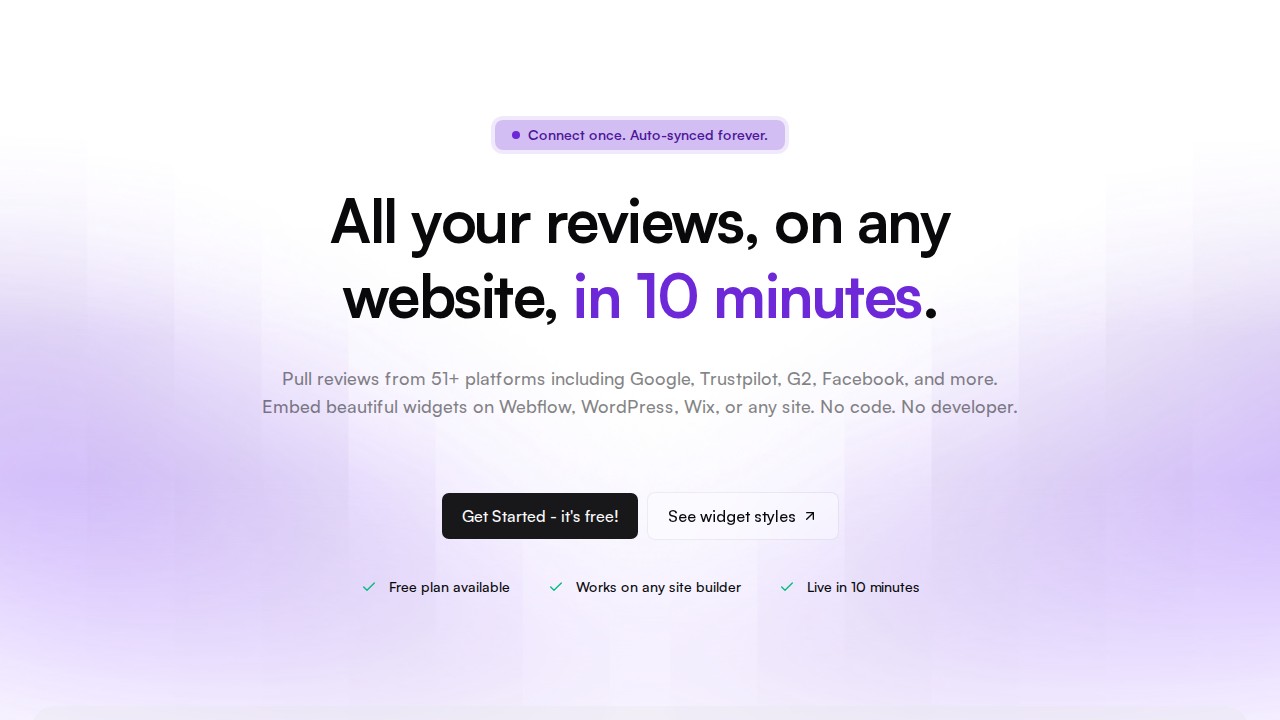
Bragly is my first choice for an Endorsal switch when the goal is to make existing public reviews work harder across a site. Endorsal can collect and display testimonials, but many teams already have proof spread across review networks, marketplaces, app directories, and social channels. Bragly brings those sources into one place, lets you filter them, and gives you multiple ways to put the right proof on the right page.
The current Bragly product supports imports from 51+ platforms, including sources used by local companies, SaaS teams, travel and hospitality brands, e-commerce stores, and professional services. You can also collect fresh text or video reviews with forms. That matters when the switch is not about replacing one collection form, but about joining old public feedback with new customer stories in one library.
Its widget library has more than 30 named layouts. A homepage carousel, pricing-page badge, landing-page single review, testimonial grid, or floating proof display can all pull from the same dashboard. Each widget can be filtered by rating, source, keyword, or tag. The result is more useful than treating every review as interchangeable copy.
| Where Bragly differs from Endorsal | What that means in practice |
|---|---|
| 51+ review sources | Public proof from more places can live in one current library. |
| 30+ widget layouts | Different pages can use different proof formats without rebuilding the collection workflow. |
| Review analysis and reply assistance | Teams can read patterns in customer feedback and prepare replies from the same workspace. |
| Collaborators and ownership transfer | Agencies can set up a project with a client, work together, then hand over reviews, forms, widgets, analytics, and settings. |
Bragly also has a free plan for up to 100 reviews, while Pro starts at $14 per month. That gives teams room to establish a proof system before they commit to a visitor-metered plan. You can see how those formats work on the testimonial widget page, including layouts for a hero section, pricing page, testimonial page, and sidebar.
Choose Bragly if your Endorsal replacement needs to be a broader review operation. It is especially useful for teams managing multiple review sources, agencies doing setup work for clients, SaaS companies surfacing directory feedback, local companies displaying public reviews, and e-commerce brands combining marketplace proof with collected stories. The teams and agency workflow is worth a close look if ownership and collaboration are part of your decision.
2. Senja

Senja is a good Endorsal alternative for teams that think in customer stories first. Its workflow centers on importing testimonials, collecting new text and video responses, tagging and filtering them, then turning the strongest moments into website widgets, Walls of Love, email proof, and social assets.
The video path is a main difference. Endorsal includes video limits tied to plan allowances. Senja emphasizes native text and video collection, video transcription, organization, and sharing. Its current Endorsal comparison page says the free tier supports up to 15 text or video testimonials, while paid plans remove the collection limit and start at $29 per month.
Senja also puts a lot of attention on finding the right customer quote later. Filters, tags, transcripts, and search can help a marketer locate a story that fits a new landing page, campaign, or sales deck. That is useful when a testimonial library needs to serve many messages instead of simply filling a single reviews section.
| Where Senja differs from Endorsal | What that means in practice |
|---|---|
| Testimonial-first organization | Customer stories can be sorted, searched, and reused by theme or customer type. |
| Video collection and transcription | Teams can work with spoken feedback without manually reviewing every recording from the start. |
| Social Proof Studio | Testimonials can move into website, email, and social formats from one collection. |
| Free plan for 15 testimonials | A smaller team can test a story-led workflow before moving to a paid plan. |
Choose Senja when video and text testimonials are the heart of the job. It is a strong fit for product marketing teams, course creators, SaaS companies, agencies, and consultants who want an organized bank of customer evidence. It is less of a review-operations choice when the main goal is importing the widest possible range of public feedback and monitoring it over time.
3. Trustmary

Trustmary takes the Endorsal alternative conversation in a different direction. It can import and display reviews, but it also reaches into feedback collection, NPS, CSAT, review analysis, and website conversion work. That makes it worth considering when a company is not only asking, “How do we show more proof?” but also, “What are customers telling us, and what should we do about it?”
Its current Endorsal comparison page promotes review imports from sources such as Google, Facebook, Yelp, Tripadvisor, G2, and Capterra. It also promotes a free starting plan and a widget path for getting existing reviews onto a website. The product navigation adds testimonial forms, video testimonials, feedback collection, NPS, CSAT, and analysis into the larger picture.
For an Endorsal user, that means Trustmary can make sense when review display should sit beside ongoing customer experience work. A marketing team may still use a widget, while a customer team gathers feedback or measures satisfaction with a related program.
| Where Trustmary differs from Endorsal | What that means in practice |
|---|---|
| Feedback and survey tools | Review work can connect to NPS, CSAT, and customer feedback programs. |
| Review analysis path | Customer feedback can inform operational decisions, not only a marketing page. |
| Free widget starting point | A team can begin with review display before expanding its program. |
| Review imports and automatic updates | Existing third-party feedback can be used without rebuilding a testimonial library from zero. |
Choose Trustmary if the next step after collecting a testimonial is learning from the wider customer base. It fits teams with customer experience, support, reputation, or marketing stakeholders who need the same feedback to serve more than one purpose.
4. Shapo
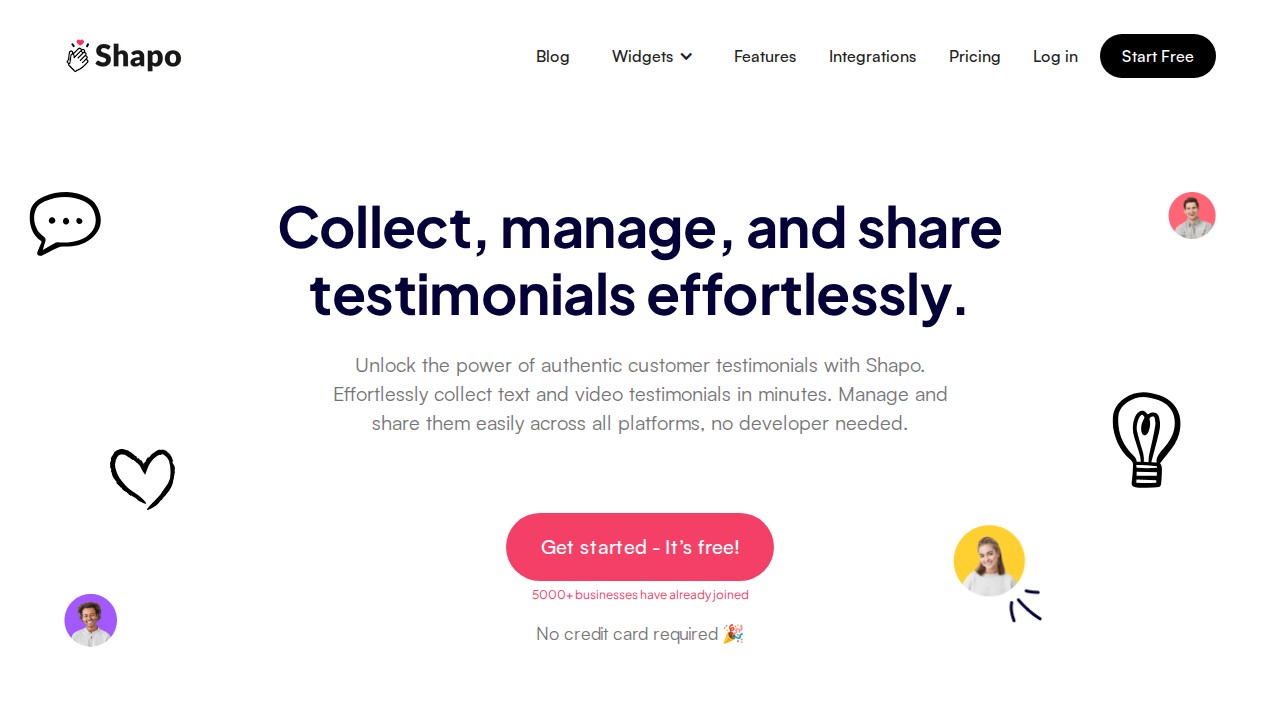
Shapo is a focused option for an Endorsal user who wants one testimonial workspace. Its core pattern is easy to understand: collect testimonials through forms, import existing feedback, organize it in one place, and show it with widgets or a Wall of Love. It also promotes text and video collection, which makes it a capable route for teams that want richer evidence without moving into a bigger feedback program.
Its current Endorsal comparison page presents a free tier for up to 10 testimonials, unlimited forms and widgets, and a $29 per month Pro tier. The same page promotes imports from 20+ sources, video testimonials, email campaign invites, and a single workspace for collection, management, and display.
The main appeal is focus. Shapo is not trying to become a full customer-feedback measurement suite. It is built around keeping customer proof organized and ready to publish. That can be attractive if Endorsal’s pricing meters are the issue but you still want a product that stays close to testimonial collection and display.
| Where Shapo differs from Endorsal | What that means in practice |
|---|---|
| Free plan with a small testimonial limit | A team can establish a simple proof workflow before deciding on a paid plan. |
| Unlimited forms and widgets | Collection and display formats do not need to be rationed at the start. |
| Testimonial workspace model | Forms, imported feedback, video, and display stay close together. |
| 20+ import sources promoted | Existing public proof can be brought into the workspace alongside collected stories. |
Choose Shapo if you want to replace Endorsal with a product that remains tightly focused on collecting, organizing, and showcasing testimonials. It is a sensible route for marketers, website builders, and product teams that value a small learning curve and do not need a broad feedback-analysis system.
5. Socialjuice

Socialjuice is the video-first choice in this list. It combines customizable review forms, video testimonial capture, organization, widgets, review gates, and assets designed for social sharing. That gives it a different role from Endorsal’s automated request and website-display mix.
The current Socialjuice site describes its purpose as capturing, managing, and displaying reviews and video testimonials. Its Endorsal comparison page adds forms, organization with search and filters, customizable widgets, and a designer for turning reviews into social media images. It promotes a free start, although the exact paid plan price was not shown on the comparison page reviewed for this article.
This is useful when a customer story should not end at a wall of testimonials. A short video can become a page widget, a social post, a sales asset, or a campaign ingredient. That approach is well suited to teams with active social channels and a steady need for customer-created evidence.
| Where Socialjuice differs from Endorsal | What that means in practice |
|---|---|
| Video-first positioning | Customer voices can become a central part of the proof program. |
| Review-to-image designer | Strong quotes can be repurposed for social distribution without a separate design workflow. |
| Review gate and shareable assets | Collection and publication can be planned for more than the website alone. |
| Custom forms and widgets | Teams can collect proof in a branded flow and then place it on site pages. |
Choose Socialjuice when video testimonials and social reuse are higher priorities than broad review aggregation or survey work. It can work well for brands, educators, agencies, and SaaS teams with a clear customer-story strategy and an audience that responds to people rather than static star ratings.
How to Choose an Endorsal Alternative
Do not start with a brand name. Start with the bottleneck in the proof system. If Endorsal’s automated requests work well but the contact or visitor allowances do not, compare pricing architecture and room to grow. If review collection is fine but the website evidence feels limited, compare widget depth, filtering, and source imports. If client delivery is the problem, compare collaboration, white-label needs, and ownership transfer.
| Your current friction | The better evaluation question | Tools to examine first |
|---|---|---|
| Reviews are scattered across public platforms | How many sources can we import and keep fresh on the site? | Bragly, Trustmary, Shapo |
| Customer stories are hard to organize and reuse | Can we collect video and text evidence, tag it, search it, and repurpose it? | Senja, Socialjuice, Shapo |
| Feedback needs to inform the business, not only a website | Does the tool connect reviews to surveys, satisfaction, and analysis? | Trustmary, Bragly |
| A web agency needs cleaner client delivery | Can collaborators work in the system and can ownership move cleanly at handoff? | Bragly, Endorsal’s partner model |
| Proof needs to appear on several page types | Can widgets be filtered and shaped for a homepage, pricing page, landing page, and review hub? | Bragly, Senja, Shapo |
Before moving any data, make a list of the review sources you already use, the pages where proof needs to appear, and the people who will own the workflow. That list is more useful than a simple feature comparison because it shows whether your next platform is really a testimonial tool, a review-management system, a feedback program, or an agency delivery product.
If public reviews are your starting point, it can also help to understand the broader category of review management software. If the bigger issue is that proof sits across different accounts, this guide to bringing customer feedback into a single review dashboard gives useful context before you migrate.
Final Thoughts
Endorsal remains a capable option for automated review requests, public proof, widgets, social sharing, and agency resale. The right alternative depends on what needs to improve next.
Choose Bragly when you need a wider review-import system, flexible page-level display, analysis, and a path from setup to client handoff. Choose Senja when organized text and video stories are the priority. Choose Trustmary when reviews should sit alongside feedback measurement. Choose Shapo when a focused testimonial workspace is enough. Choose Socialjuice when video evidence needs a life on social channels as well as on a website.
The best switch is the one that makes customer proof easier to collect, easier to find, and easier to place where people make decisions. If your next task is page placement rather than collection, see Bragly’s guide to displaying reviews on a website. If responding to what customers say is part of the job, AI-assisted review replies can keep that work connected to the same proof system.
Frequently Asked Questions
What should I look for when moving away from Endorsal?
Start with the workflow you actually need to change. Compare review-source imports, collection forms, email or SMS requests, video capacity, widget formats, public-review updates, collaborator access, agency requirements, and pricing meters. A tool can look cheaper at the first plan but become a poor fit if its limits do not match your contacts, visitors, or proof strategy.
Which Endorsal alternative is best for managing reviews from many sources?
Bragly is the strongest choice in this list for teams that want public reviews from many platforms in one place, then want to filter and display them in different widget styles across a website. Trustmary and Shapo are also worth reviewing when imported proof is the main requirement.
Which option is best for video testimonials?
Senja and Socialjuice both put more weight on video testimony than a standard review-widget workflow. Senja is a good fit when videos need rich organization, filtering, transcription, and reuse. Socialjuice is a better fit when those videos should also become social assets.
Can an agency use these tools for client work?
Yes, but the workflow matters. Endorsal has a dedicated agency partner and white-label route. Bragly gives agencies and teams collaborator access plus an ownership-transfer path for completed client projects. Other tools may be suitable for client work, but their agency access, workspaces, and handoff model should be confirmed before committing.
Do I need a testimonial tool or review management software?
Choose a testimonial tool when your main goal is collecting, organizing, and publishing selected customer stories. Choose review management software when you also need to import public reviews, monitor feedback, analyze themes, manage responses, and place proof across several parts of a website. Many teams need both jobs, but one should be the main buying reason.