

Looking for a Shorter Overview?
AI Summary
Key Moments
Choosing proof based on visitor action
Select an alternative based on whether you need live notifications or permanent reviews on your site.Differences in pricing allowance models
Understand that each tool measures usage differently—visitors, notifications, or impressions.Bragly for enduring customer proof
Use Bragly when lasting, page-level review displays and management are critical.Nudgify for ecommerce-specific prompts
Leverage Nudgify when real-time social proof combined with shopping nudges is necessary.ProveSource is a sensible choice when you want visitors to see recent activity while they are deciding.
The reason to switch is usually more specific than wanting “better social proof.” You may be hitting a monthly unique visitor limit before you have much traffic, need a notification that can do more than repeat a recent event, want deeper test controls, or want customer proof that stays visible after a popup is gone.
I found that the most useful way to compare ProveSource alternatives is to separate the delivery mechanism from the proof itself. A live notification is a short signal. A review widget can sit near your pricing or product copy for months. A low-stock prompt changes the shopping decision in a different way again.


The five tools below cover those different jobs. Bragly is my first choice when reviews and customer stories need a lasting place on the website. Fomo, TrustPulse, Nudgify, and WiserNotify are closer matches when real-time activity, campaign settings, or shopping nudges are the main requirement.
Quick comparison
| Tool | Best for | What changes from ProveSource | Pricing posture | Choose it when |
|---|---|---|---|---|
| Bragly | Reviews and customer stories that remain on the page | Replaces short-lived notices with imported reviews, collection, moderation, and many page-level displays | Free up to 100 reviews; Pro from $14/month | A visitor needs to inspect real proof on a homepage, pricing page, product page, or testimonials page. |
| Fomo | Direct live-activity replacement | Adds a distinct live-plus-inline approach and notification-based allowance | From $25/month for 8,000 notifications | Live events, page rules, integrations, and optional inline proof are the focus. |
| TrustPulse | Simple campaigns with a lower annual entry price | Offers a compact activity-campaign builder and visitor allowances | Listed from $5/month billed yearly promotional rate | You want basic event capture, targeting, and unlimited campaigns without a bigger notification suite. |
| Nudgify | E-commerce behavior nudges | Adds stock, delivery, discount, and order-timing prompts beside sales and review notices | From $9/month for 10,000 impressions | A store needs proof and shopping prompts at the same decision point. |
| WiserNotify | Template breadth, testing, and many event sources | Puts popup and inline formats, A/B tests, and broad integrations in one notification system | Basic from $59/year; Pro from $16/month | You need more event inputs, testing, and campaign variations. |
Key takeaways
- Start with the meter. Visitor, notification, and impression allowances are not interchangeable. Compare the resource your site will actually consume.
- Choose Bragly for proof that stays. It is the stronger fit for imported reviews, fresh customer stories, and flexible displays that keep working after a visitor has dismissed a popup.
- Choose Fomo for direct event notifications. It is a close match for live customer activity with a different product experience and optional inline proof.
- Choose TrustPulse or Nudgify for a specific delivery model. TrustPulse focuses on compact activity campaigns, while Nudgify ties proof to stock, delivery, discounts, and checkout behavior.
- Choose WiserNotify for template breadth and testing. It fits teams that need popup and inline formats, broader event inputs, goal tracking, and experiments.
1. Bragly
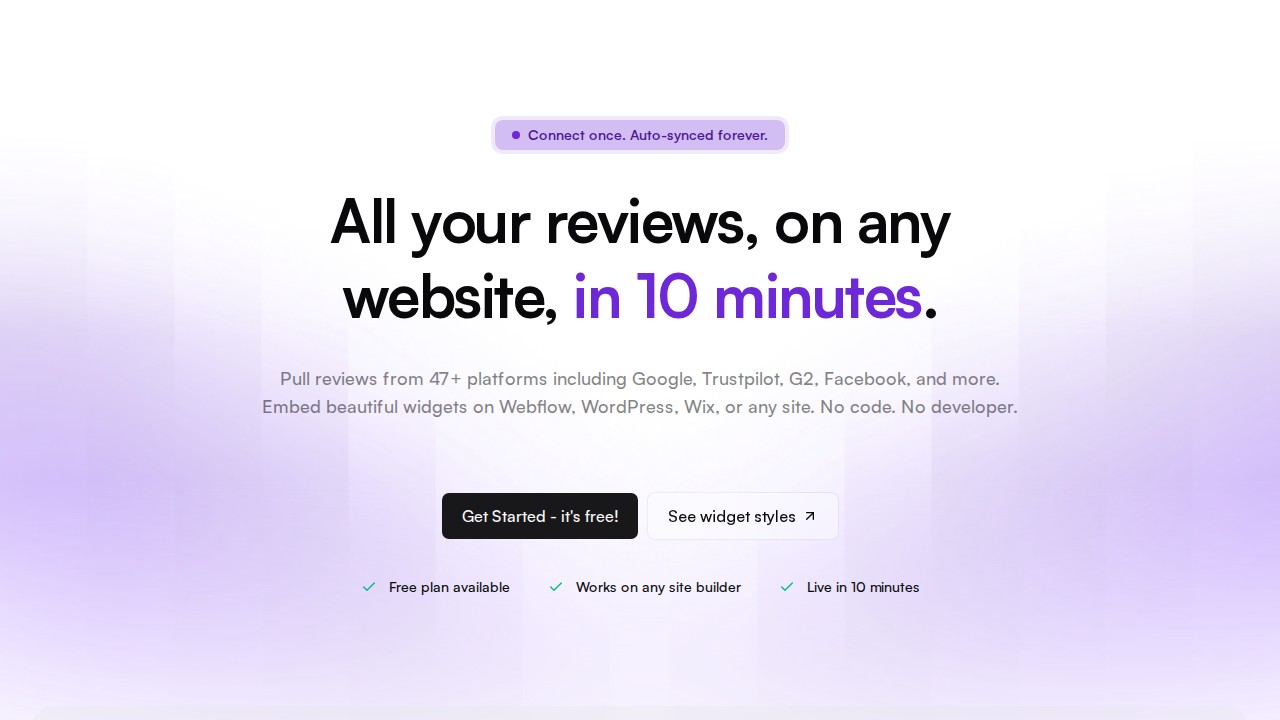
Bragly is the ProveSource alternative I would start with when the actual problem is not a lack of activity popups. It is a lack of customer proof that a visitor can read at their own pace. ProveSource can show a recent event well. Bragly handles the reviews, testimonials, collection, and page placement that should still be useful after that event has disappeared.
That distinction matters when a business has feedback spread across public sources. A SaaS team may have G2 and Capterra reviews. An e-commerce brand may have Shopify, marketplace, Google, and Trustpilot reviews. An agency may be responsible for proof across several client sites. A rolling notice gives someone a momentary signal, but it does not give them much context. A page-level display lets the visitor see the pattern for themselves.
Bragly connects to 47+ review platforms and supports fresh text and video collection, moderation, tags, highlights, analytics, AI-assisted review responses, Wall of Love pages, and 30+ widget layouts. Its free plan supports up to 100 reviews, while Pro starts at $14 per month. It is not a one-for-one replacement for a current-purchase notice, but it is a practical fit for teams that want imported proof and new customer stories in the same workspace.
| Where Bragly fits | What it gives you | Where ProveSource may still fit better |
|---|---|---|
| Reviews are scattered across public sources | 47+ source connections, moderation, tags, filters, and page-ready displays | You only need a live message from one current event feed. |
| A visitor needs proof that remains visible | 30+ layouts, Wall of Love pages, and widgets filtered by source, rating, keyword, or tag | A short activity notice is the entire campaign. |
| Teams own customer proof together | Shared work across reviews, widgets, forms, and analytics | Your account is only for notification campaigns. |
A testimonial widget can sit beside a CTA, on a product page, near a pricing explanation, or in a dedicated customer-stories area. That is valuable because it gives visitors enough time to read the evidence. You can show only the reviews that are relevant to that page instead of placing every event into one rotating format.
Bragly also fits when review work continues after display. Teams can use AI-assisted review responses to draft replies, review the text before sending, and keep the source material organized. For agencies and internal teams, teams and agency workflows support collaborators, client handoffs, and separate ownership rather than shared logins.
2. Fomo

Fomo is the closest direct ProveSource alternative in this list. Both products center on real customer activity and both can make that activity visible while somebody is browsing. If you are leaving ProveSource because you want another notification-first system, Fomo is the first product I would compare side by side.
Fomo offers live social proof notifications plus Fomo Inline, a format that places activity in the page rather than only over it. Its site also presents integrations for purchases, social activity, email sign-ups, support events, forms, product reviews, active visitors, and webhooks. That gives teams plenty of ways to send real activity into a campaign.
The practical difference is the allowance model. ProveSource prices around monthly unique visitors. Fomo’s Starter plan is listed at $25 per month for 8,000 notifications on one website. Its Business plan is listed at $75 per month and adds inline proof along with a higher notification allowance and unlimited websites. A site with steady traffic but relatively few events may experience those limits very differently.
| Fomo is a stronger fit when | Why it matters | Compare ProveSource closely when |
|---|---|---|
| You want a direct live-activity replacement | The core job remains customer events shown while someone browses | You prefer a visitor-based allowance rather than a notification allowance. |
| Inline proof is part of the plan | Fomo makes a permanent on-page format available on higher plans | A floating or streaming notice is enough. |
| Several page-specific messages matter | Page rules and notice settings can support distinct journeys | You need a simpler campaign setup. |
One caution applies to both products. A sales notice should come from a real sale, a signup from a real signup, and a visitor counter from current data. A tool can make a truthful event easy to see. It cannot make an invented event trustworthy.
3. TrustPulse
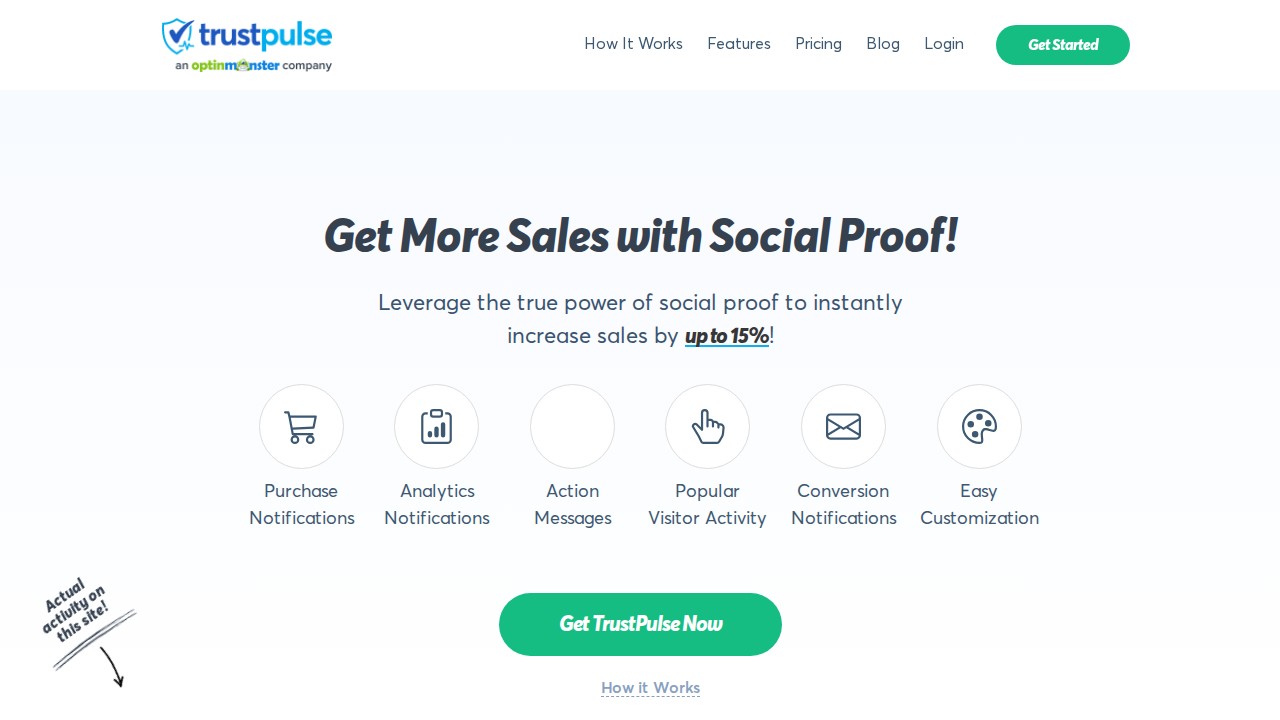
TrustPulse is a useful ProveSource alternative when you want a compact notification product with a lower advertised annual entry price and a familiar campaign model. Its named campaign types include recent activity, on-fire notices, analytics notifications, action messages, popular visitor activity, and conversion notifications.
The product’s appeal is simple. It tracks activity on the website, lets you choose where and when the message appears, and gives you controls for timing, position, display, and targeting. The company also calls out automatic event capture, Zapier, element clicks, and integrations with common website platforms. For a team that does not need a broad notification library, that can be enough.
TrustPulse lists Basic at $5 per month when billed yearly as a promotional price, with one site, 1,500 monthly unique visitors, and unlimited campaigns. Plus is listed at $10 per month yearly for two sites and 10,000 visitors, with analytics notifications and action messages. Pro is listed at $19 per month yearly for five sites and 25,000 visitors. Check renewal terms before using the promotional price as a long-term budget number.
| TrustPulse is a stronger fit when | Why it matters | Compare ProveSource closely when |
|---|---|---|
| You want a compact notification builder | Recent activity, on-fire, analytics, and action campaigns cover the planned work | You need more notification formats in one account. |
| An annual entry plan fits the budget | The advertised entry price starts below ProveSource Starter | You do not want annual billing or promotional renewal uncertainty. |
| Page targeting and event capture are enough | It covers a clear activity-campaign workflow without extra layers | You need a more expansive notification configuration. |
TrustPulse is not the answer when the site needs durable review management. In that case, compare a review management software workflow rather than another live-popup tool. The products solve adjacent problems, but they should not be evaluated as if they do the same work.
4. Nudgify
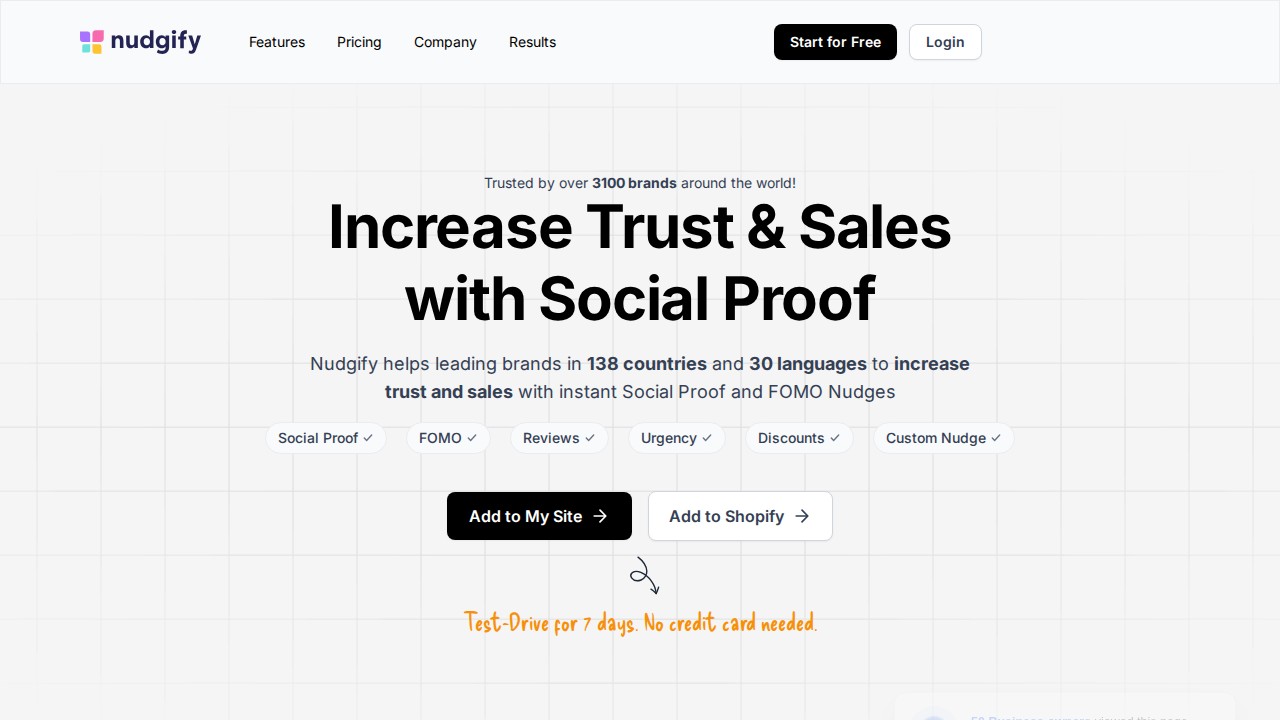
Nudgify is the better ProveSource alternative when real-time activity is only one part of the buying journey. It can show sales, sign-ups, reviews, and live visitor information, but it also includes low-stock, selling-fast, order-soon, free-delivery, discount, and custom nudges. That range is useful for an e-commerce store that wants proof and practical shopping prompts in the same system.
The difference is visible in the way each product thinks about the page. ProveSource is good at turning a recent event into a signal. Nudgify can do that, then add a reminder that only a few items are left, a free-delivery threshold, or a time-sensitive order message. That does not make it automatically better. It makes it more appropriate when those signals are true and genuinely useful to a buyer.
Nudgify lists Lite at $9 per month for 10,000 monthly impressions, unlimited websites, unlimited nudges, and three review inputs. Plus is listed at $29 per month for 90,000 impressions, Genius at $49 for 300,000, and Agency at $89 for 1,000,000. The wording matters here. An impression is not a unique visitor and not a notification. Estimate how often a nudge will appear before you compare its entry plan with ProveSource’s MUV allowance.
| Nudgify is a stronger fit when | Why it matters | Compare ProveSource closely when |
|---|---|---|
| Stock, delivery, or discount prompts matter | The product includes these prompts alongside social proof | Recent activity messages are the only need. |
| Your store needs e-commerce-specific nudges | It combines purchase proof with shopping behavior prompts | A campaign is not tied to an e-commerce decision. |
| Impression-based planning makes sense | The plan allows unlimited sites and nudges | You prefer to budget around unique visitors. |
There is a line worth keeping clear. Low-stock, selling-fast, delivery, and timing notices should report the real state of the offer. Honest urgency can help a visitor make a decision. A made-up deadline or stale inventory message will do the opposite.
5. WiserNotify
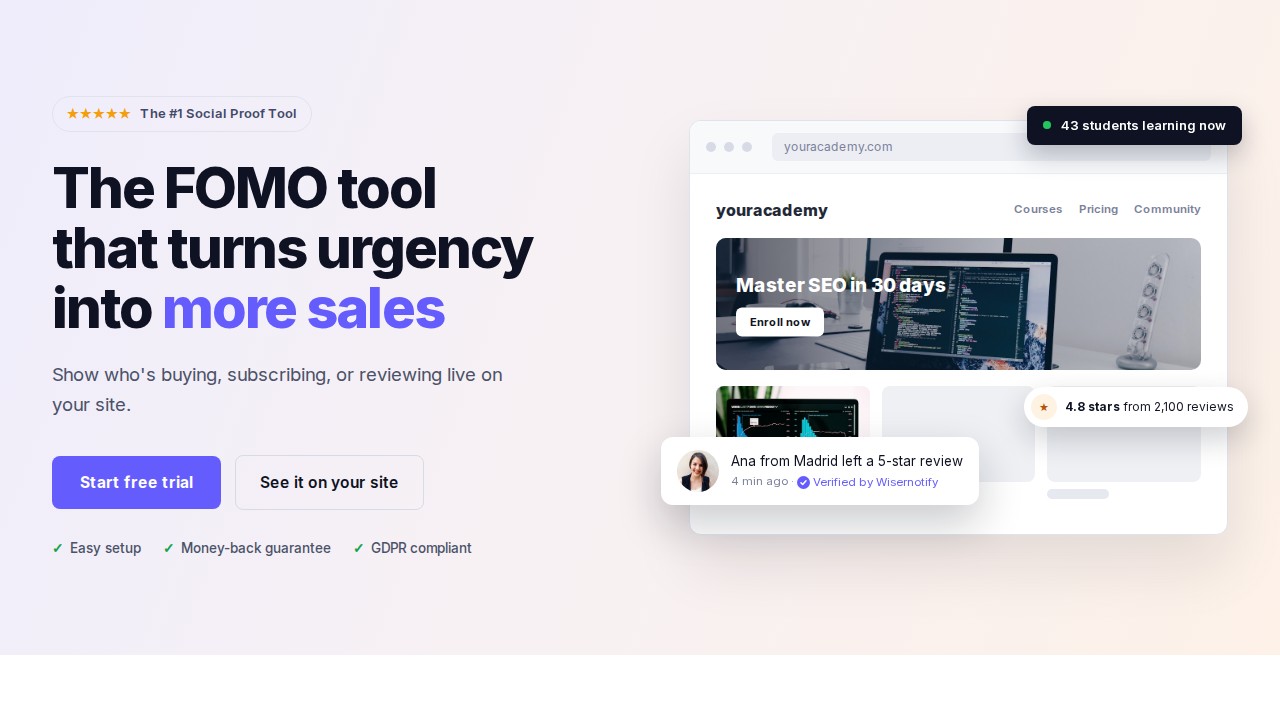
WiserNotify is the ProveSource alternative I would choose when the notification program needs more formats, more event sources, and more testing. It offers floating popups and inline social-proof widgets, then layers on template choices, goal tracking, A/B tests, targeting, custom CSS, and a broad integration list.
Its source inputs go beyond purchases and form submissions. The product describes support for sales, leads, bookings, reviews, chat, course enrollments, visitor activity, and custom API or webhook events. That makes it useful for a SaaS team, service business, course creator, e-commerce store, or agency that wants one notification system across several kinds of customer activity.
WiserNotify’s Basic plan is listed at $59 per year for 5,000 monthly visitors with a limited template set, unlimited notifications and impressions, multiple websites, and more than 200 integrations. Pro is listed from $16 per month and adds full templates, branding control, A/B testing, goal tracking, custom CSS, and one teammate. Growth begins at $65 per month and adds inline messaging, more staff seats, and higher visitor options.
| WiserNotify is a stronger fit when | Why it matters | Compare ProveSource closely when |
|---|---|---|
| You need popup and inline proof in one system | Both formats can be used across the site | Activity streams and notices are enough. |
| You will run tests and measure goals | Pro adds A/B testing and goal tracking | You need a simpler campaign workflow. |
| Many event sources feed the program | It connects sales, leads, bookings, chat, reviews, and webhooks | Most activity comes from a few existing integrations. |
For durable review proof, WiserNotify’s inline messages are still different from a full review workspace. If the job is bringing reviews from several public sources into one place, a single review dashboard is usually the better starting point. Notification events and review operations can work together, but they are separate jobs.
How to choose a ProveSource alternative
Start by listing the action you want a visitor to see. If it is a recent purchase, signup, download, visitor count, or other live event, compare Fomo, TrustPulse, Nudgify, and WiserNotify. If it is a customer opinion that should remain useful on the page, begin with Bragly instead.
Then compare the meter, not only the price. The entry plans may all look modest, but the allowances track different things. A growing site can run into a limit much sooner than expected if the wrong metric is used during planning.
| Tool | Primary allowance to watch | Ask this before you buy |
|---|---|---|
| ProveSource | Monthly unique visitors | How many unique people reach the pages where notices are active? |
| Fomo | Notifications per month | How many real events will create messages each month? |
| TrustPulse | Monthly unique visitors | Does the visitor allowance cover every active site and campaign? |
| Nudgify | Monthly impressions | How often will each nudge be seen across the customer journey? |
| WiserNotify | Monthly visitors | Will testing, inline formats, or extra integrations justify a higher tier? |
Finally, make honesty part of the setup. Use real events. Set a time window that matches the event. Do not show a stock warning after the stock has changed or a purchase message that is no longer representative of current demand. The best notification is one a visitor can believe without being pushed.
If you choose Bragly, plan where the proof should stay. The guide to displaying reviews on a website is a useful next step for choosing between a homepage carousel, pricing-page badge, product-page display, or dedicated review page. That page-level placement is often more valuable than trying to make one floating message carry the entire trust story.
Final thoughts
ProveSource is still a good product for turning real activity into visible social proof. Switching makes sense when its allowance model, delivery format, campaign controls, or proof type no longer match the work you need done.
Choose Fomo when you want the closest live-activity alternative. Choose TrustPulse when a focused notification tool and annual visitor plan fit the budget. Choose Nudgify when the site needs commerce and urgency prompts beside proof. Choose WiserNotify when testing, templates, inline messages, and many data inputs belong in the same campaign system.
Choose Bragly when the question is bigger than the next popup. Reviews and customer stories can become a permanent part of how a business earns trust online. That is a different job, and it needs a tool built for it.
Frequently asked questions
What is the best ProveSource alternative for proof that stays on a website?
Bragly is the stronger fit when reviews and customer stories need to remain visible on a homepage, pricing page, product page, service page, or testimonials page. It imports public reviews, collects fresh text and video proof, and offers flexible displays. ProveSource is closer to real-time activity notifications, which have a shorter life on the page.
Is Fomo cheaper than ProveSource?
Their entry plans use different meters. Fomo lists Starter at $25 per month for 8,000 notifications, while ProveSource lists a free plan for up to 1,000 monthly unique visitors and Starter at $24 per month billed yearly for 20,000 monthly unique visitors. Compare your expected event volume and traffic before treating either price as lower in practice.
Which ProveSource alternative has the lowest annual entry price?
TrustPulse lists Basic at $5 per month when billed yearly as a promotional rate, with 1,500 monthly unique visitors and unlimited campaigns. The offer is annual and the page notes that renewals are at the full price, so confirm the current checkout terms before you choose it.
Is Nudgify better than ProveSource for an online store?
Nudgify is the closer fit when a store needs low-stock, selling-fast, delivery, discount, and order-timing prompts alongside sales, sign-up, and review proof. ProveSource is a better comparison when the program is primarily about showing current activity rather than adding shopping nudges.
Does WiserNotify offer inline social proof?
Yes. WiserNotify offers popup notifications and inline social-proof messages. Its Growth plan lists inline messaging, while its Pro plan adds testing and goal tracking. That makes it worth considering when the team wants to experiment with more than one placement and measure the result.