
Looking for a Shorter Overview?
AI Summary
Key Moments
Identify Your Primary Need
Choosing software depends on whether you need conversation tools, reputation programs, agency platforms, or website-proof systems.Bragly for Website Proof
Bragly turns scattered public reviews into organized, filterable proof displayed across websites with no-code widgets.Broadly for Local Services
Broadly combines AI reception, booking, messaging, review management, and local visibility for local service businesses.Grade.us for Agencies
Grade.us supports agencies and consultants with white-label review programs, client reporting, and multi-client management.Podium can make sense when fast customer conversations, text messaging, review requests, and appointment-related follow-up need to live close together. But that is a wide job description. If your real priority is turning reviews into website proof, running reputation programs for clients, managing multiple locations, or keeping local leads moving, you may not need every part of a conversation-first platform.
I looked for alternatives that make the tradeoffs easier to see rather than treating every review tool as interchangeable. Some entries focus on durable proof that stays on a website. Others are built for multi-location reputation work, agency delivery, referrals, or local-service lead response. Those are different jobs, and the best choice depends on which one is slowing your team down.
The five tools below are Bragly, Broadly, NiceJob, Grade.us, and MessageDesk. Bragly comes first because it gives teams a direct route from scattered public reviews to collected proof, analysis, and no-code display, without asking them to adopt a broader local-business conversation suite when that is not the need.


Quick Comparison
| Tool | Best for | Primary strength | Pricing approach |
|---|---|---|---|
| Bragly | Durable review proof across websites | Imports, collects, analyzes, and displays reviews in 30+ widget layouts | Free up to 100 reviews; Pro from $14/month |
| Broadly | Local-service lead response and reputation | AI reception, booking, reviews, messaging, and local visibility | AI Workforce package listed at $799/month |
| NiceJob | Reviews, referrals, and reputation marketing | Automated review requests with referral and social-proof workflows | Start-free path; check current plan options |
| Grade.us | Agencies serving many clients | White-label review programs, client reporting, and monitoring | Check current agency plan options |
| MessageDesk | Shared-team business texting | Existing numbers, shared SMS inboxes, assignment, and message automation | Team from $39 per user/month; Pro from $99 per user/month, both with annual-contract billing |
Key Takeaways
- Choose the job before the software. Podium alternatives split into conversation-and-booking tools, reputation operations, agency platforms, and durable website-proof systems.
- Start with Bragly for lasting proof. It is a strong fit when public reviews need to become organized, filterable proof across a website rather than another item in a customer inbox.
- Choose Broadly for a full local-service operating layer. It is the closer fit when lead response, booking, reviews, messaging, and local visibility need to work together.
- Choose NiceJob or Grade.us for a narrower reputation program. NiceJob centers on review and referral marketing, while Grade.us is designed for agency delivery and white-label client work.
- Choose MessageDesk when team texting is the narrow need. It is a better fit when a shared SMS inbox, existing phone lines, and team assignment are the required slice of a larger customer-conversation platform.
1. Bragly
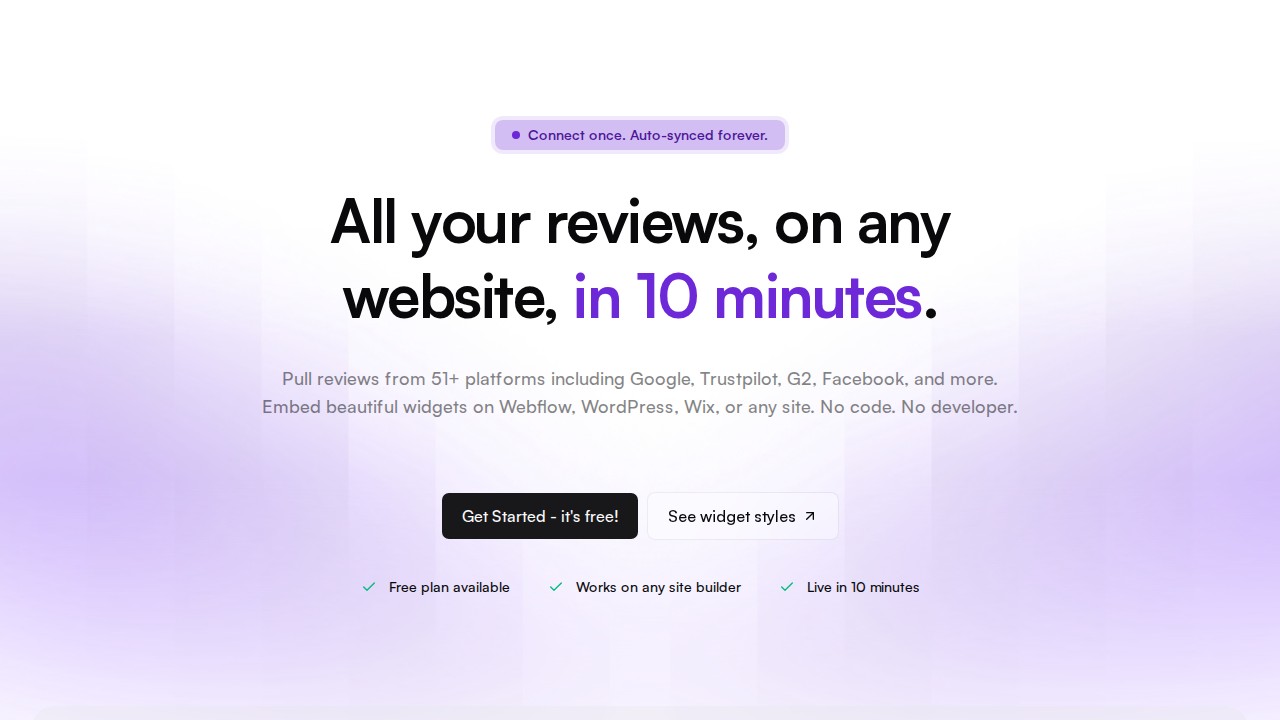
Bragly is my first choice for teams that need to turn public customer feedback into proof that keeps working after the review arrives. It imports reviews from 51+ sources, lets you collect text and video feedback, organizes what you have, and places selected proof on a site with no-code widgets. That makes it a different kind of Podium alternative. The center of the work is not the live conversation. It is the customer proof that should remain visible on a homepage, pricing page, product page, landing page, case-study page, or Wall of Love.
That distinction matters. A review request is only one moment in a customer relationship. Once a positive review arrives, teams still need a place to bring it together with feedback from Google, Trustpilot, G2, Facebook, marketplaces, app stores, and direct collection forms. Bragly gives them one workspace for that evidence, then lets them filter it by source, rating, keyword, or tag before it appears in a widget.
The testimonial widget library gives a page-level choice rather than forcing the same block everywhere. A badge can sit near a purchase decision, a carousel can support a homepage, a grid can serve a full testimonials page, and a video format can place customer stories near a product or service explanation. Widgets update as reviews sync, which is more useful than manually pasting screenshots that become stale.
Bragly also fits agencies, SaaS brands, e-commerce teams, local businesses, and enterprises. Team members can work on reviews, widgets, forms, and analytics together, and the teams and agency workflows page describes a full ownership handoff when a client takes over. That is helpful for any team that sets up proof systems for more than one brand.
| What Bragly covers | What that means in practice |
|---|---|
| Review imports from 51+ platforms | Bring public proof into a single workspace instead of switching between review sites. |
| Text and video collection | Request fresh feedback without depending only on public review platforms. |
| 30+ widget layouts | Match proof to the page and the decision a visitor is making. |
| AI analysis and reply assistance | Spot recurring themes and prepare thoughtful responses to reviews. |
| Moderation, tags, filters, and webhooks | Keep proof organized before it reaches a website or another workflow. |
Bragly differs from Podium most when a buyer wants proof infrastructure, not an all-purpose customer messaging system. It does not try to replace every inbound text, call, or booking conversation. Instead, it helps teams keep the strongest customer evidence current, organized, and visible where future buyers can use it.
Bragly has a free plan for up to 100 reviews. Pro starts at $14 per month and includes unlimited reviews, 20 collection forms, and monthly AI analysis. That makes it approachable for a first proof project while still leaving room for agencies and larger teams that need more collection capacity and permissions.
Best for: teams that want a review and testimonial system that ends in credible website proof.
2. Broadly
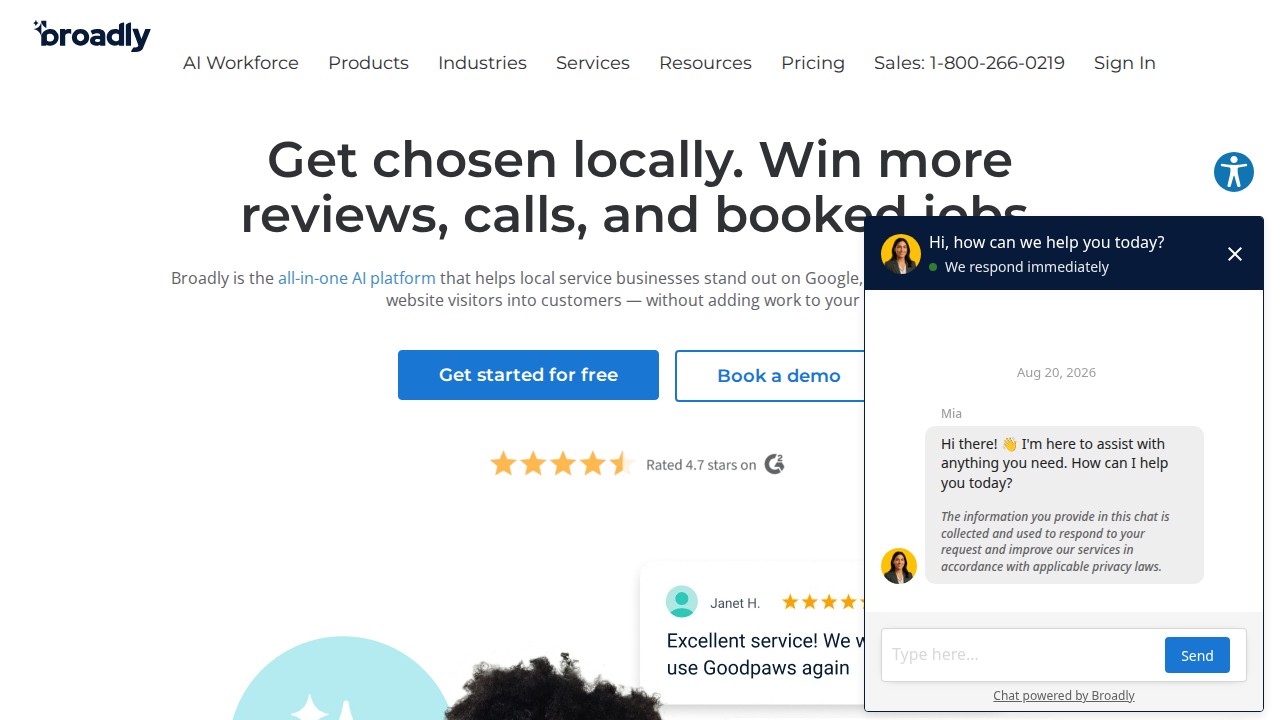
Broadly is the closest operational alternative to Podium in this list for local-service teams. Its current public product materials include an AI receptionist, website chat, shared messaging, lead capture, appointment scheduling, review requests, review responses, local listings, campaigns, and social media management. In other words, it keeps the customer-conversation and local-business operating layer that many buyers want from Podium.
The most useful comparison is direct. If a service business regularly misses calls while staff are on jobs, needs to reply by text, wants to book estimates, and also wants to request and manage reviews, Broadly is aimed at that combination. It is not merely a review widget or a reputation-reporting tool. It is a local-service customer-engagement system with reputation work inside it.
Broadly’s current AI Workforce package is listed at $799 per month. The package includes an AI receptionist, review responses, social media management, a professional website, and directory listings. That is a published package price, not a claim that every Broadly plan or setup costs the same amount. Buyers should check which elements they actually need before comparing it with a Podium quote.
Compared with Bragly, Broadly has more immediate lead-response and booking support. Compared with Podium, it gives local service teams another way to combine calls, texts, reviews, and local visibility. The review management software guide can help when a team decides that its next purchase should center on reviews rather than an all-in-one local operations platform.
Best for: local service businesses that need AI lead response, booking, customer messaging, review operations, and local visibility in one place.
3. NiceJob
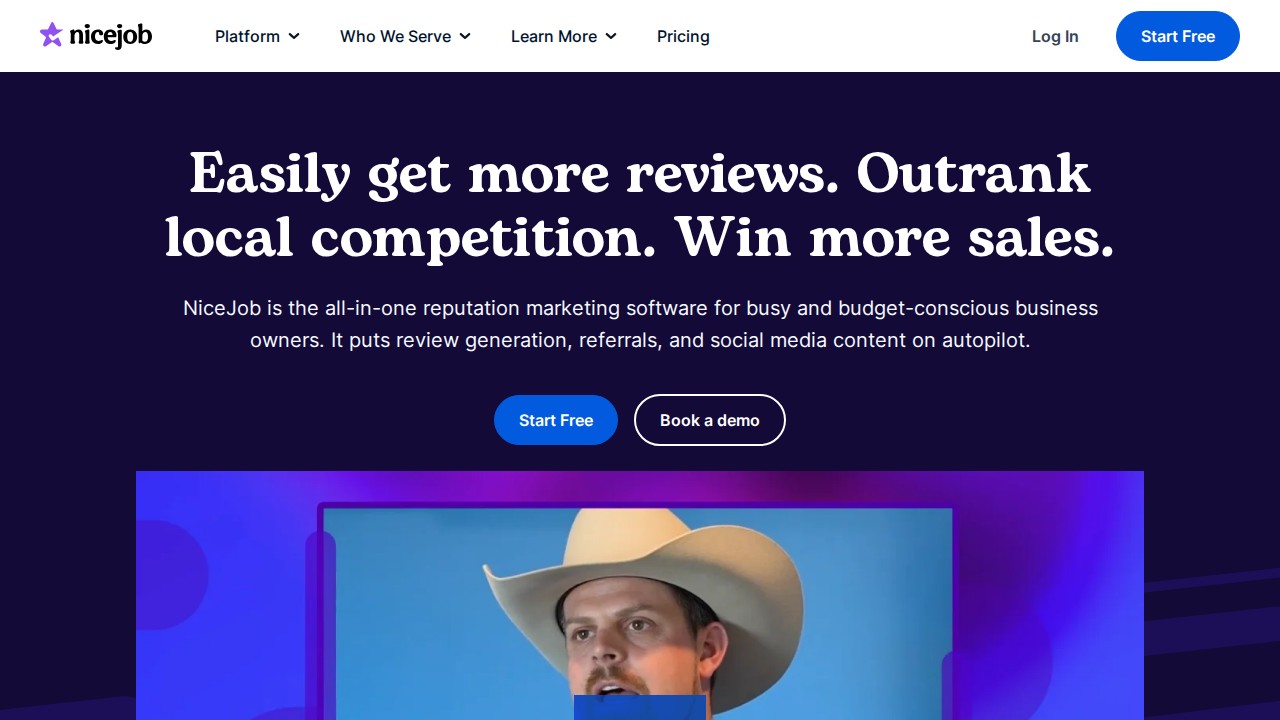
NiceJob takes a reputation-marketing approach. Its public platform navigation puts reviews, referrals, social proof, sites, insights, and feedback in the same conversation. That makes it a useful Podium alternative for teams whose main goal is getting more reviews at the right time, turning happy customers into referral opportunities, and reusing proof in marketing.
The appeal is focus. A service team may not need a full customer operating system to improve its public reputation. It may need review requests that go out after a completed job, a way to follow up with customers, referral prompts, and simple social proof. NiceJob is designed around that path.
It is especially worth comparing with Podium when review volume and referral activity matter more than a complex shared inbox. If the customer conversation must handle a high volume of inbound sales questions, booking, payment, or operational handoffs, a broader conversation tool may still be the better fit. If the desired result is a healthier stream of reviews and referrals, NiceJob is more directly aligned.
NiceJob presents a start-free route on its current public site. Exact plan details can change, so check its live pricing page before making a final choice. The selection question is less about adding every customer interaction to one system and more about whether review and referral marketing should become a repeatable part of the service lifecycle.
Best for: local and service teams that want review generation and referrals to drive their reputation marketing.
4. Grade.us
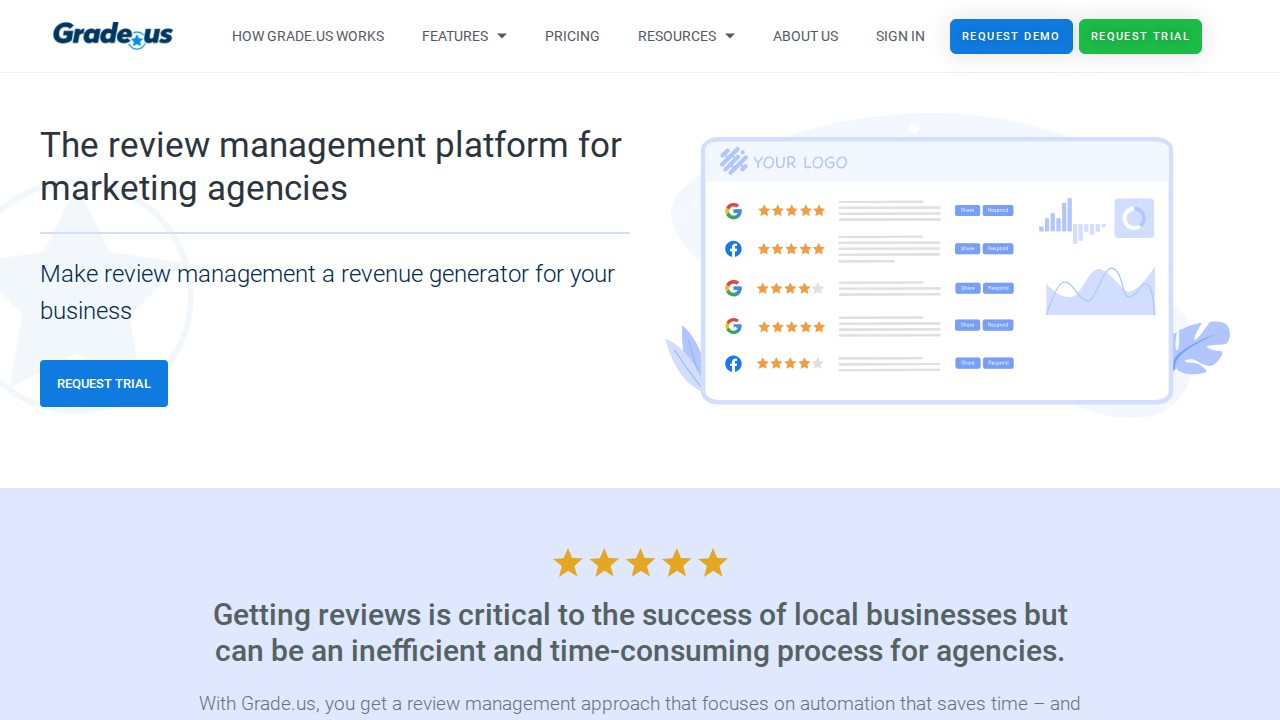
Grade.us is the agency-focused entry in this comparison. It is designed for marketing agencies, consultants, and reputation specialists who need to run review programs for multiple client accounts or locations. Its public site centers on managing, generating, monitoring, marketing, and reporting on reviews, with white-label features, listings, integrations, and API resources available alongside those workflows.
That agency structure is the main reason to consider it instead of Podium. A consultant managing reviews for twenty clients has a different problem from a local business responding to texts during the day. They need client separation, repeatable setup, reporting that can be shared, branded delivery, and a clear way to show what changed over time. Grade.us is built around that work.
It can also suit in-house teams managing a group of locations, although the agency delivery model remains its clearest use case. Before choosing it, ask whether the review program will be owned by an internal operating team or sold and reported as a client service. The answer affects how much value white labeling and client-level controls will add.
Grade.us shows a request-trial and pricing path on its public site. Confirm live plan details and white-label requirements directly before signing up, since agency pricing often depends on account, client, or location structure.
Best for: agencies and consultants that need white-label review operations and reporting across client accounts.
5. MessageDesk
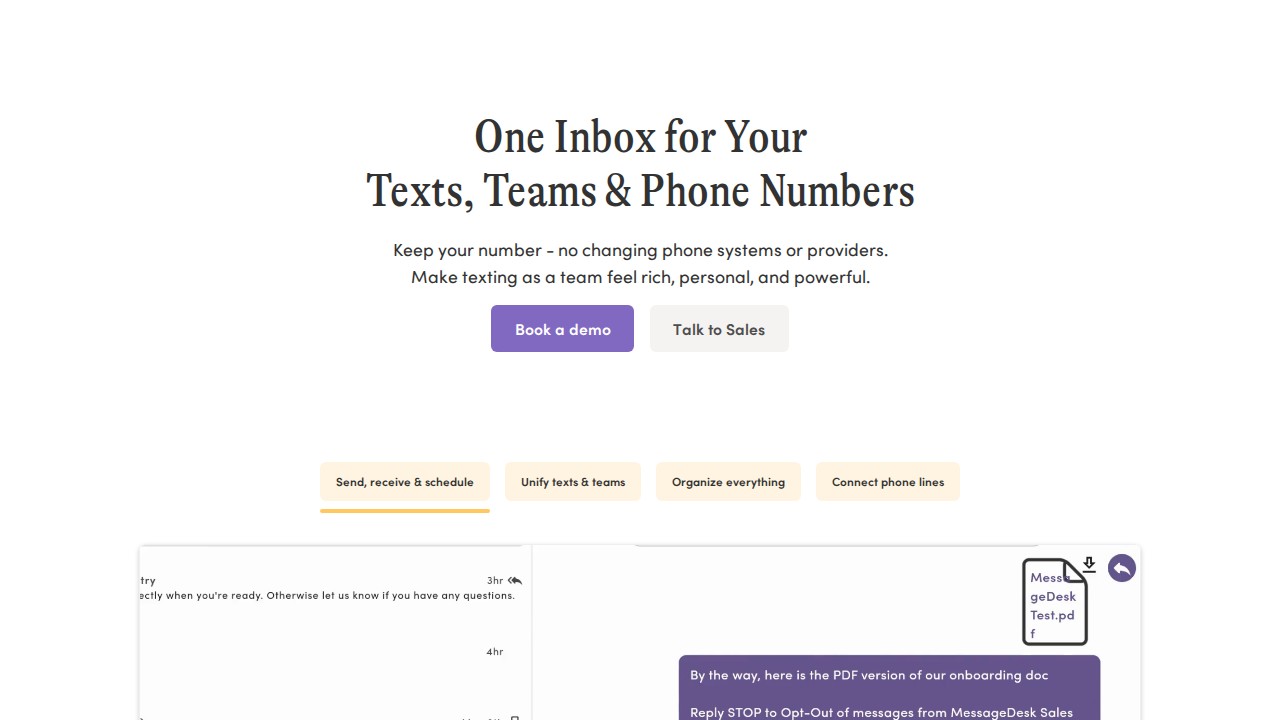
MessageDesk is the focused shared-texting alternative in this list. Its current public site presents a single team inbox for texts, phone lines, and assigned conversations, while letting teams keep their existing phone systems or providers. It supports sending, receiving, and scheduling messages, connecting multiple business numbers, routing work to teammates, and organizing text threads without moving every customer interaction into a broader local-business suite.
That focus makes the comparison with Podium useful for a particular buyer. A team may already have a CRM, booking tool, review platform, and website workflow that work well enough. The missing piece may simply be a shared SMS inbox where several people can see, assign, label, comment on, and continue customer conversations from their existing business numbers. MessageDesk is designed for that smaller operational problem.
MessageDesk should not be treated as a review-management replacement. A team that needs to import reviews, request feedback, analyze themes, and publish proof will still need a proof or reputation layer. Its value is that business texting can remain a focused, shared workflow instead of dictating the rest of the software stack.
Its public pricing page lists Team at $39 per user per month with an annual contract billed monthly and a three-user minimum. Pro is listed at $99 per user per month on the same billing basis with a one-user minimum. Both plans include a shared team inbox; Pro adds message broadcasts, automations, custom roles and permissions, multi-line opt-out controls, and Zapier integration. Check the current plan page before making a final buying decision because seat count and contract terms change the real cost.
Best for: teams that need a shared business SMS inbox and existing-number support without replacing their entire customer stack.
How to Choose a Podium Alternative
Start with the work that must change in the next quarter. Do not begin with a feature list. A customer-conversation issue and a proof-distribution issue can both involve reviews, but they need different software.
If your team loses leads because calls, chats, or texts wait too long for a response, look closely at Broadly or keep a conversation-first platform in the evaluation. The deciding question is whether the system can help you capture a lead, continue the conversation, and book the next step without adding another handoff.
If reviews exist across different public platforms but rarely make it onto your site, start with Bragly. Its job is to pull proof into one place, apply a useful filter, and put the right proof on the right page. The single review dashboard article is useful context if review sources are scattered across teams or platforms.
If review requests, referrals, and reputation marketing are the priority, NiceJob is a more focused option. If you deliver reputation work for clients, Grade.us gives the agency model a proper place in the comparison. If a shared team SMS inbox is the only missing communication layer, MessageDesk can solve that job without making the team replace every other tool it already uses.
Finally, consider what happens after a review arrives. Someone needs to respond, identify a pattern, decide whether the review belongs on a page, and make sure the display stays current. A guide to AI-assisted review responses and a guide to displaying reviews on a website can help define that ongoing workflow before you choose a platform.
Final Thoughts
The best Podium alternative depends on whether the next problem is an unanswered customer message or underused customer proof. Broadly is the closest local-service operating alternative when lead response, booking, and reputation belong together. NiceJob focuses on reviews and referrals. Grade.us serves agency delivery. MessageDesk gives teams a narrower path when shared business texting is the needed capability.
For review collection, review organization, and proof that stays visible after the conversation ends, Bragly is the strongest first option. It gives teams a path from scattered feedback to a current website display, without requiring the rest of a local-business communication stack. That makes it a practical choice for agencies, SaaS teams, local businesses, e-commerce brands, and enterprises that want customer proof to do more of the selling.
Frequently Asked Questions
What is the best Podium alternative for review management?
Bragly is a strong option when the goal is to collect reviews, import proof from many sources, organize it, and publish it on a website. NiceJob focuses more directly on review and referral marketing, while Broadly combines review work with local-service customer communication.
Is Podium mainly a review management tool?
Reviews are part of Podium’s offering, but its official positioning also includes customer conversations, text messaging, lead capture, payments, and local-business operations. It is worth comparing alternatives by the work you need most rather than by reviews alone.
Which Podium alternative is best for agencies?
Grade.us is built for agency and consultant delivery, particularly when client accounts, white-label presentation, repeatable review programs, and reporting are central to the work. Bragly is also useful when an agency needs to build website proof and hand the finished project to a client.
Which alternative is closest to Podium for local service businesses?
Broadly is the closest option in this list when a local service team wants customer messaging, lead response, booking, reviews, and local visibility to work together. Check its current package contents against your required workflow before deciding.
Can I use Bragly instead of a customer messaging platform?
Bragly is not intended to replace an all-purpose phone, text, or booking system. It is for collecting, managing, analyzing, and displaying customer proof. It can be the better choice when the real gap is turning customer feedback into visible trust on a website.