
Looking for a Shorter Overview?
AI Summary
Key Moments
Rule Activation and Enforcement
The FTC's Consumer Reviews and Testimonials Rule became enforceable in October 2024, with active penalties starting December 2025.Prohibited Review Practices
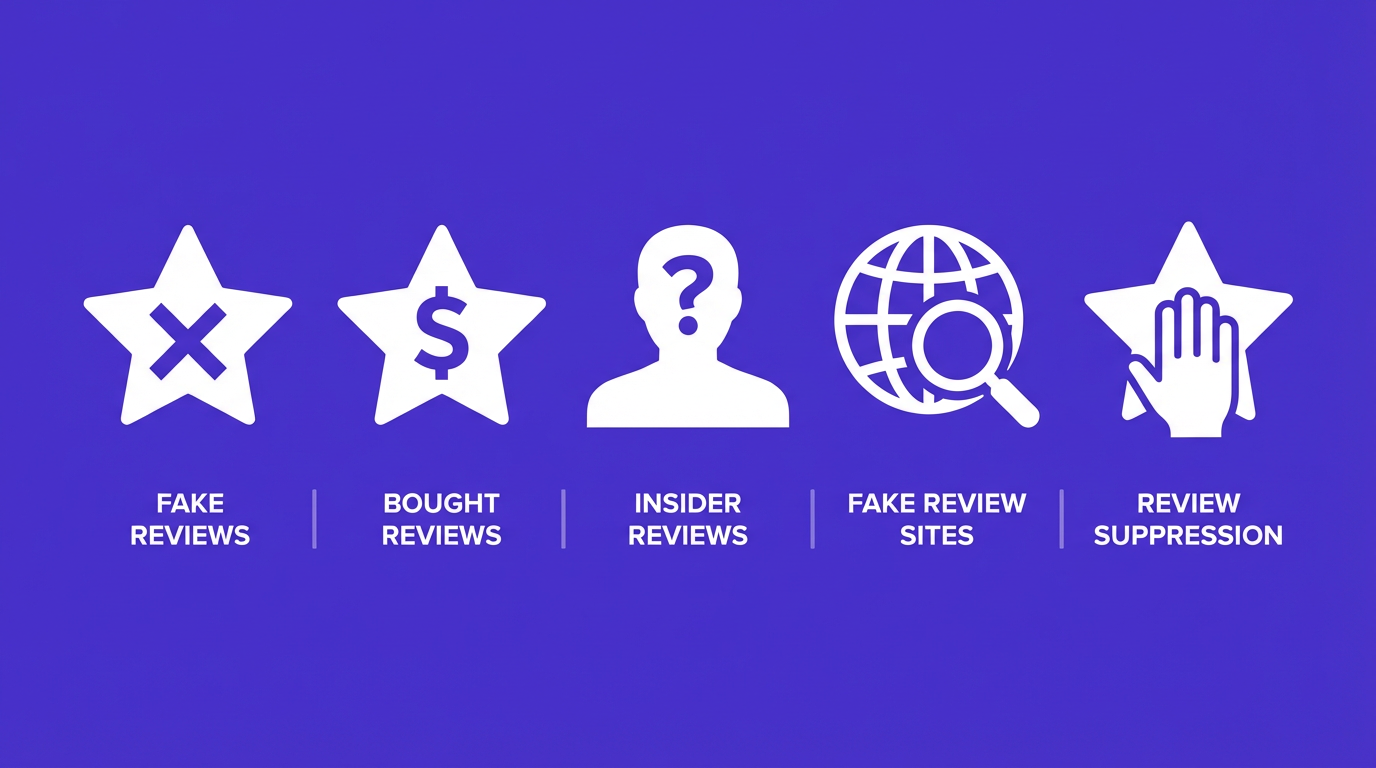
The rule forbids fake reviews, sentiment-based incentives, insider reviews without disclosure, review suppression, fake review sites, and fake social indicators.Compliance Allowed Practices
Businesses may ask for reviews and incentivize them without conditioning on positive sentiment, plus disclose insider reviewers clearly.Consequences of Non-Compliance
Violations can lead to civil penalties up to $53,088 per infraction, as well as reputational damage and platform penalties.Civil penalties of up to $53,088 per violation are now being enforced. Here’s exactly what changed — and what your business needs to do differently.
Key takeaways
- The FTC’s Consumer Reviews and Testimonials Rule (16 CFR Part 465) has been in effect since October 2024 and is now actively enforced
- Civil penalties reach $53,088 per violation; enforcement is already underway
- The six key prohibitions cover fake reviews, sentiment-based incentives, insider reviews, suppression, fake review sites, and fake social indicators
- Review gating and selective display of only positive reviews are primary violations
- Transparent, third-party-sourced reviews displayed without filtering are the compliant path — and the trust-building one
What the FTC’s Consumer Review Rule actually is
In October 2024, the Federal Trade Commission activated a rule specifically targeting how businesses collect, display, and handle customer reviews. It’s called the Consumer Reviews and Testimonials Rule (16 CFR Part 465), and it doesn’t just cover Google reviews — it covers every platform where your customers can leave feedback: Google, Yelp, Trustpilot, Facebook, industry-specific sites, and even testimonials on your own website.
For over a year, the FTC took an educational approach. Businesses had time to read the rule and adjust. That grace period is now over.

In December 2025, the FTC sent formal warning letters to 10 companies, giving them five business days to confirm corrective action or face civil penalties. The message was clear: the FTC is done just informing businesses — it’s actively enforcing.
Why this rule exists
Fake and deceptive reviews cost consumers money and honest businesses their reputations. The FTC’s own research found that review manipulation — buying positive reviews, suppressing negative ones, using AI-generated testimonials — distorts the marketplace in ways that hurt businesses doing the right thing.
The rule was designed to give the FTC a direct path to civil penalties without going through lengthy court proceedings. Each violation can now cost up to $53,088, and the FTC is not limiting penalties to a single count — each fake review, each incentivized review, each suppressed negative review can be treated as a separate violation.
What the rule actually prohibits
The rule covers six distinct areas. Many businesses are accidentally violating at least one of them without realizing it.
1. Fake or false reviews
You cannot create, buy, sell, or publish reviews from people who never used your product or service. This includes AI-generated reviews presented as real customer opinions. If you’ve ever paid a third party to seed your product pages with five-star reviews — or asked a friend to write one — that falls here.
The rule also catches situations where a business should have known a review was fake. For example, if a batch of reviews appears within hours of a product launch, all using similar language, that’s a red flag the FTC will use against you.
2. Buying positive or negative reviews
You cannot offer compensation, discounts, loyalty points, or any incentive conditioned on a specific sentiment — whether that’s a five-star rating or a one-star attack on a competitor. The condition doesn’t have to be explicit. If the structure of your incentive program implies that only positive reviews earn the reward, that’s likely a violation.
This applies both ways. Paying someone to write negative reviews about a competitor is also a primary violation under this rule.
3. Insider reviews without disclosure
Your employees, officers, managers, and agents cannot write reviews of your business without clearly disclosing their relationship. “Great product!” from someone who works for you is deceptive if that connection isn’t visible to readers. Family members of employees fall under the same requirement.
Even if the insider review includes a disclosure, the FTC has noted that if those reviews materially lift your average star rating, you may still have a problem under the broader Endorsement Guides — because consumers see the stars, not always the fine print.
4. Review suppression
Selectively publishing only your four and five-star reviews while quietly removing one and two-star ratings is now explicitly illegal. So is using legal threats, physical intimidation, or groundless accusations to push a negative review offline.
The phrase “review gating” — using software to automatically filter out negative reviews before they publish — falls squarely in this category. Many small businesses using popular review platforms don’t realize their “auto-moderation” settings may be non-compliant.
5. Misrepresenting your review presence
If you operate a website that claims to offer independent, unbiased reviews of businesses — but you’re actually the business being reviewed, or you control the content — that’s a violation. This is particularly relevant for businesses that have created “partner” or “preferred vendor” pages that function as review showcases for their own services.
6. Fake social media indicators
Buying followers, likes, views, or engagement to create a false impression of popularity or influence is prohibited. This section is adjacent to reviews but affects how social proof is used in marketing more broadly.
What the rule actually allows
Compliance doesn’t mean fewer reviews. The FTC explicitly permits several practices that some businesses have been too cautious to use:
- Asking customers to leave reviews — as long as you’re not conditioning the ask on a positive sentiment
- Incentivizing reviews — if the incentive isn’t tied to what the review says (e.g., “write a review and get entered in a draw” is fine; “write a five-star review and get 20% off” is not)
- Responding to reviews — including negative ones, as long as you don’t make false accusations against the reviewer or use threats
- Requiring disclosure from insiders — employees and affiliates can leave reviews; they just have to say they work for you
How to audit your review practices today
Here’s a practical checklist based on what the FTC’s warning letters and guidance documents have flagged:
- Review your collection flow. If you send a link to customers asking them to “share their experience,” without specifying a rating or tone, you’re likely fine. If your request implies only happy customers should respond, you need to change it.
- Check your platform agreements. The FTC holds businesses responsible for what their review platforms do on their behalf. If you’re using a tool that filters or suppresses negative reviews, that risk flows back to you.
- Audit your insider reviews. Pull up your Google Business Profile, your website testimonials, and your third-party platform profiles. Do any of them come from people who work for you or have a material connection to the business? Add disclosures where needed.
- Review your social proof displays. If you’ve embedded reviews on your website using testimonial widgets, make sure they represent the full range of feedback — not just your best ones. Hiding negative reviews to look better isn’t just unethical — it’s now a rules violation.
- Look at your review link or QR code process. When you send customers a direct link to leave a review, are you directing them to a specific platform where you’ll display that review? Make sure you’re not implying the review will only be published if it’s positive.
What happens if you’re non-compliant
The FTC’s enforcement actions can include civil penalties of up to $53,088 per violation, court-ordered consumer redress, and injunctions that prohibit specific business practices. The December 2025 warning letters gave companies five business days to respond — there’s no slow-motion regulatory process when they’re already watching.
Beyond the FTC, platforms like Google and Yelp have their own detection systems. Businesses caught manipulating reviews face not just federal fines but permanent “consumer alert” badges that tank their local search rankings and destroy trust with new customers.
How a review management platform fits into compliance
Using a tool like Bragly to manage your reviews doesn’t automatically make you compliant — but it changes your posture in meaningful ways.
When you aggregate reviews from Google, Yelp, Trustpilot, and 30+ other platforms through a single review analytics dashboard, you’re displaying feedback that already exists in public, on third-party platforms. You’re not creating reviews, not incentivizing specific sentiments, and not filtering for positivity — you’re curating a display of authentic customer voices from across the web.
Bragly’s AI-powered review response feature drafts responses to your reviews, but you review and send them yourself — preserving the human accountability that the FTC expects. And because the reviews are pulled from live platforms, the recency and authenticity signals that consumers and search engines value are naturally preserved.
The compliance angle here is straightforward: transparent, third-party-verified reviews displayed as they exist — not curated to tell only one story — is the opposite of manipulation. It’s what the rule was designed to protect.
The bottom line
The FTC’s Consumer Review Rule is now active enforcement, not future guidance. The five-day warning letters sent in December 2025 were the opening move, not a final notice. Businesses that are still using review gating, incentivizing only positive reviews, or publishing testimonials without insider disclosures need to change their approach before they become the next case study in FTC enforcement news.
The good news: doing compliance right is also doing reputation management right. Authentic reviews from real customers, transparently displayed, are exactly what the FTC’s rule protects — and they’re also what builds the kind of trust that keeps customers coming back.
This article is for informational purposes and does not constitute legal advice. Consult a qualified attorney for guidance specific to your business.