Looking for a Shorter Overview?
AI Summary
Key Moments
Core functions of reputation management software
Monitors, collects, responds to reviews, aggregates feedback, and displays social proof.Bragly as an affordable all-in-one solution
Offers aggregation, collection, AI replies with free and low-cost plans ideal for most businesses.Tailoring tool choice to business needs
Selection depends on budget, number of platforms, and required features like SMS campaigns or local SEO.Limitations of current tools
No tool legitimately removes negative reviews; instead, they assist with responses and boosting positive feedback.Key Takeaways
- Reputation management software helps businesses monitor reviews, respond to feedback, collect new reviews, and display social proof across their website.
- The best tools combine review aggregation, collection forms, and AI-assisted responses, for businesses of any size: local shops, agencies, SaaS products, and multi-location enterprises alike.
- Bragly starts at $0 and covers 33+ review sources. Birdeye and Podium are strong for automation but cost much more. BrightLocal is the best pick for local SEO-focused businesses. NiceJob works well for service businesses that need simple review generation.
- The right tool depends on your budget, the number of review platforms you use, and whether you need collection forms, AI replies, or local listing management.
Your online reputation is built one review at a time. And once a pattern of negative feedback or missing reviews takes hold, it takes real effort to reverse it.
Reputation management software gives you a single place to monitor what customers are saying, respond to reviews, and collect new ones before problems compound. But the market is crowded, pricing is all over the place, and most tools are built for enterprise teams with six-figure budgets.
This guide covers the five best options in 2026: tools with transparent pricing, practical features, and real value for solo operators, agencies managing multiple clients, and growing enterprises.
What reputation management software actually does
Before comparing tools, it helps to be clear about what this category covers. The term gets used loosely, and different tools solve different parts of the problem.
At the core, reputation management software does some combination of these things:
- Monitors reviews across platforms like Google, Yelp, Facebook, and industry-specific sites
- Sends review requests to customers via email or SMS to generate new feedback
- Helps you respond to reviews, either manually or with AI-drafted replies
- Aggregates reviews from multiple sources into one dashboard
- Displays reviews on your website via embeddable widgets
- Tracks sentiment and flags patterns in customer feedback over time
Some tools do all of this. Others specialize in one area. Knowing which problems you actually need to solve will save you from paying for features you’ll never use.
For a broader look at managing your presence across platforms, see our guide on how to manage your online reputation across all platforms.
The 5 best reputation management software tools in 2026
Here is a quick comparison before we go into detail on each tool:
| Tool | Best for | Starting price | Free plan |
|---|---|---|---|
| Bragly | Review aggregation + collection + AI replies | $0/month | Yes |
| Birdeye | Full-stack review automation for multi-location | Custom pricing | No |
| BrightLocal | Local SEO + review monitoring | $29/month | No (14-day trial) |
| NiceJob | Simple review generation for service businesses | $75/month | No |
| Podium | SMS-based review requests and messaging | Custom pricing | No |
1. Bragly
Best for: Businesses that want review aggregation, collection, and AI replies in one affordable tool
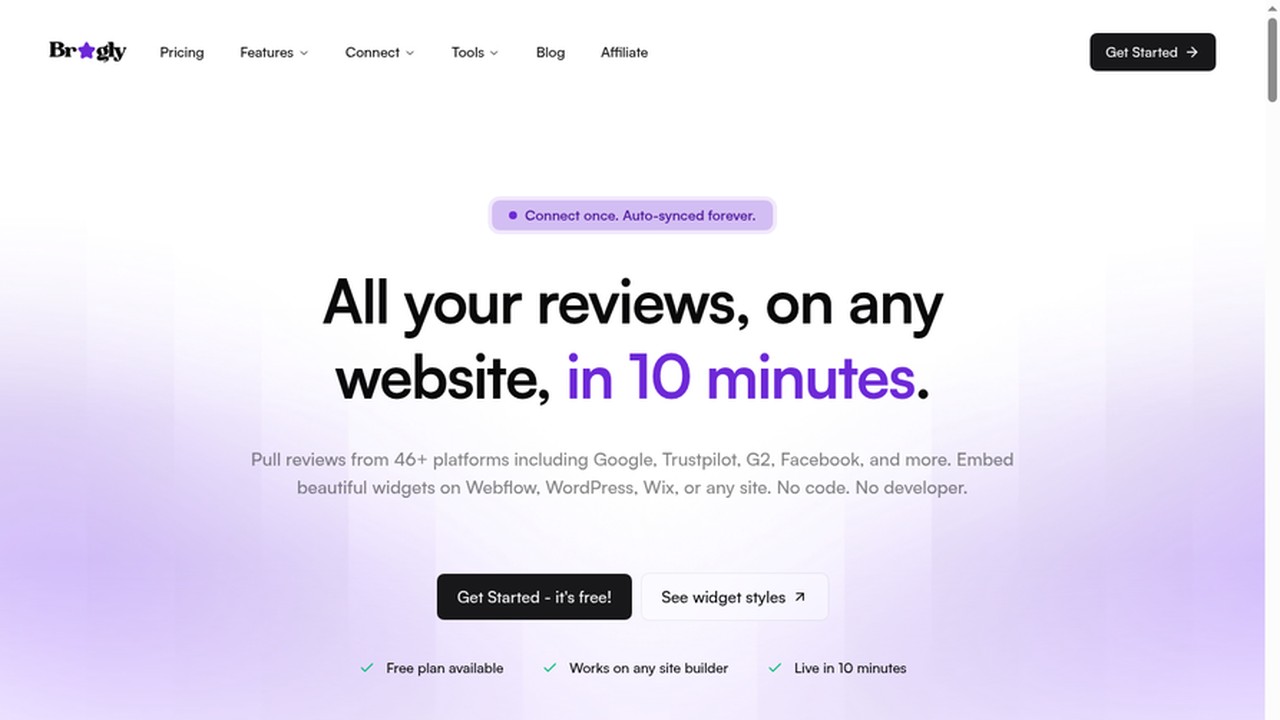
Bragly sits in a category of its own. Most tools in this space either aggregate existing reviews or help you collect new ones. Bragly does both, and adds AI-assisted reply drafting on top of that. If you are specifically looking for tools focused on collecting testimonials, see our testimonial collection tools comparison.
The free plan pulls in reviews from up to 10 sources and lets you build embeddable widgets to display them on your website. The Pro plan at $14/month unlocks unlimited reviews from 33+ platforms, 20 collection forms, and 10 AI-generated review analyses per month. The Business plan at $67/month adds unlimited AI analyses and 100 collection forms.
What makes Bragly stand out at this price point is the combination of features. You can connect Google, Yelp, Trustpilot, Facebook, Capterra, G2, Glassdoor, and 26 other sources. Reviews sync automatically. When a new review comes in, you can use the AI reply assistant to draft a response in about 30 seconds, then edit and send it.
The widget library has 10 styles including carousels, grids, marquees, and badge formats. All widgets are responsive, auto-update when new reviews arrive, and can be filtered by rating, source, or keyword. The embed is a single HTML snippet that works on any website builder.
For businesses that already have reviews scattered across multiple platforms and want to bring them together, display them on their site, and start collecting new ones without a complicated setup, Bragly is the most practical starting point at this price.
What you get
- 33+ review sources, including Google, Yelp, Trustpilot, Facebook, G2, Glassdoor, and more
- 10 widget styles, all embeddable with one HTML snippet
- AI reply assistance, negative review insights, and NPS analysis
- Collection forms with video support
- Free plan available; Pro at $14/month
Where it falls short
- No SMS review request campaigns (collection is form-based, not text-based)
- No local listing management or citation building
- Best suited for businesses with existing reviews to aggregate and display
2. Birdeye
Best for: Multi-location businesses that need full-stack review automation
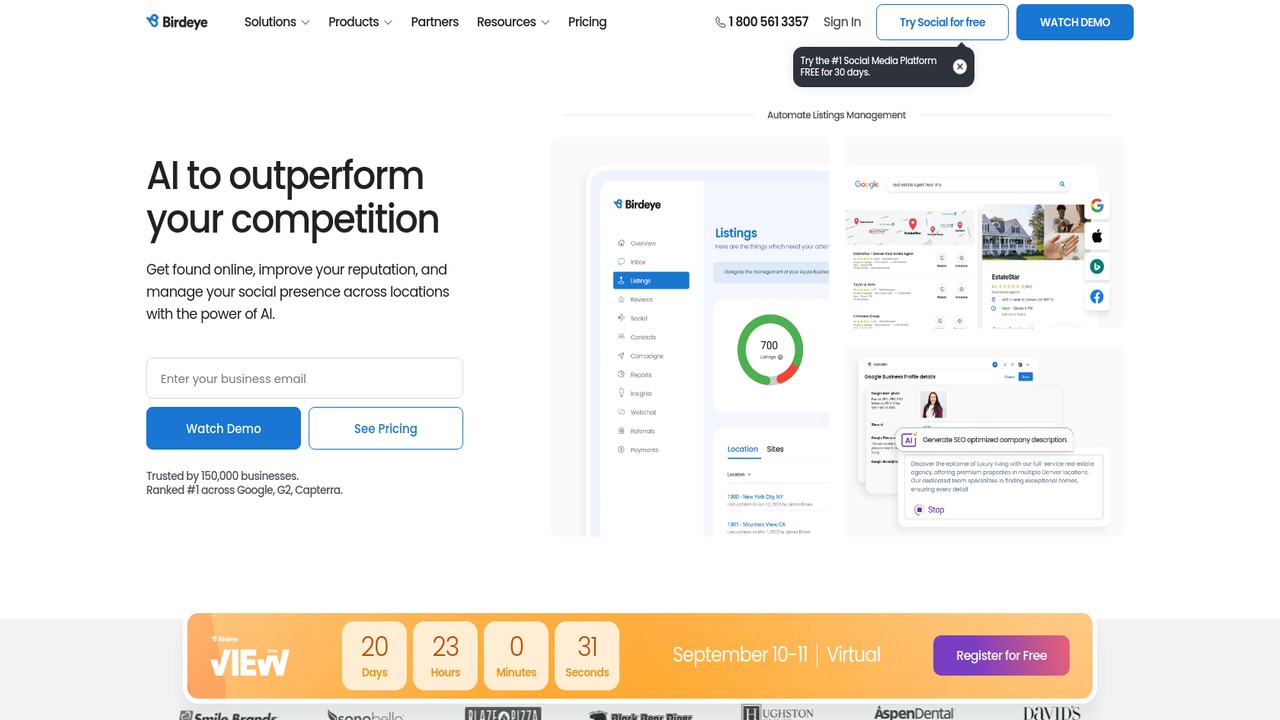
Birdeye is one of the most widely used reputation management platforms, and for good reason. It covers review monitoring, automated review requests, AI-powered responses, social media management, and local listing updates from a single dashboard.
The platform pulls reviews from 200+ sites and lets you send automated review requests via email and SMS. The AI response tools are mature: Birdeye can draft replies based on review content and brand context, and the workflow supports approval before sending.
Birdeye works particularly well for businesses with multiple locations. Each location gets its own dashboard, and managers can see performance across all locations in aggregate. The reporting tools are detailed, with sentiment tracking, review volume trends, and competitor benchmarking.
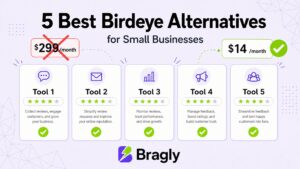
The main drawback is pricing. Birdeye does not publish rates publicly, and most businesses report paying $300 to $500 per month or more. For teams that only need review aggregation and display, that is hard to justify when tools like Bragly cover the core use case at a fraction of the cost. If you are evaluating Birdeye and want to compare alternatives before committing, our Birdeye alternatives guide covers five options worth considering.
What you get
- Review monitoring across 200+ platforms
- Automated review requests via email and SMS
- AI-powered response drafting with approval workflows
- Multi-location dashboards and reporting
- Social media management and local listing updates
Where it falls short
- Pricing is not transparent; costs can be high for teams that only need core review management
- Onboarding can be complex for teams without a dedicated marketing person
- Feature depth may be overkill for single-location businesses
3. BrightLocal
Best for: Local SEO-focused businesses that want review monitoring alongside citation and listing management
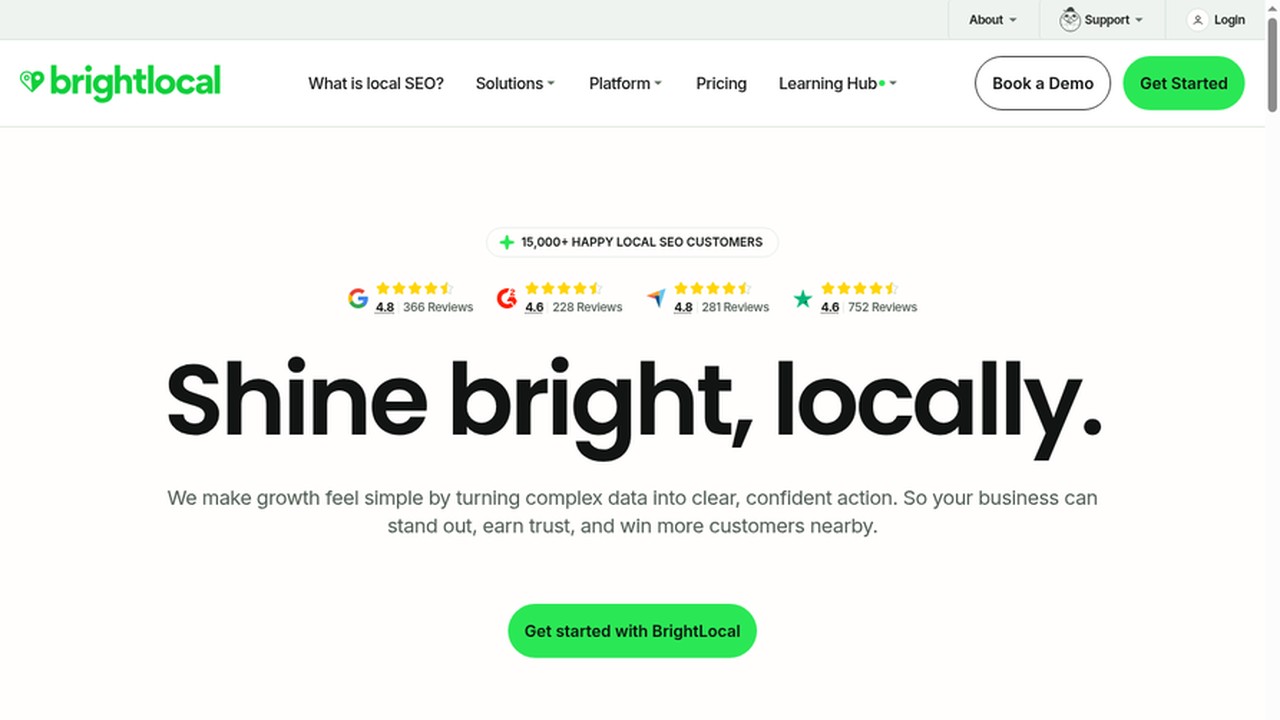
BrightLocal is primarily a local SEO platform, but its reputation management features are strong enough to earn a spot on this list. The Reputation Manager tool monitors reviews across Google, Facebook, Yelp, and 80+ other sites, sends email and SMS review requests, and provides detailed reporting on review volume and sentiment.
What sets BrightLocal apart is the integration with local SEO tools. You can monitor your Google Business Profile, track local rankings, audit citations, and manage your reputation all from the same platform. For businesses where local search visibility is a priority, this combination is genuinely useful.
Pricing starts at $29/month for the Track plan, which covers rank tracking and basic reporting. The Manage plan at $49/month adds citation building and listing management. Review collection and response tools are available as add-ons or included in higher tiers.
BrightLocal is not the right choice if you just need review aggregation and display widgets. But if local SEO is part of your strategy and you want reputation management built into the same workflow, it is one of the most practical options at this price.
What you get
- Review monitoring across 80+ platforms
- Email and SMS review request campaigns
- Local SEO tools including rank tracking, citation audits, and listing management
- White-label reporting for agencies
- Starts at $29/month with a 14-day free trial
Where it falls short
- Review display widgets are limited compared to dedicated tools
- The interface can feel cluttered if you only need reputation features
- Add-on pricing for some features can push costs higher than expected
4. NiceJob
Best for: Service businesses that want a simple, automated review generation system
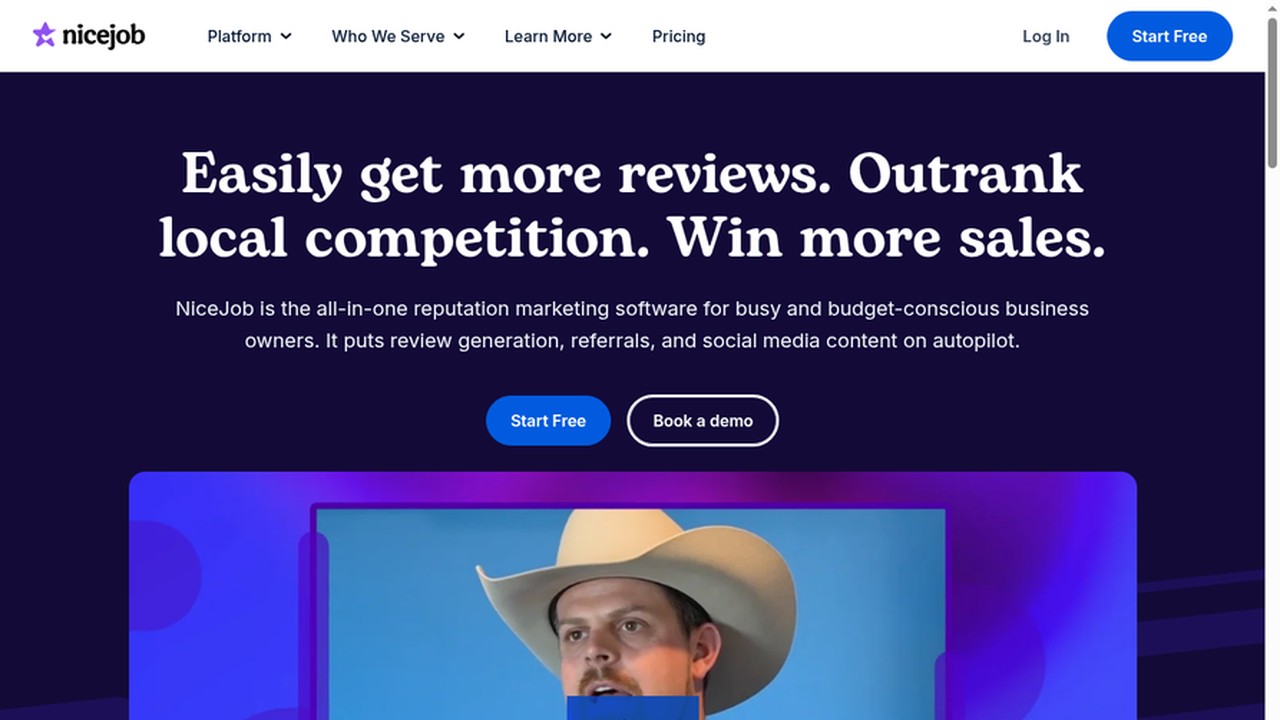
NiceJob is built around one core idea: make it as easy as possible for happy customers to leave a review. The platform automates review requests via email and SMS, sends follow-up reminders, and tracks conversion rates so you can see which campaigns are working.
The setup is simple. You connect your CRM or job management software (NiceJob integrates with ServiceTitan, Jobber, HubSpot, and dozens of others), and it automatically sends review requests when a job is completed or an invoice is paid. The timing and messaging are customizable.
NiceJob also has a “Stories” feature that turns reviews into social media posts and website content automatically. It is a useful way to get more mileage from positive feedback without manual work.
Pricing starts at $75/month for up to 2,500 contacts. There is no free plan, but the focus on service businesses with high transaction volume makes the price reasonable if review generation is your primary goal.
What you get
- Automated review requests via email and SMS
- CRM integrations with ServiceTitan, Jobber, HubSpot, and 40+ others
- Follow-up sequences and conversion tracking
- “Stories” feature for turning reviews into social content
- Starts at $75/month
Where it falls short
- No review aggregation or widget display tools
- Limited analytics beyond review volume and conversion rates
- Not well suited for businesses that need to manage existing reviews across multiple platforms
5. Podium
Best for: Businesses that want to combine review requests with customer messaging in one inbox
Podium started as a review request tool and has grown into a broader customer communication platform. The core reputation management features include automated review requests via SMS, review monitoring across Google and Facebook, and a unified inbox for managing customer messages.
The SMS-first approach is Podium’s main differentiator. Text-based review requests consistently outperform email in response rates, and Podium has built its entire workflow around this. Customers get a text after a transaction, tap the link, and leave a review in under a minute.
Podium also handles payments, webchat, and team messaging, which makes it appealing for businesses that want to consolidate multiple tools. But this breadth comes at a cost. Pricing is not published, and most users report paying $400 to $600 per month. For businesses that only need review management, this is hard to justify.
What you get
- SMS-based review requests with high response rates
- Unified inbox for reviews, texts, and customer messages
- Payments and webchat integration
- Review monitoring across Google and Facebook
- Custom pricing (typically $400–$600/month)
Where it falls short
- Expensive for businesses that only need review management
- Limited review source coverage compared to tools like Bragly or Birdeye
- No review display widgets for embedding on your website
How to choose the right tool
The right choice depends on three things: your budget, the number of review platforms you use, and what you actually need the software to do.
If you want to aggregate reviews from multiple platforms, display them on your site, and start collecting new ones, Bragly is the most practical starting point. The free plan is genuinely useful, and the Pro plan at $14/month covers most use cases for businesses of any size.
If you manage multiple locations and need enterprise-grade automation with detailed reporting, Birdeye is the most complete option, but budget accordingly.
If local SEO is a priority alongside reputation management, BrightLocal gives you both in one platform at a reasonable price.
If you run a service business with high transaction volume and want to automate review generation through your existing CRM, NiceJob is built for exactly that.
If SMS-based customer communication is central to your business and you want review requests built into that workflow, Podium is worth evaluating despite the higher cost.
For a more detailed look at what review management software can do for your business, see our guide on the best review management software for small businesses.
What to look for before you commit
Before signing up for any reputation management tool, check these things:
Review source coverage. Does the tool monitor the platforms your customers actually use? Google and Yelp are table stakes, but industry-specific sites like Houzz, Healthgrades, or Capterra matter depending on your sector.
Collection method. Some tools send review requests via SMS, others via email, others via shareable form links. SMS tends to get higher response rates, but email works well for B2B businesses. Make sure the collection method fits how your customers communicate.
Response workflow. Can you respond to reviews directly from the dashboard? Does the tool offer AI-drafted replies? Is there an approval workflow for teams?
Display options. If you want to show reviews on your website, check what widget styles are available and how the embed works. Some tools offer limited display options or charge extra for widgets.
Pricing transparency. Several tools in this category do not publish pricing. That is a signal to ask detailed questions before a demo, because the actual cost is often much higher than the entry-level plan suggests.
Frequently asked questions
What is reputation management software?
Reputation management software helps businesses monitor, manage, and improve how they appear online. It typically includes tools for tracking reviews across multiple platforms, sending review requests to customers, responding to feedback, and displaying social proof on your website.
How much does reputation management software cost?
Prices vary widely. Bragly has a free plan and a Pro plan at $14/month. BrightLocal starts at $29/month. NiceJob starts at $75/month. Birdeye and Podium use custom pricing and typically cost $300 to $600 per month or more.
Can reputation management software remove negative reviews?
No legitimate software can remove reviews from Google, Yelp, or other platforms. What these tools can do is help you respond to negative reviews professionally, flag reviews that violate platform policies for manual reporting, and generate new positive reviews to improve your overall rating over time. For more on this, see our guide on how to respond to negative reviews without damaging your reputation.
Is there a free reputation management tool?
Bragly has a free plan that covers up to 10 review sources and includes embeddable widgets. Google Alerts is free and useful for monitoring brand mentions. Most other tools in this category require a paid subscription.
What is the difference between reputation management software and review management software?
The terms are often used interchangeably, but reputation management is broader. It can include social media monitoring, brand mention tracking, PR and content strategies, and sometimes even search result suppression services. Review management software focuses specifically on customer reviews: collecting them, monitoring them, and responding to them. Most small businesses need review management, not full reputation management.
Final thoughts
Most businesses do not need an overly complex reputation management platform. They need a tool that pulls their existing reviews into one place, helps them collect new ones, and makes it easy to respond without switching between tabs. For practical tactics on getting more reviews from your existing customers, see our guide on 7 ways to collect more customer testimonials.
Start with Bragly if you want to cover those bases without a significant monthly cost. The free plan is a real starting point, not a stripped-down teaser. If you outgrow it or need SMS campaigns or local SEO tools, BrightLocal and NiceJob are the next logical steps.
Birdeye and Podium are worth evaluating if you have multiple locations or want to consolidate customer communication into one platform, but go in with clear questions about pricing before the demo.
The best reputation management software is the one you will actually use consistently. A $14/month tool you check every day will do more for your business than a $500/month platform you log into once a month.
Try Bragly for free and see how many of your existing reviews it can pull in before you spend anything.