
Looking for a Shorter Overview?
AI Summary
Key Moments
Importance of Review Counts
Products with five or more reviews significantly boost purchase likelihood, underscoring testimonial value.Essential Features in Tools
The best tools combine easy collection, organized management, and attractive display on your website.Value of Review Importing
Importing existing reviews from platforms like Google or Trustpilot prevents starting testimonial collection from zero.Pricing and Fit
Pricing models and feature sets differ substantially; businesses should choose based on budget and testimonial needs.Most businesses have happy customers. The problem is getting those customers to say something useful, somewhere visible.
Emailing customers one by one, copying their replies into a Google Doc, and then trying to figure out how to put any of it on your website is a process that breaks down fast. Most business owners abandon it halfway through. The ones who don’t end up with a folder of quotes they never actually use.
Testimonial collection tools solve that. They give customers a simple way to submit feedback, organize everything in one place, and let you display it on your site without touching any code.


This guide compares five tools that are worth your time in 2026. Each one is evaluated on how it collects testimonials, what it does with them once they’re in, and how much it actually costs to get started.
Key Takeaways
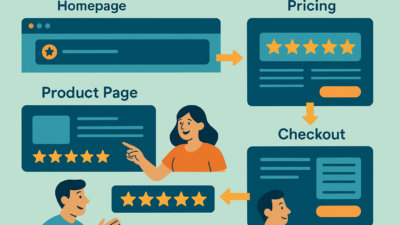
Products with five or more reviews see up to 270% higher purchase likelihood compared to products with none.
The best testimonial tools handle three things: collecting feedback, organizing it, and displaying it on your website.
Most tools focus on collecting new testimonials. Fewer also import reviews you’ve already earned on Google, Trustpilot, or Capterra.
Video testimonials build trust faster than text alone. 62% of viewers say video increases their confidence in a purchase. If you’re weighing whether to prioritize video or text, the video vs. text testimonials comparison breaks down which format works better in different contexts.
Free plans exist across most tools, but limits on testimonial counts, video, or widget options vary significantly.
What to Look for in a Testimonial Collection Tool
Before comparing tools, it helps to know what actually matters. Most people focus on price first, but the features that determine whether you’ll actually use a tool day-to-day come down to a few things.
Collection method. Can customers submit text, video, or both? Is the form easy enough that customers will actually complete it, or does it require an account or app download?
Review imports. If you already have Google reviews, Trustpilot ratings, or G2 feedback, can the tool pull those in? Starting from zero when you already have social proof elsewhere is a waste. If you’re not sure how to get more reviews in the first place, the guide on how to collect more Google reviews covers the full process.
Display options. A widget that looks generic or slows your page down is worse than no widget. Look for customizable embeds that match your site’s design and load quickly.
Pricing structure. Some tools charge per workspace, some per testimonial count, some per feature tier. Know what you’re actually paying for before you commit.
The Top 5 Testimonial Collection Tools
1. Bragly
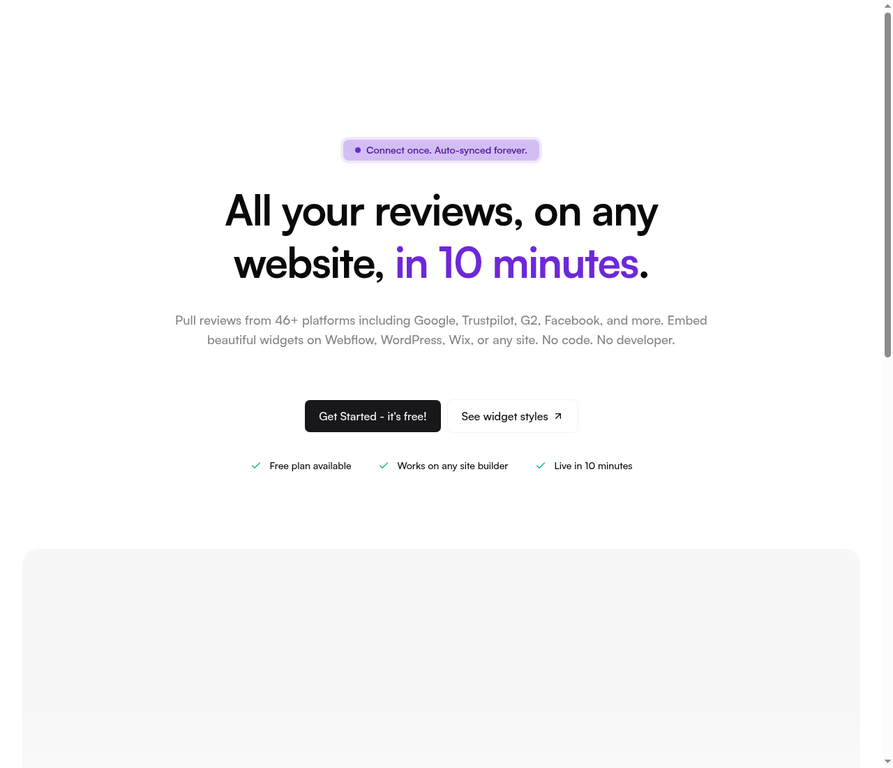
Bragly sits at the intersection of two things most tools treat as separate: collecting new testimonials and managing the reviews you’ve already earned. It pulls in reviews from 33+ sources, including Google, Trustpilot, G2, Capterra, Yelp, and Facebook, while also giving you collection forms for fresh testimonials.
The collection side works through shareable form links. You customize the questions, send the link to customers via email or DM, and their responses flow into your dashboard. Video testimonials are supported through browser recording or file upload. No app required on the customer’s end.
Once testimonials are in, you get ten widget styles to choose from: carousels, grids, marquees, badges, single-review displays, and more. Each widget updates automatically when new reviews come in. The embed is a single HTML snippet that works on WordPress, Webflow, Wix, Squarespace, Shopify, and any other site that accepts HTML.
The AI layer is where Bragly separates itself from most tools in this category. It drafts replies to reviews, surfaces recurring themes in negative feedback, and runs NPS analysis on your review data. If you want to see how that reply workflow actually works, the walkthrough on using AI to respond to customer reviews faster goes into detail. All of this uses a brand profile built from your website. For a small business owner who doesn’t have time to read every review carefully, that’s genuinely useful.
Pricing: Free plan covers up to 10 reviews and basic widgets. Pro is $14/month with unlimited reviews, 20 collection forms, and 10 AI analyses per month. Business is $67/month with unlimited everything, 100 forms, and unlimited AI.
The free plan is a real starting point, not a teaser. The Pro plan at $14/month is one of the more affordable options in this category for what it includes.
Best for: Small businesses and e-commerce brands that want to combine review aggregation with active testimonial collection.
2. Senja

Senja has built a following among creators, course sellers, and solopreneurs who want a clean, no-fuss testimonial setup. The interface is genuinely beginner-friendly. You can have a collection form live in a few minutes, and the dashboard is easy to navigate without any onboarding.
It handles both text and video testimonials. Customers submit through a branded form, and you can organize responses by product, campaign, or tag. The widget options are solid for the price: walls of love, carousels, and single-quote displays that look good on most sites.
The free tier is generous for solo use. Paid plans start at $29/month, which is higher than some alternatives, but the product is polished and the support is responsive.
Where Senja falls short is on the review import side. It doesn’t pull in existing Google or Trustpilot reviews, so if you already have a review presence on those platforms, you’re starting fresh. For businesses that rely on those platforms as their primary trust signal, that’s a real gap.
Pricing: Free plan includes unlimited testimonials with limited widgets. Starter is $29/month with more widgets, video support, and custom domain.
Best for: Creators, consultants, and solopreneurs collecting testimonials from scratch.
3. Testimonial.to
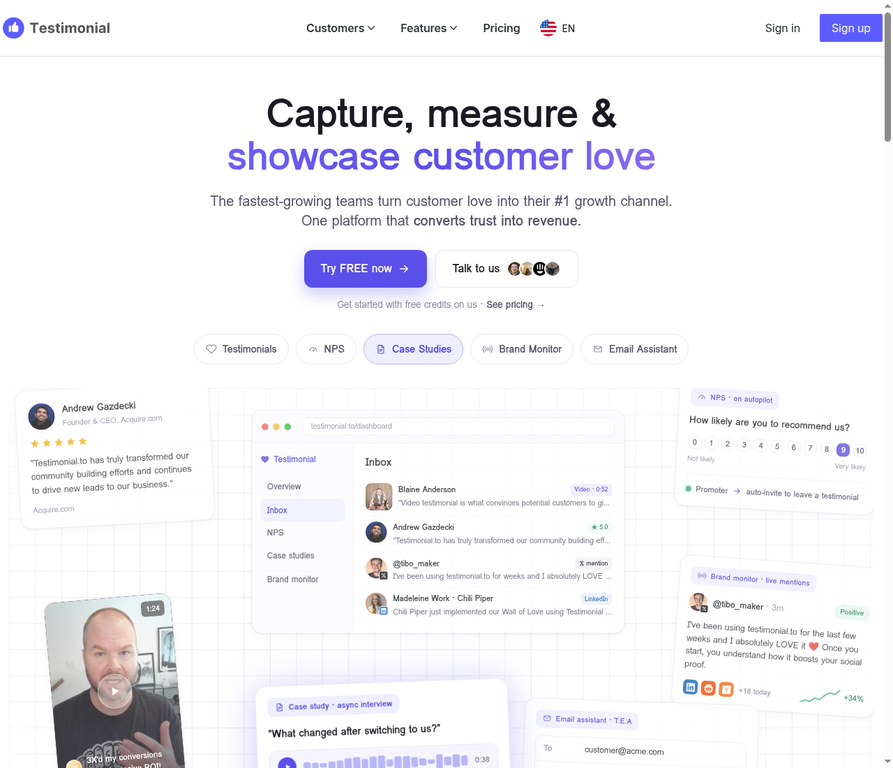
Testimonial.to became well-known for its “Wall of Love,” a masonry grid of testimonials that became something of a standard for SaaS landing pages. It handles both text and video collection, and the display options are polished enough that a lot of SaaS founders use it as their default.
The collection form is straightforward. Customers get a branded page, submit text or record a short video, and their response appears in your dashboard. You can embed the Wall of Love or individual testimonials on any site.
The platform has expanded since its early days. It now includes NPS tracking, case study generation, and brand monitoring alongside testimonial collection. That breadth is useful if you want one tool for multiple feedback use cases.
The pricing reflects that expanded scope. The free plan is limited, and the paid tiers start at $20/month but get expensive quickly if you need multiple spaces or advanced features. There have also been occasional reliability complaints from users. Access issues have come up in online discussions, though these appear to be intermittent rather than systemic.
Pricing: Free plan with limited testimonials and spaces. Starter is $20/month with more testimonials, video, and custom domain.
Best for: SaaS founders and product teams who want a polished Wall of Love and broader feedback features.
4. Famewall
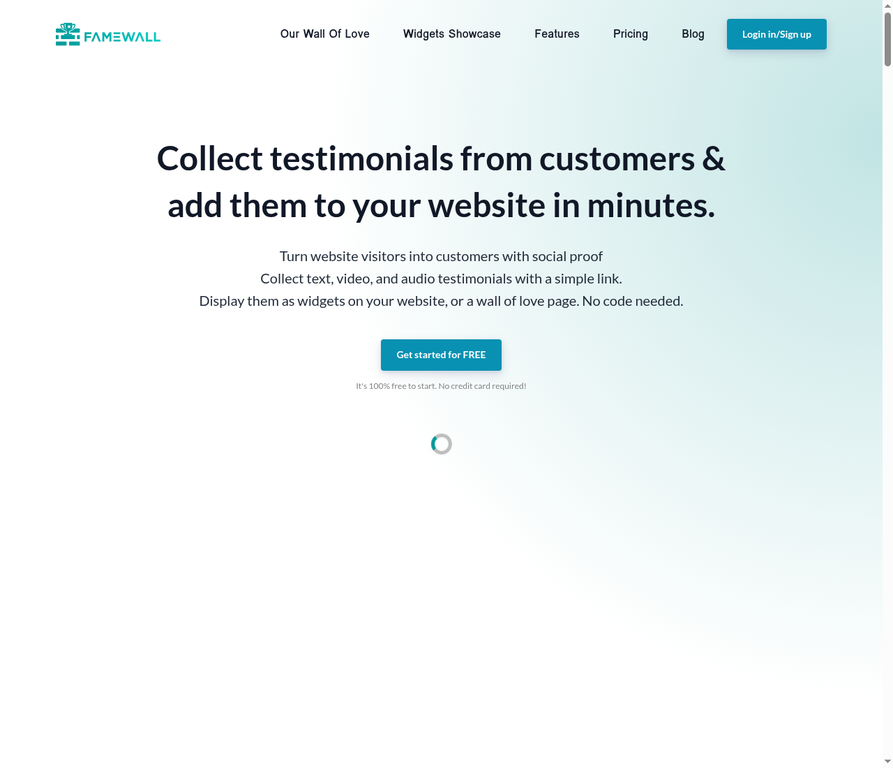
Famewall is the most affordable entry point in this list. The free plan covers basic collection and display, and paid plans start at $9/month, lower than any other tool here. For someone collecting their first testimonials and not sure how much they’ll use the tool, that low barrier matters.
The feature set is solid for the price: text and video collection, social media import from Twitter/X and LinkedIn, a wall of love display, and basic widget options. The interface is clean and easy to use.
The tradeoffs show up at scale. Widget customization is more limited than Bragly or Senja, and the import options don’t extend to Google or Trustpilot. For a freelancer or early-stage business, those limitations probably don’t matter. For a business with an established review presence, they do.
Pricing: Free plan for basic collection and display. Pro is $9/month with more testimonials, video, and custom domain.
Best for: Freelancers, early-stage businesses, and anyone who wants to start collecting testimonials without spending much.
5. Trustmary

Trustmary takes a different angle than the other tools here. Its core strength is connecting testimonial collection to your existing Google review presence. You can import Google reviews, send NPS surveys to identify your happiest customers, and then ask those customers for a more detailed testimonial, all within one workflow.
That sequenced approach is smart. Instead of cold-asking customers for a testimonial, you’re identifying the ones who already gave you a 5-star rating and asking them to say more. The conversion rate on that kind of targeted outreach is meaningfully higher than a blanket email campaign.
The widget options are functional, and the platform connects with common CRMs and email tools. The free plan is limited but usable for testing.
Where Trustmary gets complicated is pricing. The plans are structured around the number of leads or contacts you’re working with, which can make costs unpredictable as you scale. It’s also more focused on the NPS-to-testimonial workflow than on general testimonial management, so if you want a broad widget library or deep customization, other tools serve that better.
Pricing: Free plan with limited imports and widgets. Starter is $19/month with more imports, NPS surveys, and basic widgets.
Best for: Businesses with an active Google review presence who want to turn existing ratings into detailed testimonials.
Side-by-Side Comparison
| Tool | Text + Video | Review Import | Free Plan | Starting Price | Best For |
|---|---|---|---|---|---|
| Bragly | Both | 33+ sources | Yes (10 reviews) | $14/month | SMBs wanting collection + aggregation |
| Senja | Both | No | Yes (unlimited) | $29/month | Creators and solopreneurs |
| Testimonial.to | Both | Limited | Yes (limited) | $20/month | SaaS founders |
| Famewall | Both | Social only | Yes | $9/month | Freelancers, early-stage |
| Trustmary | Both | Google + others | Yes (limited) | $19/month | Google-review-heavy businesses |
Which Tool Should You Choose?
The right tool depends on where your testimonial gap actually is.
If you already have reviews on Google, Trustpilot, or other platforms and want to pull them together and display them on your site, Bragly is the most capable option. The 33-source import means you’re not starting from zero, and the collection forms let you gather new testimonials alongside the ones you’ve already earned. The AI reply feature saves real time if you’re responding to reviews regularly.
If you’re starting from scratch and your audience is primarily online creators or course buyers, Senja’s free tier and clean interface make it a strong starting point. For a broader look at the tools available for managing reviews across platforms, the best review management software comparison covers the full picture. The lack of review imports doesn’t matter if you don’t have existing reviews to import.
If you’re a SaaS founder who wants a polished Wall of Love and broader feedback tooling, Testimonial.to has the most established product in that niche.
If budget is the primary constraint, Famewall at $9/month is hard to beat for basic collection and display.
If your business lives and dies by Google reviews and you want a structured workflow to turn ratings into detailed testimonials, Trustmary’s NPS-to-testimonial approach is worth the extra setup.
Final Thoughts
Testimonial collection doesn’t have to be complicated. The tools above handle the hard part: getting customers to submit feedback and displaying it in a way that actually builds trust on your site.
The gap most businesses fall into isn’t choosing the wrong tool. It’s not choosing any tool and continuing to collect testimonials manually, one email at a time, with nothing to show for it on their website.
If you already have reviews on Google or Trustpilot and want to start there, Bragly’s free plan lets you connect those sources, set up a widget, and see what your review presence actually looks like on your site, without paying anything upfront. The guide on how to display customer reviews across your website shows exactly where and how to place them for the most impact. That’s a reasonable first step before deciding how much you want to invest in active collection.
Frequently Asked Questions
What is a testimonial collection tool?
A testimonial collection tool is software that helps businesses gather customer feedback through branded forms, organize it in a central dashboard, and display it on their website using embeddable widgets. Most tools support both text and video submissions, and some also import existing reviews from platforms like Google, Trustpilot, and G2.
What’s the difference between a testimonial tool and a review platform?
Review platforms like Google Business Profile or Trustpilot are public directories where customers leave reviews. Testimonial collection tools are software you control. They let you collect feedback directly, organize it, and display it on your own website. Some tools, like Bragly, do both: they import reviews from public platforms and let you collect new testimonials through your own branded forms.
Do I need a testimonial tool if I already have Google reviews?
Not necessarily, but a tool helps you do more with those reviews. You can pull them into your website, display them in a widget that matches your brand, and use them alongside testimonials you collect directly. If you’re only relying on a Google review link and hoping visitors find it, a tool gives you more control over how that social proof appears.
Can customers submit video testimonials without downloading an app?
Yes, most modern testimonial tools support browser-based video recording. Customers click a link, allow camera access in their browser, record a short clip, and submit. No app or account required. Bragly, Senja, Testimonial.to, and Famewall all support this.
How many testimonials do I need before adding a widget to my site?
There’s no fixed number, but three to five genuine testimonials are enough to start. A single strong testimonial displayed near a call to action can outperform a generic “trusted by thousands” badge. Start with what you have and add more as you collect them.