Looking for a Shorter Overview?
AI Summary
Key Moments
Match Review Templates to Business Types
Use specific templates tailored to product, service, SaaS, hospitality, and other sectors to capture relevant and actionable feedback.Timing is Critical for Requests
Send review requests after meaningful usage or completion milestones to improve the quality and honesty of feedback.Balance Detail and Ease
Collect enough detail for usefulness while minimizing friction to avoid abandoned forms and encourage completion.Maintain Transparency and Permission
Always obtain explicit consent for public use of testimonials and preserve original customer meaning without altering qualifiers.You've finished the job, delivered the order, or helped a customer get started. You send a review request, and the reply comes back: great service, would recommend. It's positive, but it doesn't tell the next buyer much.
The problem often starts with the question. A bakery customer can describe freshness and a favorite pastry immediately. A SaaS customer needs time to judge implementation and results. A dental patient might want to comment on booking and communication without sharing treatment details.
Useful templates for reviews match the customer relationship. They ask about the customer's experience, arrive when it's clear, and collect details you can publish without stripping away context.


That matters because customers don't necessarily read reviews in one place. In BrightLocal's 2024 Local Consumer Review Survey, 77% of respondents consulted at least two review platforms when deciding whether to use a local business.
Use the editable prompts below in your request messages or collection forms. Replace the bracketed fields, keep sensitive details optional, and give customers room to describe limitations as well as benefits.
Start with the experience, not the rating. Ask what happened and what mattered. Don't ask customers to repeat a marketing claim you've already written.
1. Product Review Template (E-commerce and Direct-to-Consumer)
A shopper considering a jacket needs fit information. Someone buying a coffee grinder needs to know how it performs in daily use. A product review should answer the next buyer's practical question, not just collect a star rating.
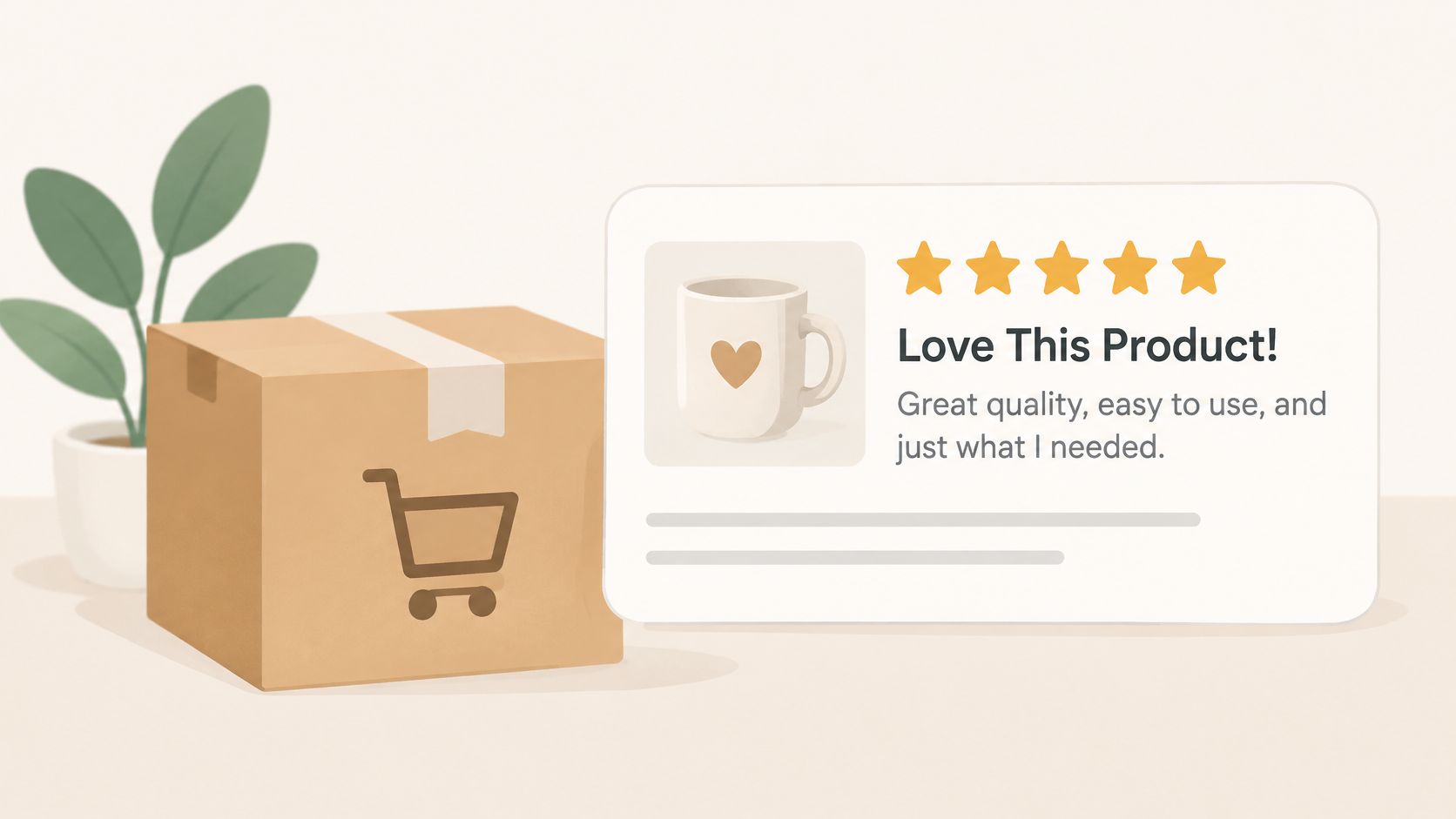
An editable product prompt
Request text
Hi [first name], how is [product] working out? Please share what you bought it for, how it performed, and anything you'd change. Your honest feedback helps other shoppers decide whether it fits their needs.
Collection fields
- Overall assessment: Rating and a headline in the customer's own words.
- Usage context: Product variant, intended use, and how long they've used it.
- Buying detail: Main benefit, limitation, and optional photo.
- Publication permission: Approved display name and consent for website use.
Send it after meaningful use, rather than automatically when tracking says delivered. Clothing buyers can assess fit quickly; customers buying skincare or durable equipment may need longer.
Amazon's verified-purchase indicators and photo uploads illustrate useful context. Shopify apparel stores can go further by asking whether sizing matched expectations. For a jacket, ask how the fit compared with the buyer's usual size instead of asking whether they loved it.
The trade-off: Detailed fields produce comparable reviews, but a long form creates friction. Keep the main-benefit question prominent and make photos optional.
The Medill Spiegel Research Center found that purchase likelihood generally peaked at ratings between 4.0 and 4.7 stars, rather than at a perfect score. Don't remove balanced observations merely because they sound less enthusiastic.
Display product-specific comments beside the purchase decision, using a grid for photos or a carousel for short quotes. Our tagging tools can group reviews by product line; these examples of good customer reviews can help you recognize useful specificity.
2. Service Review Template (Local and Professional Services)
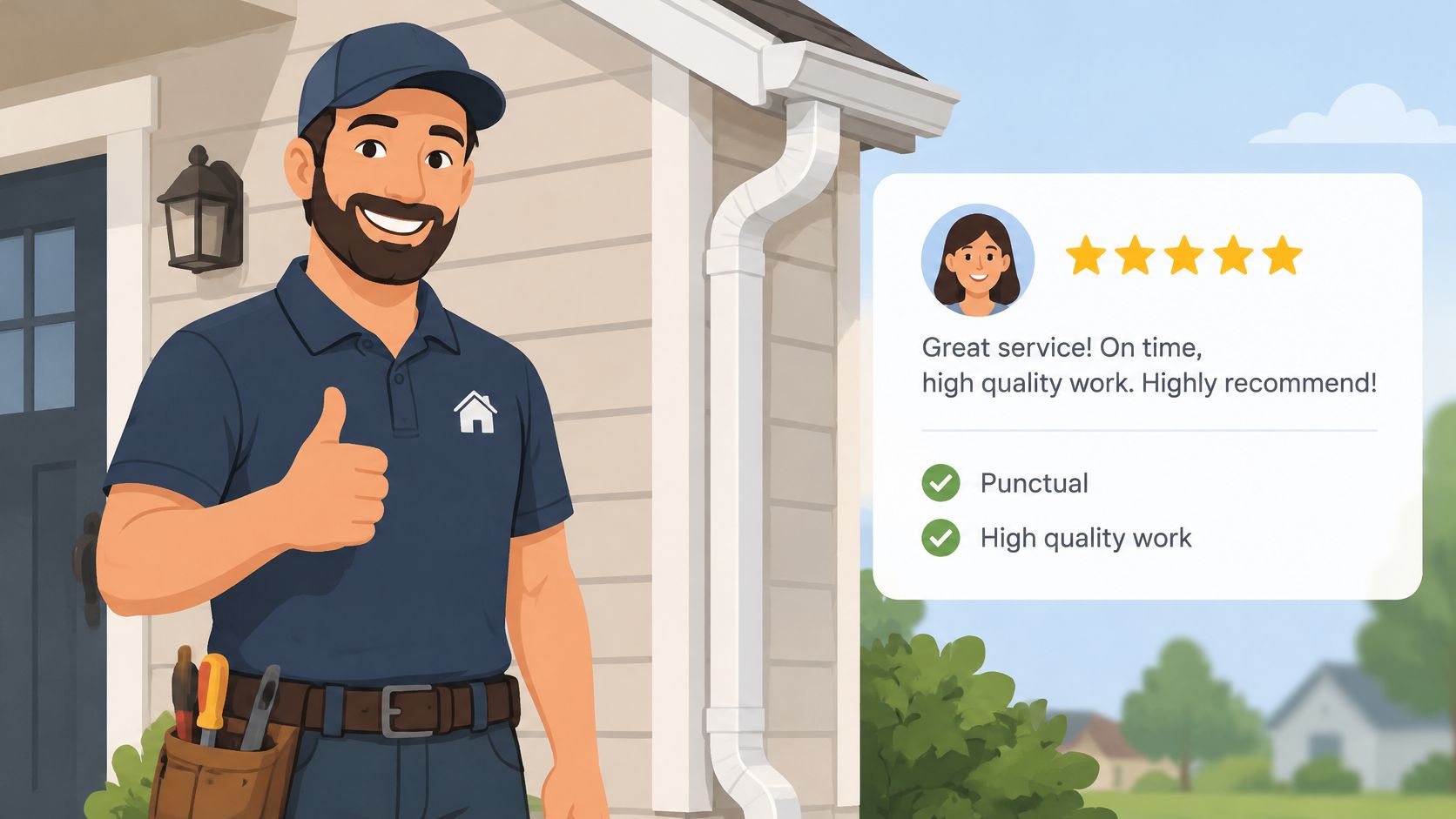
For a plumber, accountant, cleaner, or consultant, the work itself is only part of the experience. Prospects also want to know whether someone arrived as agreed, explained the work, and handled unexpected problems professionally.
Send the request when the job is complete, after confirming that the customer understands what was done. Don't confuse an automatically closed support ticket with a resolved customer issue.
Editable request
Hi [first name], thanks for choosing [business] for [service]. How did booking, communication, and the completed work compare with your expectations? Please mention anything we handled well or could improve, without including private information.
Capture reliability without exposing private details
Ask for service type, optional neighborhood, booking experience, communication, outcome, and whether the final charge matched the agreed scope. For healthcare, leave diagnosis and treatment details out of the prompt.
A cleaning company might ask whether the agreed rooms and tasks were completed. A consultant might ask whether the final deliverable answered the original business question. Browse Colorado Springs cleaning testimonials as a service-specific reference, then choose questions that fit your own scope of work.
- What works: A prompt tied to the completed job produces concrete evidence of reliability.
- What doesn't: Asking only whether the customer would recommend you leaves the reason unexplained.
- Where to display it: Match cleaning reviews to cleaning pages and emergency-repair reviews to emergency-service pages.
We support connected Google and Yelp sources with auto-sync, so website displays can stay current without repeated copying. Keep the originating platform visible, and tag feedback by service type rather than filling every page with the same general praise.
The privacy trade-off matters: A less identifiable testimonial can still be useful when the service and outcome are clear.
3. SaaS and Software Review Template
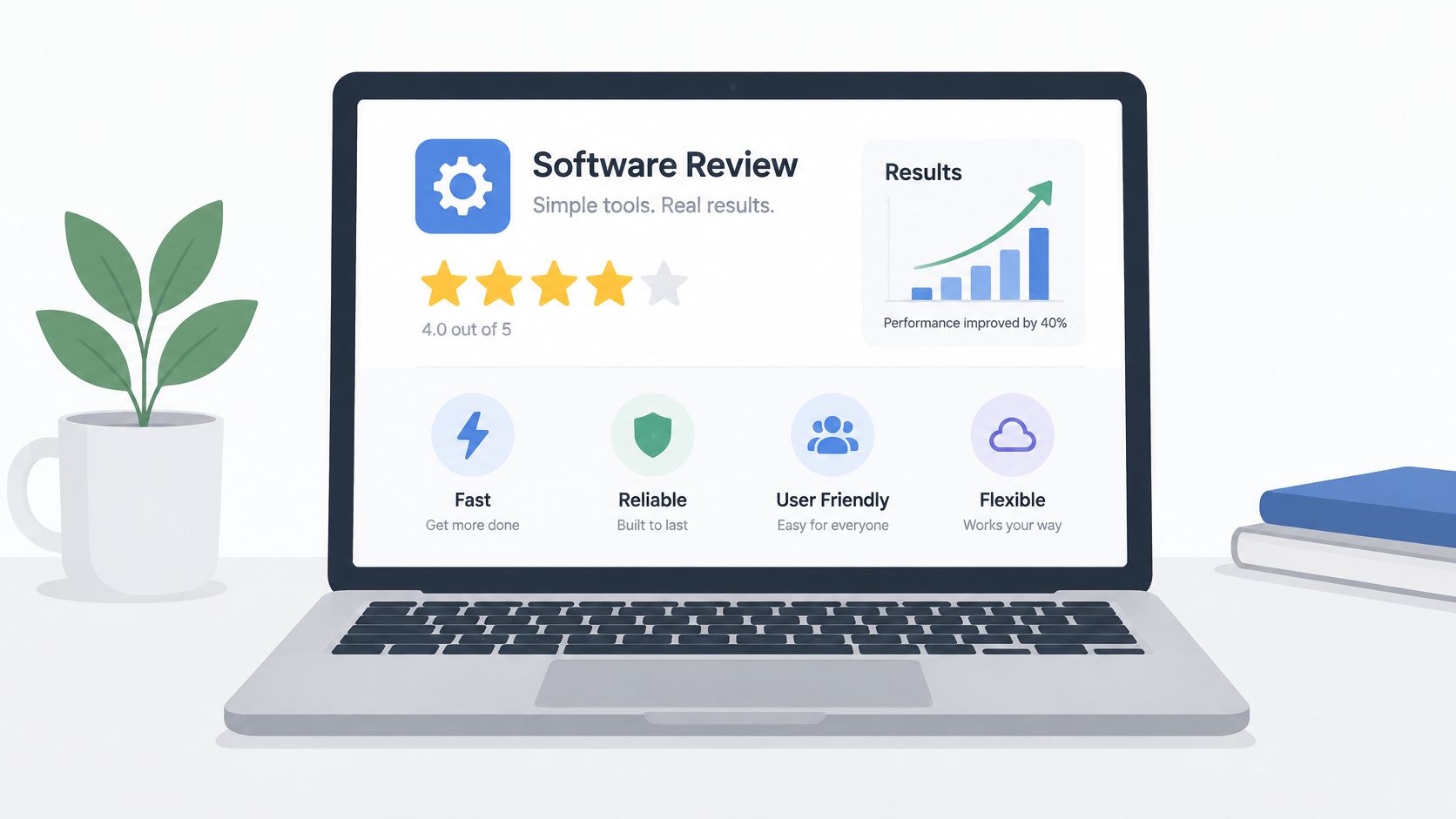
An enthusiastic launch-day comment isn't the same as evidence from a team using software in production. Separate first impressions from operational results, especially when buyers need to understand implementation effort and ongoing support.
G2 and Capterra illustrate role- and company-context reviews. Product Hunt comments can be useful for early reactions, but they shouldn't be presented as proof of long-term return on investment.
Ask after a meaningful milestone
Trigger the request after a completed project, successful rollout, or recurring workflow. Avoid treating account creation as evidence that the customer has received value.
Editable prompt
You've completed [milestone] using [software]. What were you trying to accomplish, which features helped, and what required extra effort? Please describe the outcome and anything another team should know before adopting it.
Collect these fields with optional business details:
- Customer context: Role, team type, company size, and use case.
- Implementation: Setup effort, onboarding obstacles, and support experience.
- Results: What changed, how the customer assessed it, and remaining limitations.
- Attribution: Approved name, title, company, and publication consent.
Say a project-management customer completed a client handoff. Ask whether teammates could find approvals and outstanding tasks, not whether collaboration improved.
The advantage is relevance: A visitor can recognize a similar team and workflow. The drawback is effort: Busy users may abandon a form that feels like a procurement questionnaire.
Our collection forms capture first-party testimonials alongside imported feedback. Use AI summaries to identify recurring themes, but verify each theme against the original comments before turning it into website copy.
Display role and use-case context beside the quote. A short testimonial with a clear limitation is often more useful than an impressive-sounding claim with no explanation.
4. Restaurant and Hospitality Review Template
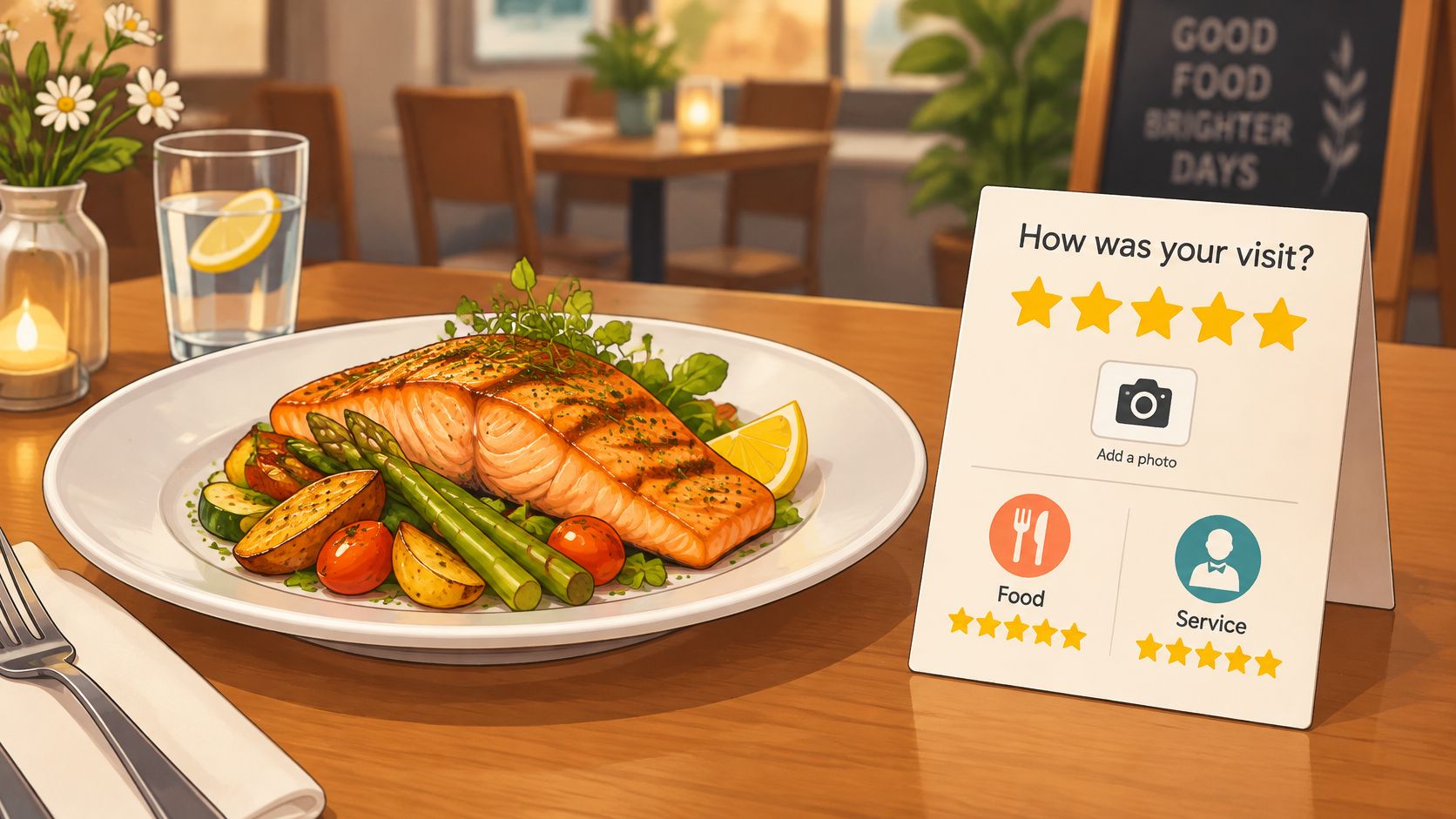
Ask a guest what they remember, and you're more likely to collect something useful than if you ask whether everything was excellent. A standout dish, quiet room, or helpful interaction gives future guests a concrete expectation.
Request feedback when the bill is settled or at checkout, not while someone is eating or trying to resolve a problem.
Editable guest prompt
Thanks for visiting [venue]. What stood out about your [meal/stay], and what could have been better? If you'd like, mention a dish, room feature, or staff interaction that would help another guest plan their visit.
Collect details guests can use
For restaurants, capture dish ordered, occasion, service experience, atmosphere, and value. For hotels, substitute room type, trip purpose, cleanliness, sleep experience, and check-in.
Tripadvisor's trip-type categories illustrate why context matters. A business traveler and a family on holiday may judge the same hotel differently without either review being wrong.
- Restaurant example: A bakery asks which pastry the guest tried and how its texture and freshness compared with expectations.
- Hotel example: A boutique property asks whether the room suited the guest's reason for traveling.
- Display choice: Use dish-specific quotes near menus and room-specific comments near accommodation descriptions.
Don't turn the request into a suggested answer. Asking which dish stood out leaves room for an honest response; asking guests to praise your signature dish doesn't.
The trade-off: Category ratings are easy to compare, but free text explains why the guest chose them. Keep both available without making every category compulsory.
A header badge can summarize rating and review volume, while a carousel or mosaic carries detailed comments. For wording suited to dining experiences, adapt these restaurant review prompts, and respond to feedback on its originating platform before selecting website excerpts.
5. Mobile App Review Template
A mobile app review has two jobs: helping prospective users judge the app and helping the product team understand what happened. A rating alone can't tell you whether someone struggled with onboarding, a device-specific crash, or a missing feature.
Choose a natural usage milestone, such as completing a task or finishing a game level. Don't interrupt an error-recovery flow with a rating request, and don't use satisfaction screening to reserve public review invitations for happy users.
Separate public feedback from diagnostics
Editable prompt
You've just completed [task] in [app]. How did the app help, and where did you encounter friction? Please describe your experience without including passwords, account details, or other sensitive information.
Offer optional fields for device model, operating system, app version, usage frequency, and the affected feature. Make clear which details remain private and which may appear publicly.
- Public review: A short summary, overall assessment, and useful context about the task.
- Private diagnostic detail: Reproduction steps, device information, and support contact permission.
- Internal routing: Tags for crashes, onboarding, accessibility, billing, and feature requests.
For a productivity app, ask whether the customer completed the intended workflow. For a mobile game, ask about controls or progression rather than nudging the player toward a favorable score.
The trade-off: More diagnostic fields help developers, but they can turn a review form into a bug report. Keep technical details optional and provide a separate support path.
Apple App Store and Google Play reviews provide familiar examples of version-related feedback. Respect each store's current request guidelines, avoid repeated prompts, and keep public review requests distinct from support escalation.
We can bring App Store and Google Play reviews into website widgets. Display relevant app and usage context where available, and send tagged issues to the team responsible for fixing them.
6. Local Business Review Template (Map Listings and Directories)
For a salon, gym, shop, or clinic, the best request is usually short enough to complete on a phone. Ask about the visit the customer just had, rather than sending a broad satisfaction questionnaire.
A text message or checkout QR code can provide a convenient route. Offer it consistently to eligible customers, not just those who compliment staff.
Editable request
Thanks for visiting [business/location]. Would you share an honest review of your experience? You can mention the service you used, what stood out, and anything we could improve: [review destination].
Keep the local context useful
Capture location, service, optional staff name, and a brief account of the visit. Don't require customers to identify employees or disclose sensitive details.
A salon might invite comments about consultation and whether the result matched the discussion. A fitness studio could ask about class suitability, instruction, and the booking experience.
Google Business Profile policy prohibits incentives for reviews and selectively soliciting only positive reviews, as explained in Google's review guidance. A discount attached to an otherwise neutral request still creates a policy problem.
- What works: A direct destination, minimal typing, and a specific prompt about the visit.
- What doesn't: Asking for a particular star rating or routing dissatisfied customers away from public review options.
- Display format: Location-specific quotes beside opening hours or booking details, with source-labeled rating badges.
Keep the invitation consistent: You can personalize the service name without changing who gets the chance to leave a public review.
Our free review-link and QR tools can simplify access to the review destination. If displaying ratings from different platforms, label the sources and counts clearly rather than implying that a website-created summary is an official platform score.
7. B2B Testimonial and Case Study Review Template
Start with the result, then establish what supports it. B2B buyers need to understand the original problem, the work involved, and whether the outcome applies to their own situation.
Send this request after a customer can evaluate a completed engagement, implementation, or renewal period. A courteous kickoff call isn't enough evidence for an ROI testimonial.
An editable outcome-led prompt
What changed after working with [company/product] on [project]? Please describe the original challenge, the approach taken, and the outcome you can support. Include any limitations, dependencies, or results you're still evaluating.
Then collect:
- Baseline and outcome: What changed, over what period, and how the customer measured it.
- Contribution: Which work your business performed and which other factors mattered.
- Attribution: Approved quote, name, role, company, and logo permission.
- Approval: Confirmation of the final wording and permitted publication channels.
For an agency engagement, ask the client to distinguish campaign results from changes in budget or sales follow-up. For software, distinguish a documented time saving from a general impression that work feels faster.
The benefit is reusable evidence for proposals, landing pages, and sales decks. The cost is approval effort, especially when legal or communications teams need to review claims.
Our collection forms bring submissions into a dashboard for approval and tagging. Record consent explicitly, and don't assume submitting private feedback authorizes public marketing use.
If you draft a quote from an interview, send it back for approval without adding claims. Use this customer testimonial template to structure the longer story.
The FTC's Consumer Reviews and Testimonials Rule prohibits incentives tied to a particular positive or negative sentiment. Don't make a reward contingent on approving a favorable testimonial.
8. Marketplace and Short-Term Rental Review Template
A guest review should help the next traveler judge the property. A host review should describe the guest relationship without retaliation or unnecessary personal detail. Keep those perspectives separate, even when the marketplace collects both.
Airbnb illustrates guest and host feedback with category ratings and private comments. Real estate reviews on Zillow and client–freelancer feedback on marketplaces likewise need context about the underlying transaction.
Guest-facing prompt
Thanks for staying at [property]. How did the space compare with the listing? Please comment on cleanliness, communication, check-in, and anything future guests should know. Use the private feedback field for access or maintenance details that shouldn't be public.
Build around the completed transaction
Send the reminder promptly after checkout or project completion, following the marketplace's review process. Where a platform uses delayed or double-blind publication, don't pressure the other party to reveal their review beforehand.
- Guest fields: Listing accuracy, cleanliness, communication, check-in, location, value, and public narrative.
- Host fields: Communication, observance of agreed rules, and condition at departure.
- Private fields: Maintenance specifics and sensitive access information.
For a rental with steep entrance steps, invite factual comments about access rather than a vague assessment of suitability. Don't publish door codes, identifying documents, or unnecessary guest details.
The trade-off: Category ratings make comparisons easier, but they don't replace explanations. A location rating means little without knowing whether the guest wanted nightlife, quiet, or proximity to work.
Use source-labeled quotes and category grids where the underlying information supports them. Our supported sources include Airbnb and Zillow; importing a review shouldn't be presented as independent verification of every claim it contains.
For workflow considerations, consult this review management guidance for Airbnb hosts. Respond to criticism with a factual account and corrective action, not an argument about the reviewer's motives.
How the eight review templates differ by business type, rating criteria, and send timing
| Template | Best For | Rating Categories | Typical Send Timing |
|---|---|---|---|
| Product Review Template (E-commerce and Direct-to-Consumer) | Online product purchases | Overall rating, pros and cons, use case, fit or variant, recommendation | 7–14 days after delivery |
| Service Review Template (Local and Professional Services) | Local and professional service businesses | Punctuality, communication, work quality, value | Immediately after job completion |
| SaaS and Software Review Template | Software products and B2B buyers | Ease of use, features, support, value, implementation, recommendation | After a major milestone or first month of use |
| Restaurant and Hospitality Review Template | Restaurants, hotels, and travel businesses | Food or room quality, service, atmosphere, cleanliness, value | At checkout or when the bill is settled |
| Mobile App Review Template | iOS and Android apps | Overall rating, stability, performance, onboarding | After a positive user milestone |
| Local Business Review Template (Map Listings and Directories) | Shops, gyms, salons, clinics, and other local businesses | Overall rating, visit or service details, staff feedback | At the point of service |
| B2B Testimonial and Case Study Review Template | Business vendors seeking customer stories and ROI proof | Challenge, solution, measurable results, customer approval | Once results are available and the customer can review the testimonial |
| Marketplace and Short-Term Rental Review Template | Rental, real estate, and gig-economy marketplaces | Accuracy, cleanliness, communication, check-in, location, value | Within 24 hours of checkout |
Pick One Template, Test It, and Build From There
Choose the template closest to your customer relationship and adapt it to a real completed experience. Start with the question you wish prospective customers could ask an existing customer, then remove anything that doesn't help answer it.
Send the request while the experience is fresh enough to describe accurately. Review the initial responses before rewriting the entire workflow: vague answers might indicate a vague prompt, premature timing, or a form that asks for too much.
Judge usefulness before volume
Look for a recognizable use case, a concrete observation, and enough context to avoid misleading the reader. A review that mentions a limitation can be valuable if it helps someone decide whether your offer suits them.
- If comments are generic: Replace a broad satisfaction question with a question about the task, service, or outcome.
- If forms go unfinished: Move secondary context fields out of the required path.
- If results lack support: Ask how the customer assessed the change before publishing a performance claim.
- If consent is unclear: Hold the testimonial until the customer approves its use.
Treat editing as a responsibility, not an opportunity to improve the customer's opinion. Preserve the original, obtain approval for substantive changes, and don't remove qualifications that alter the meaning.
Your website can feature selected testimonials, but it shouldn't pretend to be an independent review service. The FTC's guidance on its final review rule addresses review suppression, undisclosed insider relationships, and company-controlled review sites falsely presented as independent.
Match the display to the decision
Place product feedback near product choices, service-specific comments near booking, and approved B2B outcomes beside relevant case studies. Keep source, date, and customer context visible where available, and check mobile layouts for awkward truncation.
This testimonial guidance for small business owners offers another publishing reference. The operational priority remains straightforward: maintain accurate attribution, clear permission, and a useful connection between the testimonial and the page.
Our setup is designed as a ten-minute job: connect a review source, style a widget, and paste the snippet. The connected widget then keeps itself current, but your collection process still needs attention as products, services, and customer expectations change.
Build from specific, approved feedback rather than a larger pile of interchangeable praise. Once the request produces useful answers, reuse that structure and improve the details deliberately.
Bragly brings review collection forms, imported reviews, organization tools, and no-code website widgets into one workflow. Visit Bragly to turn the template that fits your customers into a collection form and display the resulting testimonials where buyers need them.