

Looking for a Shorter Overview?
AI Summary
Key Moments
Specificity Drives Persuasion
Testimonials must link client concerns with agent actions and results to be credible and relatable.Consent and Privacy Are Crucial
Obtaining client permission and carefully managing sensitive details ensures ethical and compliant testimonials.Tagging and Placement Matter
Organizing testimonials by client need and displaying them on relevant pages enhances their effectiveness and relevance.Balanced Storytelling Builds Trust
Honest, detailed stories that show process and outcomes foster realism and client confidence without overstating results.A realtor's website can be packed with five-star reviews and still fail to persuade. Prospects scroll past lines such as “Great agent,” “Highly recommend,” and “Made the process easy” because those phrases don't answer the question behind the visit: Can this person handle my situation?
The strongest testimonial examples for realtor websites connect a client's specific concern with the agent's actions and the result. A first-time buyer wants clarity around financing. A seller wants evidence of pricing and negotiation skill. A relocating family needs proof that remote service works. A grieving family needs patience and discretion.
The eight examples below show how to request each story, protect client privacy, tag it for retrieval, and place it where the relevant prospect is already looking for reassurance. The quote is only the visible part. The true conversion value comes from the story structure behind it.


1. First-Time Homebuyer Guided Through an FHA Loan
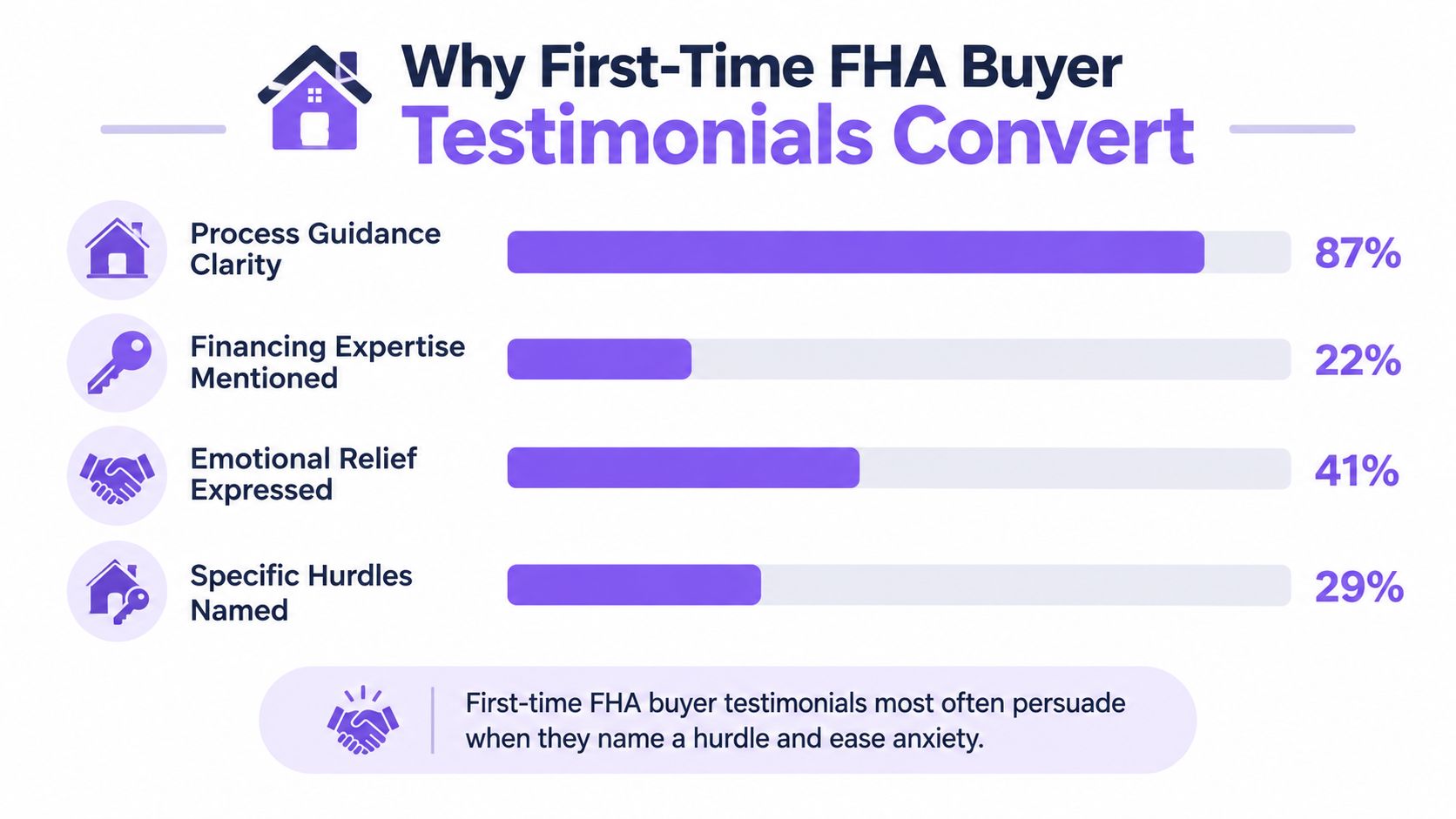
A first-time buyer may understand the home they want and still worry about the loan. FHA requirements, appraisal repairs, and lender requests can make the process feel unfamiliar. A useful testimonial should show how the agent reduced that uncertainty through specific actions.
“I had no idea what an FHA appraisal was. She walked me through every step, coordinated with our lender, and kept us calm through the repairs. We closed three days early.”
Another buyer might write:
“As a teacher with student loans, I thought homeownership was out of reach. Our agent helped us find the right program and made the process understandable.”
These quotes work because they describe observable help. “Helpful” is an opinion. Explaining FHA requirements, preparing a buyer for appraisal repairs, and keeping communication clear give future clients something they can assess. An INTELLI client testimonial can provide another example of this kind of first-time-buyer story.
Ask for the concern behind the purchase
Ask permission before mentioning income, credit history, student loans, or a specific loan program. A client may approve the FHA reference, or prefer wording such as “first-time buyer with a limited down payment.”
Send a short follow-up after closing:
- Process question: What surprised you most about buying your first home?
- Support question: Which part of the process did I make easier?
- Specificity question: Was there a moment when an explanation or update changed how you felt?
Collect the response through a testimonial collection form. Tag it first-time-buyer, FHA, or financing guidance so you can retrieve the right review for buyer pages, consultation follow-ups, or financing-related content.
Place a concise quote beside a photo of the new front door, or use a compact card near the buyer consultation form. A first name and last initial can identify the client while preserving privacy. A single quote supports trust, while the tags and placement make it useful at the point when a similar buyer needs reassurance.
2. Seller Achieves a Fast Sale Above Asking Price
Seller testimonials work best when they explain how the agent's decisions affected the campaign. A homeowner may mention comparable sales, targeted improvements, staging advice, or a pricing adjustment. The testimonial then gives future sellers something more useful than praise. It shows how the agent operates.
For example:
“We listed at $540K, made two staging changes, and adjusted the price once. We closed at $562K in nine days.”
That statement contains a result, but it also exposes the decisions behind it. Another strong version could be:
“Our agent told us what not to fix. That saved us several thousand dollars before listing and helped us focus on the changes buyers would notice.”
Results-based language needs careful handling. Keep the claim accurate, confirm that the client approves any sale price or timing detail, and add a short statement that outcomes vary by property, market conditions, and client circumstances. The FTC's Endorsement Guides require testimonials to reflect the endorser's honest experience and prohibit broader claims that the featured result is typical without appropriate support.
Build a seller-results story
Ask the seller what they're comfortable sharing:
- Timing: Days on market or time from listing to contract
- Process: Pricing, preparation, photography, staging, or negotiation decisions
- Outcome: Sale price, offer volume, or a private description such as “sold within our target range”
Tag the review seller-results, pricing strategy, or listing preparation. A grid or badge layout works well on listing-service pages because prospects can scan several specific outcomes quickly. If a longer review contains useful detail, Bragly's AI highlights feature can help identify phrases worth displaying, but the client's meaning must remain intact.
You can also connect reviews from a Zillow integration and keep first-party testimonials organized beside platform feedback. Don't publish only the most flattering lines while implying they represent every client experience. Curate for relevance, not distortion.
3. Out-of-State Relocation Handled Remotely
Remote relocation testimonials should prove that the agent can replace the client's physical presence with a reliable process. A corporate transferee may need video tours, neighborhood walkthroughs by phone, school and commute research, and coordination with an employer or relocation company.
A useful example could read:
“We never set foot in the city until move-in day. The video tours and neighborhood calls were thorough and honest. We knew what each area felt like before we made an offer.”
Another version might focus on coordination:
“Our agent worked with the relocation company, stayed within our budget, and helped us choose a home before we arrived.”
These statements are more credible when they describe the remote workflow. “Great at relocation” doesn't show what happened. Video calls, local comparisons, document coordination, and candid comments about neighborhoods give the prospect something they can evaluate.
Capture the settled-in perspective
Request this testimonial around the 30-day mark, after the client has lived in the home and can assess whether the agent's guidance held up. Ask:
- Which part of the remote process saved you the most time?
- What did the video tour or neighborhood walkthrough help you understand?
- Did the home and area match what you expected?
Tag the review relocation, remote, corporate transfer, or out-of-state buyer. Display it on relocation landing pages and neighborhood pages, where a short video highlight can communicate trust more naturally than a long paragraph. Bragly's video testimonial tools can support that format when the client is comfortable recording a clip.
Ask whether the client's employer or relocation team can share the testimonial in internal relocation resources. Get separate permission for that use. A website consent doesn't automatically cover employer communications or private company channels.
4. Winning a Competitive Bidding War
A bidding-war testimonial should show judgment, not promise victory. Buyers want to know whether the realtor can explain trade-offs, protect their limit, and structure a competitive offer without pushing them into terms they can't accept.
Consider this example:
“We lost three offers before our agent helped us write a stronger letter and structure the terms. We got the fourth house.”
The more useful version adds the decision process:
“She kept us informed about the competing offers and made sure we knew our limit before we went in. We understood what we were changing and what we wouldn't compromise on.”
That distinction matters. A testimonial can document a successful result, but it shouldn't imply that the same tactics guarantee a successful offer for every buyer. Confirm that the client's description of escalation clauses, offer terms, letters, or competing bids is accurate before publication.
Put the reassurance near the consultation decision
Ask the client:
- Which part of the offer strategy helped you feel prepared?
- What did we discuss before deciding your maximum?
- Did the final offer involve a trade-off that future buyers should understand?
Tag the testimonial competitive-market, multiple-offer, or offer strategy. Use a short quote as a banner on buyer consultation pages, where prospects are deciding whether to book a call. A carousel can rotate several bidding-war stories across a homepage, but avoid making every slide sound like a guaranteed win.
The strongest quote often focuses on control rather than triumph. “We knew our limit” may reassure a cautious buyer more effectively than “We beat six other offers.” It shows the agent helped the client compete without replacing the client's judgment.
5. Empty Nesters Downsizing with Estate Organization
Downsizing testimonials need a different tone. The transaction may involve decades of belongings, a family home full of memories, and adult children helping a parent make decisions. The agent's value includes coordination and emotional steadiness, not only pricing and negotiation.
A client might say:
“Our agent treated the move like it mattered as much as the sale. She worked with my mother every step of the way.”
Another example:
“We were overwhelmed by thirty years of belongings. The agent connected us with a trusted estate sale team and helped us move forward without rushing.”
Don't force these clients into a long questionnaire. A blank writing field may produce a more genuine account than a series of marketing prompts. Ask whether the client wants the testimonial attributed to their own name, an adult child's name, or a shared description.
Match the story to the service page
Tag these reviews downsizing, senior clients, estate organization, or family transition. Use a slider beside an “Our Services” section so visitors can read several emotional and operational stories without turning the page into a wall of text.
Ask questions that uncover the agent's role:
- What part of the transition felt most difficult?
- Which coordination task reduced your workload?
- How did the agent communicate with family members?
- What would you tell another family facing a similar move?
A testimonial can mention movers, estate-sale professionals, organizers, or family coordination only when the client's wording is accurate and the relationship is represented clearly. If a vendor relationship could affect how the endorsement is evaluated, disclose it. The FTC explains that material connections, including incentives, family relationships, and other relevant ties, should be clear and conspicuous in its guidance on endorsements.
6. Investor Building a Rental Portfolio
Investor testimonials should sound operational. Investors usually care about property screening, rent comparisons, contractor access, financing coordination, and whether the agent can support repeat decisions. A general statement about kindness may be positive, but it won't demonstrate investment competence.
A stronger example is:
“Our agent helped us acquire three duplexes in two years, and each one has cash-flowed since closing.”
Another could say:
“She understood rent comps better than most analysts I've worked with. She helped us reject properties that looked attractive but didn't fit our criteria.”
The second example may be more persuasive because it shows restraint. An investor wants an agent who can say no when the numbers or property condition don't support the plan.
Request the relationship story
Ask after the second or third closing, when the client can describe how the relationship developed:
- How did the agent evaluate properties against your criteria?
- Which property did you reject, and why?
- What support mattered after closing?
- Did the agent connect you with contractors, managers, inspectors, or other professionals?
Avoid publishing income, cash flow, purchase prices, or return figures unless the client explicitly approves them. A client can describe a portfolio outcome without revealing sensitive financial information.
Tag the review investor, rental property, duplex, or repeat client. Place it on a dedicated investor page and in approved LinkedIn outreach. Badge and mosaic layouts work well when you want to show several compact investor reviews without crowding the page.
Keep claims precise. “Cash-flowed since closing” is the client's experience. “Every investor will achieve positive cash flow” is a broader claim that requires evidence and shouldn't be implied by a testimonial.
7. Estate Sale Following a Family Loss
An inherited-property testimonial can be powerful because it reveals how the agent behaves when the transaction is emotionally difficult. It also requires the most restraint. Heirs may be managing probate, family disagreement, property maintenance, and grief at the same time.
A client might write:
“Our agent was patient with our family during the hardest months. We never felt rushed.”
Or:
“She worked with our attorney on the probate timeline and kept us informed without overwhelming us.”
The agent's role should be described accurately. Don't imply that the realtor provided legal advice or handled probate independently if an attorney managed those matters. A safer description distinguishes coordination from legal work.
Let the family control the publication
Wait several months after closing before requesting a review. Make clear that declining won't affect the relationship, and let the client decide whether to share anything at all. Give them control over the wording, name format, image, and publication channels.
Tag the testimonial estate-sale, inherited property, probate coordination, or family transition, but keep it out of automatic widget rotation unless the client has specifically approved that display. Put it beside the agent's service commitments, such as clear communication, organized timelines, and respectful coordination, rather than using grief as a marketing hook.
A resource about selling an inherited house for cash may attract a related audience, but the testimonial must remain a real account of the client's experience. Never edit emotional language into a polished sales claim. If you shorten the review for a widget, disclose that it was lightly edited and preserve the original meaning.
8. Agent Sourcing an Off-Market or New-Construction Opportunity
A buyer may choose an agent after hearing about a property before public listing, finding a suitable builder opportunity, or matching strict requirements. The testimonial should show the work behind that result without overstating access.
For example:
“Our agent called us about a home that wasn't listed yet. We made an offer that weekend.”
A new-construction client might say:
“She explained the builder's options and negotiated an incentive we didn't know was available. We understood the terms before we signed.”
Confirm each access claim before publishing. “Off-market” may describe private marketing or a property with specific restrictions. Describe builder incentives precisely, and do not suggest that every buyer receives the same concession. For agents assessing new opportunities, AI underwriting for agents can support the evaluation process, but the testimonial should still identify what the agent personally did.
Show the search, not only the result
Ask the client:
- What requirement were you trying to meet?
- How did the agent learn about the opportunity?
- What did the agent do before making contact?
- Which terms or options mattered most in the final decision?
Tag reviews sourcing, off-market, new-construction, or builder negotiation. In Bragly, use a ribbon or badge for a verified phrase such as “Found before it hit the market.” Place the testimonial on buyer-consultation pages and builder partnership pages.
Add a short case-study summary covering the buyer's requirements, search process, and decision. That context makes the review specific without promising secret inventory to every prospect. Ask whether the client approves the public wording and any details about timing, access, or incentives before publishing.
Comparing 8 Realtor Testimonials
| Testimonial Type | Implementation Complexity | Resource Requirements | Expected Outcomes | Ideal Use Cases | Key Advantages |
|---|---|---|---|---|---|
| First-Time Homebuyer Guided Through an FHA Loan | Medium, lender coordination and privacy concerns | Lender contact, consent/redaction for financial details, photo option | Increased trust and buyer conversions; reduced financing anxiety | Buyer-agent landing pages; first-time buyer campaigns | Highly relatable; demonstrates financing expertise |
| Seller Achieves a Fast Sale Above Asking Price | Medium, requires verifiable metrics and disclaimers | Sale metrics (DOM, price), staging/photos, seller permission for numbers | Credibility with sellers; stronger listing leads | Listing presentations; seller-focused ads | Concrete, verifiable results; persuasive to sellers |
| Out-of-State Relocation Handled Remotely | Medium, needs virtual tools and logistics coordination | Video tours, virtual neighborhood content, follow-up after move-in | National reach; corporate referrals; conversions for transferees | Relocation landing pages; corporate referral programs | Shows remote capabilities and organized communication |
| Winning a Competitive Bidding War | Medium–High, careful compliance around tactics | Accurate description of negotiation tactics, careful editing | Reassures buyers in hot markets; showcases negotiation skill | Buyer consultations; seasonal competitive-market campaigns | Strong storytelling; demonstrates strategic edge under pressure |
| Empty Nesters Downsizing with Estate Organization | High, multi-party consent and emotional sensitivity | Consent from clients/children, vendor referrals, careful wording | Builds trust with older clients; referral from families | Senior-client and downsizing pages; referral-driven marketing | Signals empathy, patience, and project management |
| Investor Building a Rental Portfolio | Medium, sensitive financial details, repeat engagement | Financial analysis summaries, permission to publish, network references | Attracts high-value repeat clients; B2B leads | Investor landing pages; LinkedIn and B2B outreach | Demonstrates analytical depth and long-term value |
| Estate Sale Following a Family Loss | High, very sensitive; timing and consent critical | Strong delayed consent, careful editing, possible attorney coordination | Deep trust and strong referrals from estate networks | Agent credentials pages; referral partner materials | Shows high empathy, discretion, and professionalism |
| Agent Sourcing an Off-Market or New-Construction Opportunity | Medium, must verify claims and builder terms | Verified sourcing claims, builder contacts, case-study summary | Attracts high-intent buyers; perceived exclusivity | Buyer consultations; new-construction partnerships; high-end marketing | Demonstrates access, initiative, and exclusive value |
Turn These Testimonial Examples Into a Repeatable System
The eight stories become useful when they form a system rather than a collection of random quotes. Start by mapping each testimonial type to a page, audience, and client concern.
A first-time-buyer story belongs near financing guidance and consultation forms. A seller-results story belongs on listing pages. A relocation review belongs on pages for corporate transfers and remote buyers. Downsizing and estate-sale testimonials need more controlled placement because privacy and emotional context matter.
Create a simple content map:
- Buyer education: First-time purchase, FHA guidance, appraisal support
- Seller performance: Pricing, preparation, days on market, negotiation
- Specialized service: Relocation, downsizing, estate coordination
- Advanced expertise: Investors, competitive offers, new construction
Then build a consent-first request process. Ask whether the client is willing to provide feedback, explain where it may appear, and give them control over their name, photo, transaction details, and publication channels. Don't condition a gift or incentive on positive sentiment. Don't ask only clients you expect to praise you, and don't suppress legitimate negative feedback to create a misleading impression.
The FTC's updated guidance treats review manipulation broadly. That includes publishing, editing, boosting, suppressing, or organizing reviews in ways that distort what consumers believe. Light editing for length or grammar can be practical, but disclose it and retain the client's substantive meaning.
Make every request produce a usable story
A neutral request should ask about the client's situation, the agent's action, and the result. One follow-up question often produces more useful detail than a long form:
Ask: What problem were you worried about before we started, and what changed by the end?
For a seller, that may reveal a pricing decision. For a relocation client, it may reveal how remote tours reduced uncertainty. For an investor, it may explain why the agent rejected a property. The answer gives you a testimonial that can be matched to a real landing page.
Tag every review by need, not only by transaction type. “Buyer” is too broad. Use labels such as first-time-buyer, remote, competitive-market, downsizing, investor, or estate-sale. Add a second tag for the evidence, such as communication, negotiation, pricing, financing, or coordination.
Choose the widget for the placement
A quote on a consultation page needs a different format from a review library. Use a banner or badge for one high-confidence statement, a carousel for several short buyer stories, a grid for seller outcomes, a slider for emotional transitions, and a video highlight when voice and expression add meaningful context.
Bragly can support this workflow by collecting first-party testimonials, importing reviews from supported platforms, tagging them, and displaying them through no-code widgets. The platform also supports review aggregation from sources such as Google, Facebook, and Zillow, so an agent can manage external reviews alongside direct client feedback.
Start with the two or three categories that match your strongest client segment. Don't wait until you have a perfect library. Ask recent clients for one specific story, verify the details, secure publication consent, and place it on the page where that story resolves a real objection.
Over time, compare which placements generate consultation activity and which quotes receive attention. Keep the review content honest, current, and connected to a recognizable client need. A testimonial earns trust when the prospect can see themselves in the situation and understand exactly what the agent did.
Bragly helps realtors collect, organize, and display client testimonials with forms, tags, source aggregation, and no-code widgets suited to buyer and seller pages. Visit Bragly to turn specific client experiences into proof that appears where future clients need it.