
Looking for a Shorter Overview?
AI Summary
Key Moments
Bragly excels at consolidating public reviews
It brings together reviews from over 47 platforms plus new submissions, enabling consistent website display.Senja supports broad testimonial management
Offers collection, import, display tools, and social repurposing with a strong free tier.VideoAsk facilitates conversational video feedback
Enables asynchronous customer conversations via video, voice, or text for richer follow-ups.Vocal Video suits structured high-volume campaigns
Supports multi-question collectors, automatic production, and publishing controls with annual billing.StoryPrompt is a good fit for teams that want customers to tell a story on camera without scheduling a call or learning an editing tool. A guided prompt, a recording link, and automatic production can turn a hesitant client into a publishable video, voice, or text testimonial.
Still, the right testimonial tool depends on what happens before and after the recording. You may already have credible reviews on Google, Trustpilot, G2, Facebook, marketplaces, and support messages. You may want a conversational video question rather than a guided story. Or you may need surveys, NPS, review requests, and website proof in the same workflow.
The five alternatives below do not all replace StoryPrompt in the same way. Some focus on broad testimonial collection, some on video questions, and others on formal campaigns, surveys, or public-review libraries. I have kept StoryPrompt’s strengths in view rather than treating a different category as an automatic upgrade.


One important distinction comes first. These are tools for collecting and publishing customer proof. If you need people to test a product, take part in research, or influence a product decision, a user-research platform is usually the better category. A customer story meant for your website and a research interview meant for an internal decision are not the same asset.
Quick comparison
| Tool | Best for | Starting point | Choose it when |
|---|---|---|---|
| Bragly | Public reviews plus fresh customer proof on any website | Free up to 100 reviews; paid from $14/month | Your proof already lives across public platforms and you want text or video forms alongside it. |
| Senja | Testimonial collection and social-proof display in one place | Free for 15 video and text testimonials; paid from $29/month | You want forms, imported proof, Walls of Love, widgets, and social repurposing. |
| VideoAsk | Conversational asynchronous video questions | Free to start; usage is based on processed minutes | You want to ask, reply, and follow up through video or voice. |
| Vocal Video | Multi-question video collection campaigns with automatic production | Free tier; paid plans are annual-billed from $1,188/year | You run structured video campaigns and need volume controls, production, and publishing tools. |
| Trustmary | Surveys, review collection, testimonials, and widgets | Free to start | You want customer feedback and website proof to work together in one program. |
Key takeaways
- Pick Bragly when public reviews, new text or video testimonials, and flexible website display need to live in one proof library.
- Pick Senja when a broad testimonial collection and display product, with a visible free-plan path, is the priority.
- Pick VideoAsk when customer conversations and video follow-up matter more than a finished testimonial wall.
- Pick Vocal Video when you run formal, multi-question video collection campaigns and want automatic production controls.
- Pick Trustmary when surveys, review requests, testimonial forms, and widgets need to connect.
1. Bragly: Best for public reviews and customer stories on your own website
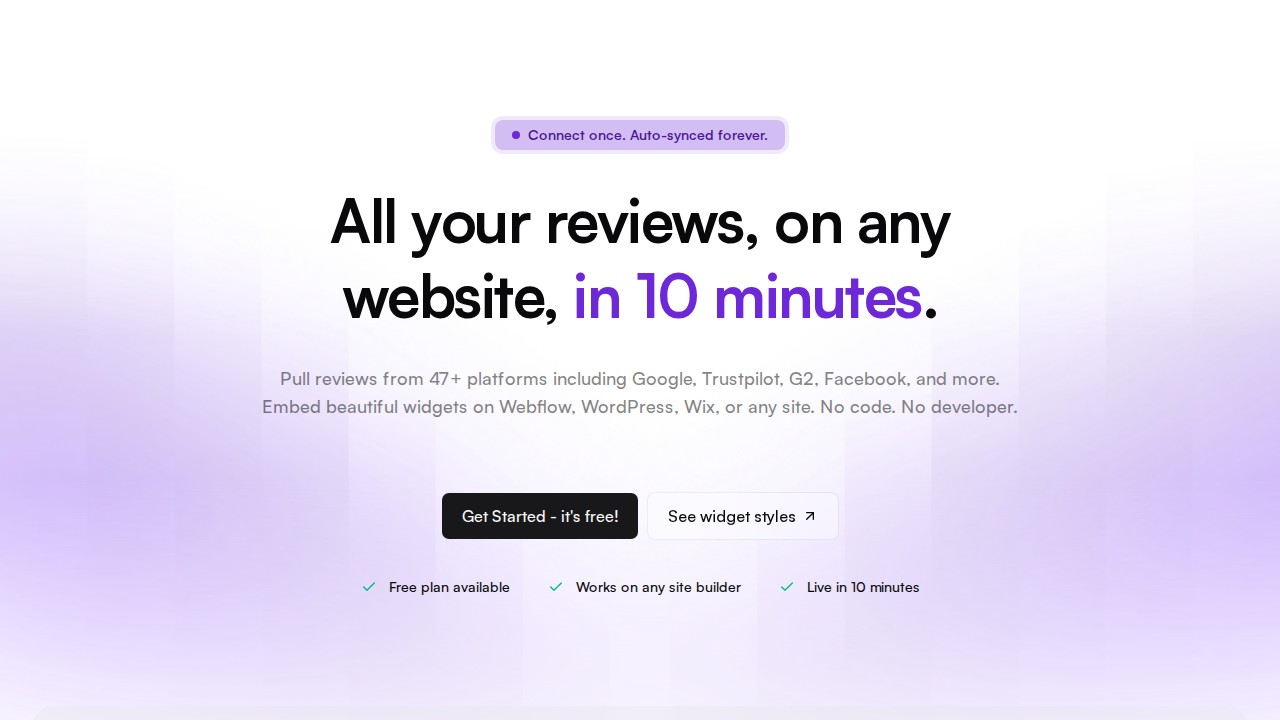
Bragly is the best StoryPrompt alternative for a team whose strongest customer proof already exists outside a video-testimonial campaign. It brings reviews from more than 47 public platforms into one place, then lets you add fresh text and video submissions through collection forms. That makes it useful when Google reviews, software-review sites, marketplace feedback, and direct customer stories all need to support the same website. If the working need extends beyond customer stories, the review management software comparison gives a broader decision framework.
This is a different starting point from StoryPrompt. StoryPrompt begins with a guided story request and produces that response. Bragly begins with the proof you already have, while still giving teams a way to collect new feedback. A SaaS company can place G2 and Capterra proof beside a new customer video. A service company can turn Google reviews and a recorded case story into a home-page section. An agency can build the system with a client, then hand the whole project over when the work is complete.
The free plan supports up to 100 reviews, and paid plans begin at $14 per month. Bragly includes text and video collection forms, moderation, AI reply suggestions, custom Wall of Love pages, webhooks, tags, highlights, and a large testimonial widget library. The display choices matter because a short video story, a detailed quote, a rating summary, and a compact proof badge do not belong in the same place on a website.
| What Bragly adds | Why it may suit a StoryPrompt user |
|---|---|
| 47+ public review sources | Keep existing proof from the places buyers already trust. |
| Text and video collection forms | Add a new story without losing the rest of your proof library. |
| Review filters and many display layouts | Match the proof format to a home page, service page, pricing page, or campaign. |
| AI reply suggestions and moderation | Manage incoming feedback before it becomes public proof. |
| Team access and project transfer | Give agencies and internal teams a clean way to collaborate and hand off work. |
Choose Bragly if your main problem is scattered proof and inconsistent website display. It is less suited to a team that mainly needs StoryPrompt’s guided asynchronous recording and automatic video-production flow for every request. In that case, StoryPrompt or Vocal Video may remain the closer match.
2. Senja: Best for broad testimonial collection and display
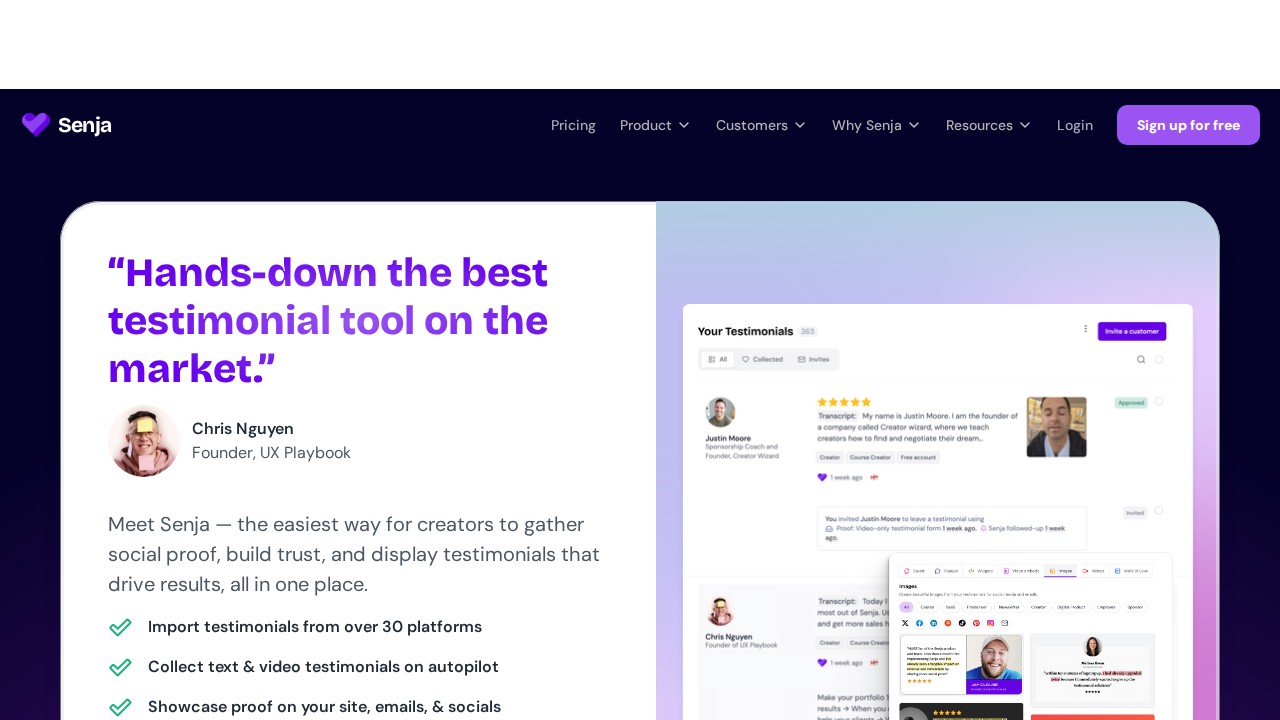
Senja is the alternative I would consider when you want a single product for collecting testimonials, importing older proof, organizing it, and turning it into website or social content. It supports video and text testimonials, collection forms, invitations and follow-ups, testimonial imports, Walls of Love, widgets, widget analytics, and repurposed video clips.
Its free tier is a notable part of the decision. Senja lists 15 video and text testimonials on the free plan, along with a collection form, imports, unlimited widgets, unlimited Walls of Love, and a selection of other proof-management features. Paid plans begin at $29 per month, moving to unlimited testimonials, brand controls, custom domains, HD exports, and more automation. That makes it easy to test the collection and display workflow before committing to a more involved setup.
Where StoryPrompt stands apart is the recording experience. Its guided video prompts and automatic production are designed to make a customer feel more comfortable telling a structured story. Senja is better thought of as a wider social-proof workspace. It is a strong choice when the business wants to collect a mix of formats, make testimonial display easier, and turn customer voices into several marketing assets.
| Senja strength | Why it matters |
|---|---|
| Video and text collection | Give customers a way to participate even when they do not want to be on camera. |
| Imports and testimonial analysis | Bring existing proof into the same working library. |
| Forms, follow-ups, and Walls of Love | Run collection and display without stitching several tools together. |
| Widgets and social repurposing | Put a customer story on a site, then adapt it for a different channel. |
Choose Senja if you want the balance to tilt toward testimonial management and display. Choose StoryPrompt instead if the personal video ask and guided recording sequence are the heart of the campaign.
3. VideoAsk: Best for conversational video questions and follow-up

VideoAsk is a different kind of alternative. It is built for asynchronous conversations through video, voice, and text. A team can ask a question, let someone reply in the format that feels comfortable, and continue the exchange. That can work well when the aim is to make the testimonial request feel more like a conversation than a form submission.
This is useful for consultants, coaches, agencies, sales teams, and customer-success teams that want to ask a customer a question, react to what they said, and guide the next step. A simple example is starting with a video thank-you, asking what changed after the customer used the service, then requesting permission to share the answer if the response is strong. The conversation can produce a testimonial, but the live exchange is the point of the tool.
VideoAsk’s pricing is based in part on processed video and audio minutes. Both the videos you create and the answers people send count toward that allowance. Check the expected length of your prompts, expected reply length, and follow-up pattern before choosing a plan. A short two-step testimonial ask can use much less processing than an ongoing customer conversation.
| VideoAsk strength | Why it matters |
|---|---|
| Video, voice, and text replies | Let each customer use the format that feels natural. |
| Conversation-style flow | Follow up on a promising answer instead of ending at one form. |
| Asynchronous participation | Customers can answer on their own schedule. |
| Processing-based usage model | Useful when you understand the likely reply volume and duration. |
Choose VideoAsk when the conversation itself creates the value. Choose StoryPrompt when you want a more focused client-story workflow that guides a customer from prompt to finished testimonial asset with less back-and-forth.
4. Vocal Video: Best for structured video testimonial campaigns
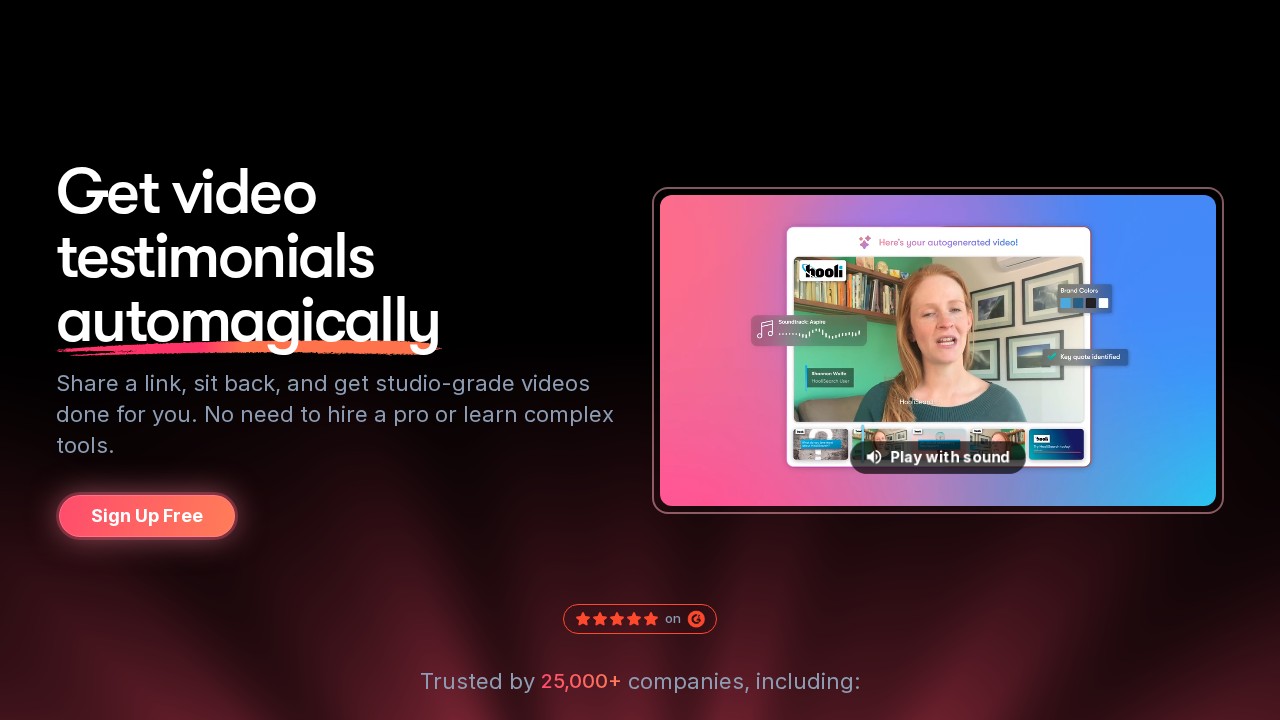
Vocal Video is a good fit for teams running a formal video-collection program. It supports branded collectors with multiple questions, video requests, automatic production, galleries, publishing controls, and team collaboration. The product is especially worth considering when a campaign needs to run at volume and the team wants more structure around request counts, questions, brand setup, and published video management.
The trade-off is its billing and processing model. Vocal Video has a free tier, but paid plans are presented as monthly figures billed yearly. Essential is listed at $99 per month, billed as $1,188 upfront for the year. The plan includes four hours of annual video processing, five active collectors, and 12,000 yearly requests. Processing is separate from publishing, so a team should estimate how much raw footage customers are likely to send, not only how many finished clips it wants to display.
The production controls are valuable for a company that needs a repeatable, branded campaign. Pro adds more collectors and questions, more processing, white-labeled collection, AI background effects, custom releases, and other brand controls. That can be a sensible fit for teams with clear video volume and an annual budget. It may be too much commitment for a team that is still learning whether its customers will record at all.
| Vocal Video strength | Why it matters |
|---|---|
| Multi-question collectors | Build a repeatable interview structure for more detailed stories. |
| Automatic video production | Turn raw responses into publishable material without a separate editor. |
| High request allowances | Run a large campaign from one collection system. |
| Publishing and gallery controls | Manage the finished video library after collection. |
Choose Vocal Video if a planned, high-volume video campaign is the core project. Choose StoryPrompt if monthly flexibility, a personal guided prompt, and a simpler start are more important than a larger annual campaign setup.
5. Trustmary: Best for surveys, review collection, and testimonial widgets together

Trustmary suits a team that treats testimonials as one part of a wider customer-feedback program. It can collect reviews and testimonials through forms, then distribute those forms through a URL, QR code, email, embeds, and other channels. It also supports imports from several established review sources and offers website widgets for showing the proof that arrives.
That makes it useful when a marketing or customer-experience team wants a survey or review request to feed into a testimonial program. For example, a company can ask for feedback, identify a strong response, invite that customer to give a fuller testimonial, then show selected proof on the website. StoryPrompt is closer to the video-story collection part of that journey. Trustmary is closer to building the larger feedback-to-proof system around it.
There is one practical detail to review: widget views. Trustmary describes views as website loads that request the widget. If the allowance is reached, the widget is hidden until the limit resets. That does not make the tool a poor fit, but it does mean traffic and display volume belong in the buying conversation, especially for a busy website or a campaign page.
| Trustmary strength | Why it matters |
|---|---|
| Survey and testimonial forms | Start with customer feedback and turn strong responses into social proof. |
| Multiple distribution methods | Use QR codes, email, links, signatures, and embeds where customers already interact. |
| Public review imports | Bring selected review-site proof into the wider system. |
| Widgets for website display | Put customer evidence close to the page where a prospect makes a decision. |
Choose Trustmary if survey, review, and testimonial work need to connect. Choose StoryPrompt if your central need is a guided customer-story recording and auto-production experience rather than a broader feedback program.
How to choose a StoryPrompt alternative
The most useful way to choose is to start with the proof you need at the end, not the feature list at the start. A finished testimonial is not always a video. It may be a public review, a short quote, a video case story, a rating badge, or a set of customer responses that should guide a follow-up conversation.
Choose Bragly when proof already exists across several public sources and you want new text or video feedback beside it. Choose Senja when a testimonial-first workspace with collection forms, display tools, and repurposing is the goal. Choose VideoAsk when a customer exchange matters more than a polished testimonial wall. Choose Vocal Video when you are building a high-volume, multi-question production campaign and can plan around annual billing and processing limits. Choose Trustmary when feedback collection, surveys, reviews, and display belong in one operating system.
Do not select a research platform simply because a software directory lists it near StoryPrompt. Research tools are built to recruit participants, test experiences, and inform internal decisions. They can collect useful video feedback, but they are not primarily made to turn a happy customer story into persuasive website proof. That distinction can save a team from buying the wrong kind of software.
Before committing, run one small campaign. Send a request to a realistic group of customers, see how many finish it, look at the quality of the response, and test the final proof on the page where buyers actually decide. Our guide to displaying customer reviews across your website can help with that last part. The best tool is the one that gets usable customer evidence from the people you serve and makes that evidence easy to publish in the right place.
Final thoughts
StoryPrompt remains a strong choice when guided prompts and automatic video production make customers willing to share a story.
But a different workflow may fit your proof problem better. Bragly is the practical choice when scattered public reviews and fresh submissions need one home. Senja is built for broad testimonial collection and display. VideoAsk is for a conversation. Vocal Video is for structured campaigns. Trustmary connects feedback, surveys, reviews, and widgets.
Pick the workflow first, then the tool. A customer story only helps when it reaches a prospect in a form that feels credible, relevant, and easy to act on.
Frequently asked questions
What is the best free StoryPrompt alternative?
The answer depends on the proof you need. Bragly has a free plan for up to 100 reviews and is useful when public reviews need to appear on your site. Senja’s free plan supports 15 text and video testimonials with collection and display tools. VideoAsk also lets teams start before committing, but its usage model is based on processed video and audio minutes.
Is StoryPrompt only for video testimonials?
No. StoryPrompt supports video, voice, and text replies. Its strongest distinction is the guided asynchronous prompt and automatic production flow for customer stories, but camera-shy customers can use another reply format.
Which StoryPrompt alternative is best for existing public reviews?
Bragly is the best fit when you already have reviews spread across public platforms and want to combine them with new text or video feedback. It is designed to bring multiple sources into one proof library, then display selected reviews across your website.
Which option is best for customer survey and testimonial workflows?
Trustmary is the closer fit for survey, review, testimonial, and widget workflows. It is useful when the process begins with feedback collection and ends with selected customer proof on a website.
Should I use a user-research platform instead of a testimonial tool?
Use a user-research platform when the goal is product feedback, participant research, or an internal decision. Use a testimonial tool when the goal is to collect and publish customer proof that supports marketing, sales, or website credibility.