

Looking for a Shorter Overview?
AI Summary
Key Moments
Match tool to proof origin
Choose your platform based on where your customer proof currently lives, like public reviews, video campaigns, or surveys.Bragly excels at public review aggregation
It connects 47+ sources and organizes existing reviews into a central display-ready library.Vocal Video suits production workflows
Ideal for teams needing multi-question video campaigns with editing, legal releases, and polished publishing.VideoAsk enables asynchronous conversations
Best for ongoing multimedia exchanges rather than one-step testimonial collection.Boast is a thoughtful choice when one customer-feedback system needs to collect video testimonials, request public reviews, run surveys, and show approved praise on a website. Its forms, email and SMS sequences, contacts, widgets, and response controls all point toward a useful goal: make it easier to ask customers for a story at the right time.
That does not mean every team needs the same kind of feedback program. A brand with years of Google, G2, Facebook, marketplace, or industry reviews may first need those existing voices in one place. A video campaign owner may need deeper recording and production controls. A customer-success team may want an actual back-and-forth conversation, while another group may care most about NPS, survey responses, and review routing.
I compared five tools with that question in mind. Bragly is my first pick when proof is spread across public sources and needs to become usable on a website. Senja is a broad testimonial and display option. Vocal Video is built for structured video campaigns. VideoAsk fits conversational video or voice follow-up. Trustmary suits survey, review, testimonial, and widget work in one program.


Quick comparison
| Tool | Best for | Core approach | Pricing posture | Choose it when |
|---|---|---|---|---|
| Bragly | Public review aggregation and fresh customer proof | Imports, collection, response support, filtering, and display | Free plan; Pro from $14/month | Existing public reviews should become proof on your website alongside new text or video submissions. |
| Senja | Testimonial collection, display, and repurposing | Forms, imports, Walls of Love, widgets, and social assets | Free tier; paid from $29/month | You want a flexible testimonial product with an accessible starting point. |
| Vocal Video | Produced multi-question video campaigns | Video collectors, editing, publishing, releases, and team review | Free tier; paid from $99/month billed yearly | A finished video asset and organized production process are the immediate job. |
| VideoAsk | Two-way video or voice conversations | Asynchronous questions, replies, follow-ups, and routing | Processing-minute model | A customer conversation matters more than packaging a one-way testimonial. |
| Trustmary | Surveys, reviews, testimonials, and widgets | Survey forms, review imports, collection, and display | Free plan and paid options | Feedback and review collection need to work together in one program. |
Key takeaways
- Start where the proof begins. Existing public reviews, guided video requests, campaign footage, conversations, and survey responses point to different tools.
- Choose Bragly for public proof. It is the strongest fit when reviews across platforms need to become a managed library, collection program, and website display.
- Choose Senja for broad testimonial work. It suits teams that want forms, imports, widgets, Walls of Love, and social repurposing without buying a full feedback suite.
- Choose Vocal Video for campaign production. It is the better match when multi-question recording, editing, team review, and polished published videos carry the work.
- Choose VideoAsk or Trustmary for a distinct feedback model. VideoAsk fits conversations, while Trustmary fits surveys, review requests, testimonials, and widgets together.
1. Bragly
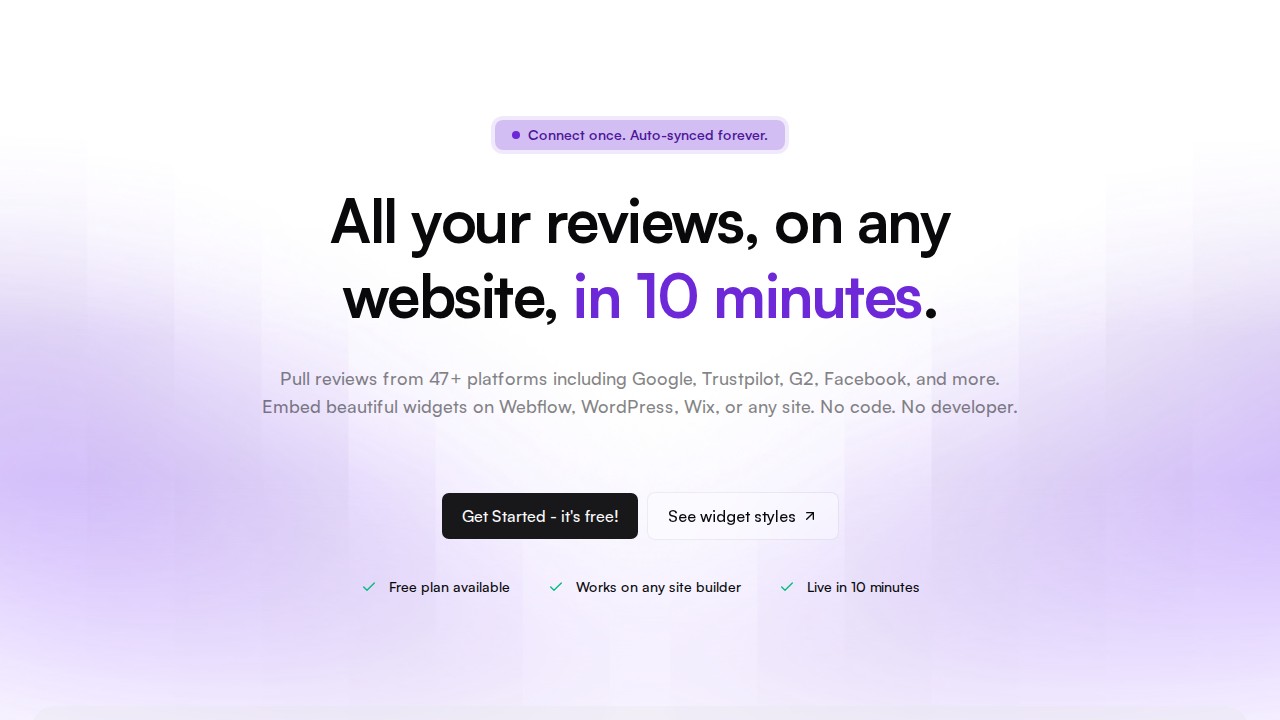
Bragly is the Boast.io alternative I would start with when the customer proof already exists in more than one place. A SaaS team may have G2 feedback, a local operator may have Google reviews, an e-commerce brand may have marketplace reviews, and an agency may need proof from several clients. The first job is not always to send another request sequence. It can be to bring the proof you have already earned into one useful workspace.
Bragly connects with 47+ review platforms and also gives teams text and video collection forms, QR codes, email campaigns, moderation, AI response suggestions, testimonial widgets, Wall of Love pages, and more than 30 display layouts. The free plan supports up to 100 reviews, while Pro starts at $14 per month. That combination works well for teams that want both imported proof and a way to collect new customer stories.
The difference from Boast is the starting point. Boast is strong when a feedback request and a video-testimonial sequence are central to the program. Bragly is strong when proof is scattered across sources and needs to become a clear marketing asset. You can filter it, respond to it, gather more of it, and display it in the places where prospects make decisions. An agency can also manage the work with collaborators and use teams and agency workflows to hand the finished project to a client.
| Where Bragly fits | What it gives you | Where Boast may still fit better |
|---|---|---|
| Reviews already live across public platforms | Imports from 47+ sources, one workspace, moderation, filtering, and display tools | You need a video-first request sequence as the center of the feedback program. |
| A website needs stronger proof | 30+ layouts, embeds, Wall of Love pages, custom domains, and source filtering | The main output is edited video footage from a structured campaign. |
| An agency is building proof for clients | Team access, flexible embeds, and project transfer | You need Boast’s specific contact, location, and staff setup inside a feedback suite. |
Bragly is a better fit when public proof, new testimonials, and website display need to work as one connected process. If you want a wider view of the category, see the comparison of review management software, a single review dashboard, and the guide to displaying reviews on a website. Teams that need faster, consistent follow-up can also use AI-assisted review responses before choosing which proof to show.
2. Senja
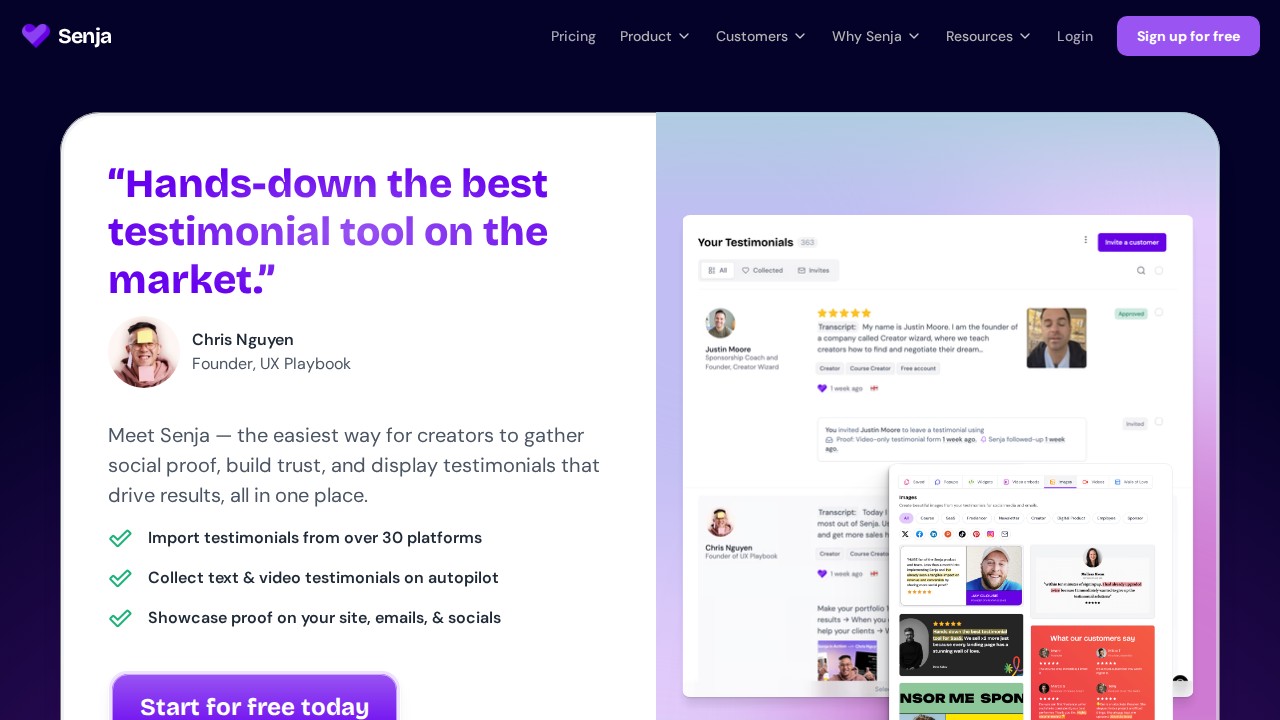
Senja is the alternative for teams that want a broad testimonial product with a low-friction starting point. Its free tier allows 15 text and video testimonials, a collection form, imports from multiple sources, widgets, Walls of Love, and basic social repurposing. Paid plans begin at $29 per month for unlimited testimonials, branding, custom domains, HD exports, and other collection and display controls.
This makes Senja useful for marketers, founders, agencies, and SaaS teams that want customer stories to move quickly from request to website or social post. A team can collect through a form, invite customers, pull in proof from other channels, select the strongest examples, and publish a page or widget without turning every request into a larger survey program.
Boast and Senja overlap around forms, video collection, and website proof. The practical split is in the overall operating model. Boast groups testimonials with sequences, review requests, contacts, survey formats, and feedback reporting. Senja puts more attention on testimonial collection, curation, display, case studies, and repurposing.
| Where Senja fits | What it gives you | Where Boast may still fit better |
|---|---|---|
| You need text and video testimonials in one product | Collection forms, bulk invites, imports, widgets, and Walls of Love | You need a feedback program with formal survey types and contact tracking. |
| Social proof needs frequent reuse | Reels, case-study creation, thank-yous, and shareable displays | The team needs email and SMS sequences tied to a wider feedback workflow. |
| Cost and fast publishing matter | A free entry point and paid plans from $29/month | You need deeper video editing, response limits, or location and staff organization. |
3. Vocal Video
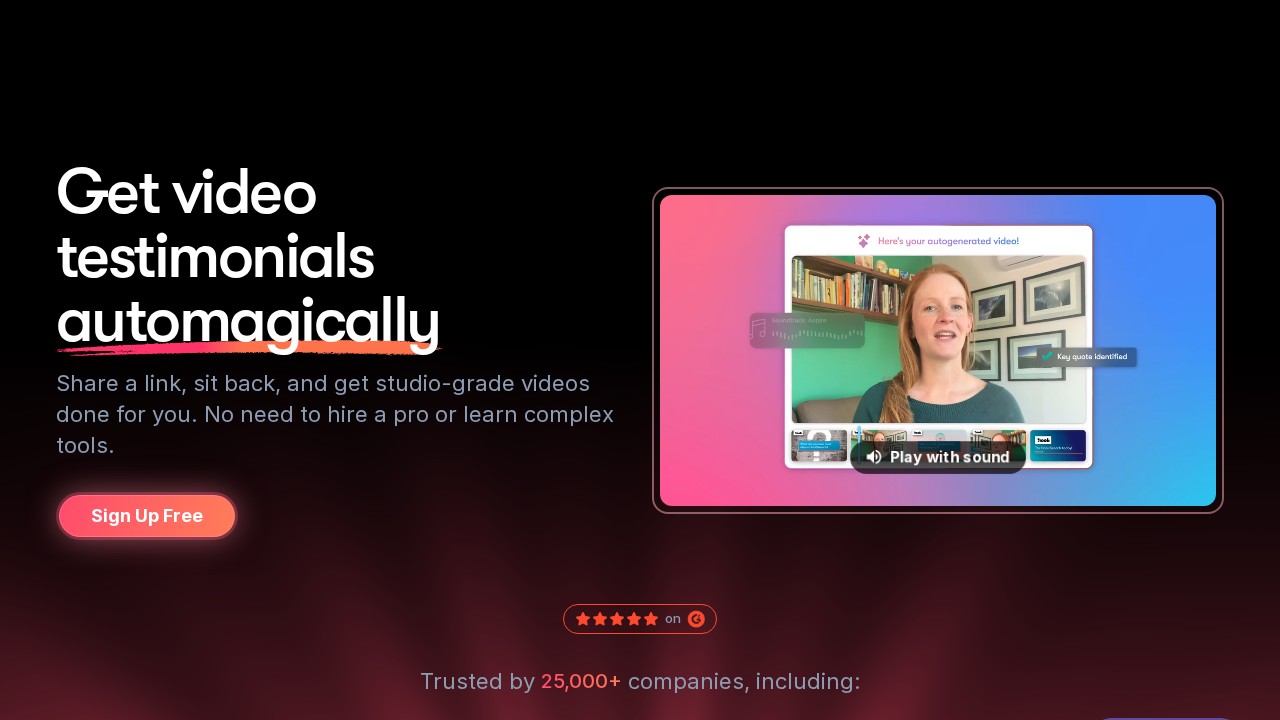
Vocal Video is the closest fit when the primary deliverable is a polished video campaign rather than a general testimonial library. Its collectors can ask multiple questions, and the platform focuses on turning responses into publishable video assets with themes, transcripts, editing controls, downloads, galleries, team review, releases, and consent options.
The free plan includes five published videos, 20 minutes of monthly processing, one active campaign, three questions, and 50 requests each month. Paid Essential begins at $99 per month billed yearly, with watermark-free 1080p publishing, video downloads, multiple collectors, and a much higher annual request allowance. Higher plans add more brands, custom releases, video effects, workspaces, and custom-domain support.
This is a different emphasis from Boast. Boast makes room for video but also serves surveys, reviews, feedback forms, contacts, and widgets. Vocal Video leans into recording campaigns and the production work after a customer submits footage. That can be worth the higher entry price when video quality, legal approval, and campaign management are not optional details.
| Where Vocal Video fits | What it gives you | Where Boast may still fit better |
|---|---|---|
| A campaign needs multi-question video collection | Video collectors, multiple questions, templates, and processing controls | You need surveys, online-review requests, and non-video feedback in the same program. |
| Published assets need a finished look | Editing, themes, 1080p publishing, downloads, galleries, and transcripts | You want a lower-priced feedback suite with video as one component. |
| Legal and team controls matter | Releases, consent, reviewer roles, team comments, and workspaces | Your team needs lightweight forms and widgets rather than a production workflow. |
4. VideoAsk
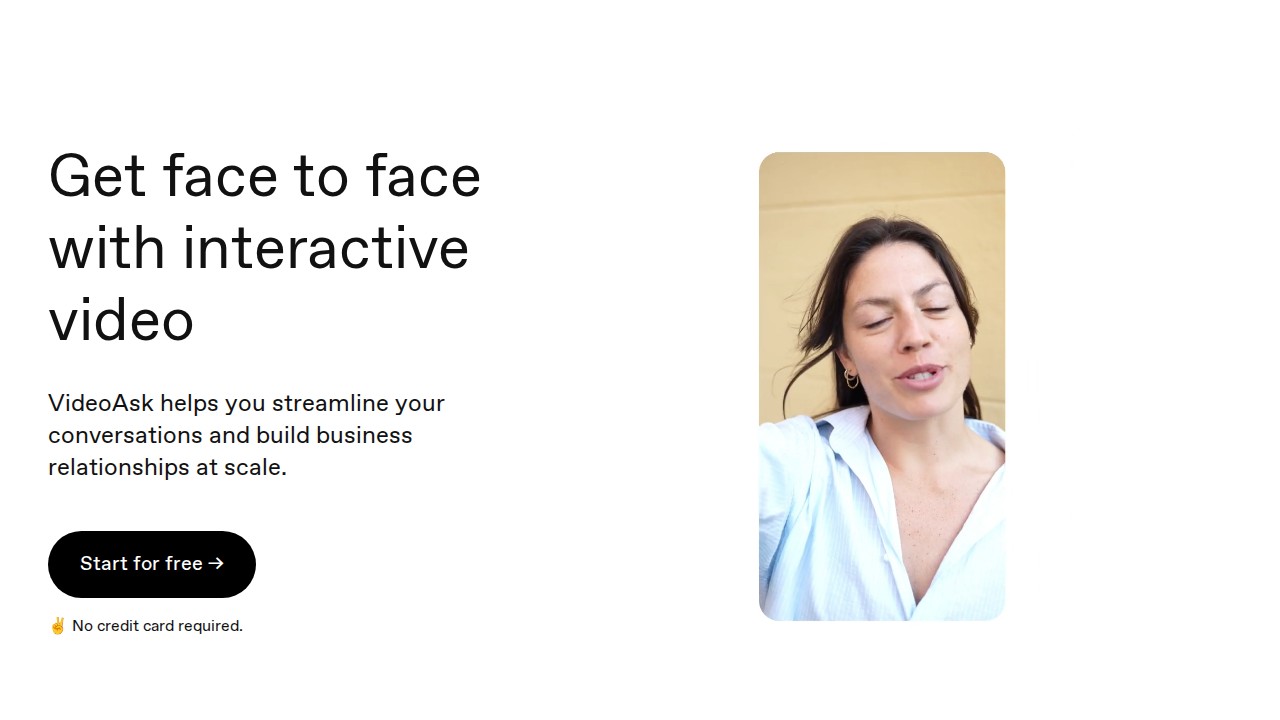
VideoAsk is the best choice here when you do not want every request to end in a finished testimonial. It is built around asynchronous video and voice conversations. A team can ask a question, let someone reply on their own time, send a follow-up, route the response, and continue the exchange without turning the interaction into a static form submission.
That model is useful for customer-success interviews, qualification, product feedback, recruiting, onboarding, research, and post-purchase follow-up. A respondent can answer by video, voice, or text, and the person on your team can respond in the medium that fits the moment. The useful outcome may be a deeper customer answer or an action item rather than a widget-ready asset.
VideoAsk pricing is based on processed video or audio minutes. That deserves attention if you expect many long exchanges. Each prompt, response, and follow-up can contribute to the processing total, so estimate the format and expected response volume before making a plan choice.
| Where VideoAsk fits | What it gives you | Where Boast may still fit better |
|---|---|---|
| You need an exchange, not only a submission | Asynchronous video, voice, and text conversations with follow-up | You want an automated one-way request sequence for testimonials and surveys. |
| Customer interviews need context | Reply flows and flexible response formats | The end product should be an approved video testimonial in a website widget. |
| A team works from time zones or busy schedules | Responses happen when each person is ready | You need a unified feedback suite with review requests, survey templates, and contact management. |
Choose VideoAsk when the next useful action after a customer response is another question. Choose Boast when the next useful action is approval, display, review routing, or feedback analysis.
5. Trustmary

Trustmary is the best fit when surveys, review collection, testimonials, and widgets need to sit together in one customer-feedback program. Its forms can be distributed by link, QR code, email, SMS in Europe, website or app embeds, and email signatures. It also imports reviews from Google, Facebook, G2, Capterra, Tripadvisor, Yelp, spreadsheets, and manual sources.
That setup makes Trustmary useful for teams that need a mix of request routes. A customer could receive an NPS or survey prompt, leave a testimonial, be directed toward a public review, or have an existing review imported and displayed. The central question is less about creating a finished video asset and more about making customer experience visible across survey, review, and website workflows.
Boast has survey templates, review requests, and widgets too, so there is real overlap. The choice comes down to emphasis. Boast makes video testimonials and video editing a visible part of the product. Trustmary is more naturally framed around surveys, collected reviews, testimonial forms, review imports, and display widgets.
| Where Trustmary fits | What it gives you | Where Boast may still fit better |
|---|---|---|
| Surveys and reviews share the same program | Survey and testimonial forms, request routes, review imports, and widgets | Video collection and production are a central marketing function. |
| Proof comes from public and private feedback | Google, Facebook, G2, Capterra, Tripadvisor, Yelp, CSV, and manual imports | You need a single video-first campaign workflow with editing tools. |
| Many distribution routes matter | Links, QR codes, email, SMS in Europe, embeds, and signatures | You prefer Boast’s sequences, contact setup, locations, staff, and video controls. |
Trustmary is a sensible Boast alternative when the feedback program starts with surveys and reviews, not only a video prompt. It can also work well for teams that need several ways to request or import customer proof before showing it on a website.
How to choose a Boast.io alternative
Start by drawing the path your customer proof takes today. Do not begin with the longest table of features. The first input usually tells you which tool will feel natural after the first month.
| If proof begins with… | Start with… | Why |
|---|---|---|
| Reviews already scattered across public sources | Bragly | It brings existing reviews into one proof workspace and adds collection, response, and display tools. |
| A customer story you want to collect and repurpose | Senja | It puts forms, imports, social proof, widgets, and Walls of Love in a testimonial-focused product. |
| A planned recording campaign with production needs | Vocal Video | It centers collectors, edited video output, releases, publishing, and team review. |
| A customer response that needs another question | VideoAsk | It is built for asynchronous multimedia conversation and follow-up. |
| Survey results, public reviews, and testimonial forms | Trustmary | It groups feedback collection, review imports, survey distribution, and widgets. |
Then check the constraints that are easy to miss in a demo. Boast plan limits cover responses, forms, sequences, staff, locations, video length, and video quality. Vocal Video plans also depend on request counts and processing time. VideoAsk uses processing minutes. A good buying brief should include expected response volume, video length, number of campaigns, number of people who need access, and whether proof needs to be shown on many web pages.
Finally, consider the handoff. Marketing may need a proof page or social post. Customer success may need a conversation or survey insight. An agency may need a client-ready proof system.
Final thoughts
Boast remains a useful platform for teams that want video testimonials, customer surveys, review requests, forms, sequences, contacts, and widgets in one place. Moving away from it only makes sense when your proof workflow asks for a different center of gravity.
Bragly is the first option to consider when public reviews need to become visible proof across a website. Senja is the testimonial-first option. Vocal Video is the campaign-production option. VideoAsk is the conversation option. Trustmary is the surveys, reviews, and testimonials option.
Before choosing, write down the result you need: imported reviews, an edited video campaign, a customer interview, survey visibility, or a client proof library.
Frequently asked questions
What is the best Boast.io alternative for existing public reviews?
Bragly is a strong fit when public proof already lives across Google, G2, Facebook, marketplaces, and other sources. It brings reviews into one workspace, supports fresh text and video collection, and gives teams flexible ways to display proof on a website.
Is Senja cheaper than Boast?
Senja offers a free tier with limited text and video testimonials, while its paid Starter plan begins at $29 per month. Boast’s monthly Basic plan is $59. Compare the limits and workflow first, because Boast includes a wider feedback suite and Senja is more focused on testimonial collection and display.
Is Vocal Video better than Boast for video testimonials?
Vocal Video can be the better fit when a team needs multi-question video campaigns, polished production, releases, publishing controls, team review, and high-quality downloadable videos. Boast can be the better fit when video is one part of a wider program that also includes reviews, surveys, and feedback requests.
Is VideoAsk a testimonial platform?
VideoAsk can collect customer video or voice responses, but its main strength is asynchronous conversation. It is a better choice when your team expects to ask follow-up questions and continue the exchange rather than collect a finished testimonial in one step.
Does Trustmary support both surveys and testimonials?
Yes. Trustmary supports survey and testimonial forms, review collection, review imports, and website widgets. It is worth considering when surveys, public reviews, and customer proof need to work together in the same feedback program.