

Looking for a Shorter Overview?
AI Summary
Key Moments
Bragly consolidates scattered reviews
It aggregates reviews from 47+ public platforms and combines them with fresh customer feedback in one workspace.Judge.me offers fixed-price Shopify reviews
Ideal for Shopify stores needing unlimited product and store reviews with predictable monthly costs.Okendo integrates reviews with customer marketing
Connects reviews with loyalty, quizzes, referrals, and surveys for a cohesive DTC marketing approach.ReviewTrackers manages multi-location reputation
Focuses on local listings, customer-experience analytics, and routing feedback for businesses with multiple locations.REVIEWS.io is a capable review platform. It can collect product and company reviews, publish photo and video proof, support Google Seller Ratings, run surveys, and turn customer feedback into useful on-site content. For many e-commerce teams, that is already a strong foundation.
The reason to look at alternatives is usually more specific than “I need a different review tool.” You may have customer proof spread across Google, G2, marketplaces, and direct forms. You may run a Shopify store that wants a fixed monthly price. Or your review program may now need to sit inside a bigger loyalty, retention, or multi-location reputation workflow.
I would start with the job the platform has to do after a review arrives. Does it need to appear beside a product, feed a customer profile, move into a landing-page widget, trigger a retention flow, or land with the local team responsible for a customer issue? That answer makes the shortlist much clearer.


I would not switch away from REVIEWS.io simply to chase a longer feature list. Its current plans cover review collection, display, UGC, surveys, AI tools, and reputation work. A change makes sense when another tool fits the way your team gathers, manages, and uses proof more closely.
Quick comparison
| Tool | Best for | Starting point | Choose it when |
|---|---|---|---|
| Bragly | Public-review aggregation and flexible website proof | Free up to 100 reviews; paid from $14/month | Your best reviews already sit across public sources, direct collection, and client work. |
| Judge.me | Flat-price Shopify product and store reviews | Free or $15/month | You want Shopify-native collection with unlimited reviews and predictable spend. |
| Okendo | DTC customer marketing around reviews | From $19/month | Reviews need to work with loyalty, quizzes, referrals, surveys, and Shopify data. |
| Stamped | Review, lifecycle, and loyalty programs under one vendor | Demo or plan quote | Your post-purchase program is moving beyond review collection into retention work. |
| ReviewTrackers | Multi-location reputation and customer experience operations | Demo-led | You need local listings, review routing, customer-experience insight, and location-level operations. |
Key takeaways
- Pick **Bragly** if reviews are scattered across public platforms and you want one place to collect, manage, and display them.
- Pick **Judge.me** if your main job is Shopify product and store reviews with unlimited collection at a flat price.
- Pick **Okendo** if your brand wants review content connected to loyalty, quizzes, referrals, and survey data.
- Pick **Stamped** if reviews need to play a part in a connected lifecycle and loyalty program.
- Pick **ReviewTrackers** if teams across locations need reputation work, local listing accuracy, and faster routing of customer feedback.
1. Bragly: Best for public reviews and website proof in one place
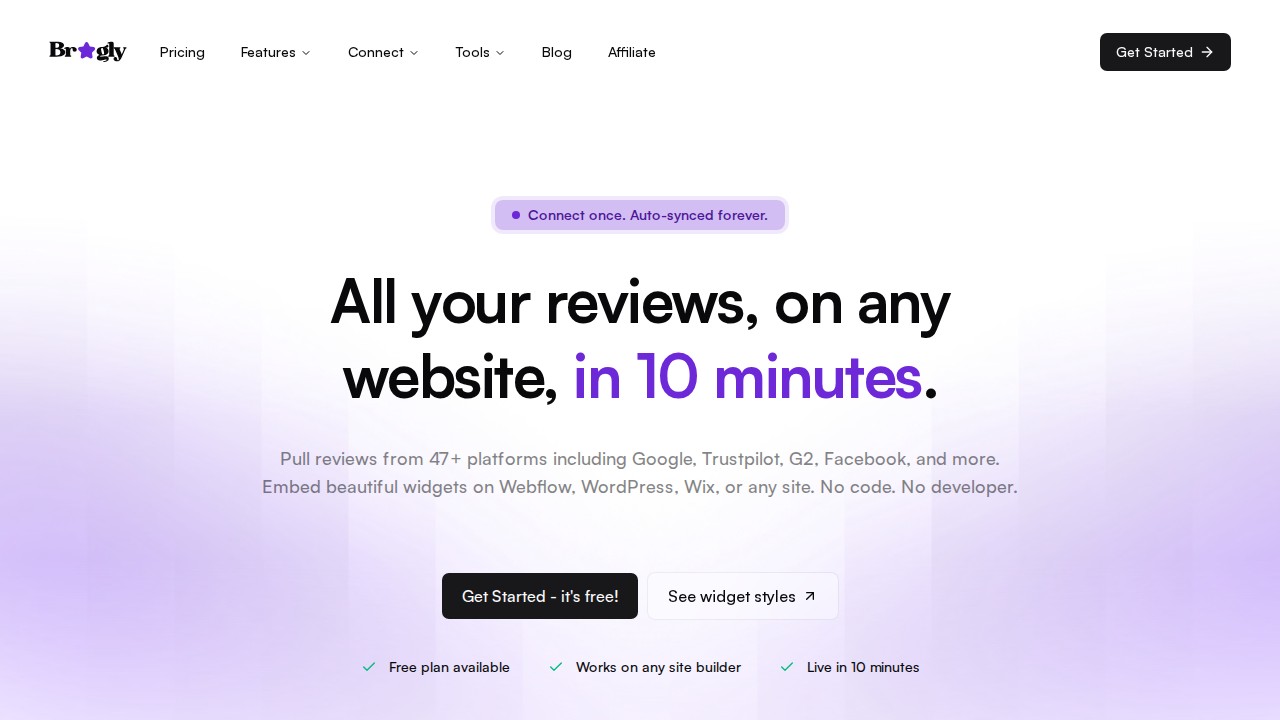
Bragly is the best REVIEWS.io alternative for teams whose proof is already spread around. It brings reviews from more than 47 public platforms into one workspace, then combines that material with fresh text and video submissions. That gives you a useful starting point if your strongest customer feedback is on Google, G2, Trustpilot, Facebook, Capterra, marketplaces, app stores, or client accounts rather than inside one storefront. It is a different starting point from a Shopify-first product, and it is why Bragly belongs in a comparison of review management software.
REVIEWS.io can collect third-party reviews and has a reputation-management product, so this is not an argument that one platform can work with public proof and the other cannot. The real difference is where your review program starts. Bragly is built around consolidating dispersed proof, then making it usable across a website, review page, campaign, or client project. That is the same workflow explained in this guide to sync customer reviews in one dashboard.
The free plan covers up to 100 reviews, and paid plans start at $14 monthly. Teams can add review sources, use collection forms for text and video feedback, moderate what appears publicly, and choose from more than 30 testimonial widget layouts. That works well for an agency moving from client to client, a SaaS team showing G2 and Capterra feedback, a local business collecting Google reviews, or an e-commerce brand pulling together proof from several touchpoints.
| What Bragly adds | Why it may suit a REVIEWS.io user |
|---|---|
| 47+ public review platforms | Bring external proof into one review workspace instead of treating each source as a separate job. |
| Text and video collection forms | Keep collecting new customer stories alongside the public reviews you already earned. |
| 30+ display layouts | Match a carousel, badge, grid, strip, or single review to the page where it needs to work. |
| AI reply suggestions and moderation | Draft responses, spot patterns, and control which proof is ready to publish. |
| Custom domains, webhooks, and agency handoff | Build branded proof pages, connect review activity to other systems, and transfer a finished project to a client. |
Choose Bragly if your review problem is fragmented proof. It is less about replacing a product-review widget and more about creating a shared home for customer voices that already exist in many places. You can also use AI reply suggestions to keep responses moving after those reviews arrive, then place customer proof across the pages where people decide.
2. Judge.me: Best for flat-price Shopify reviews
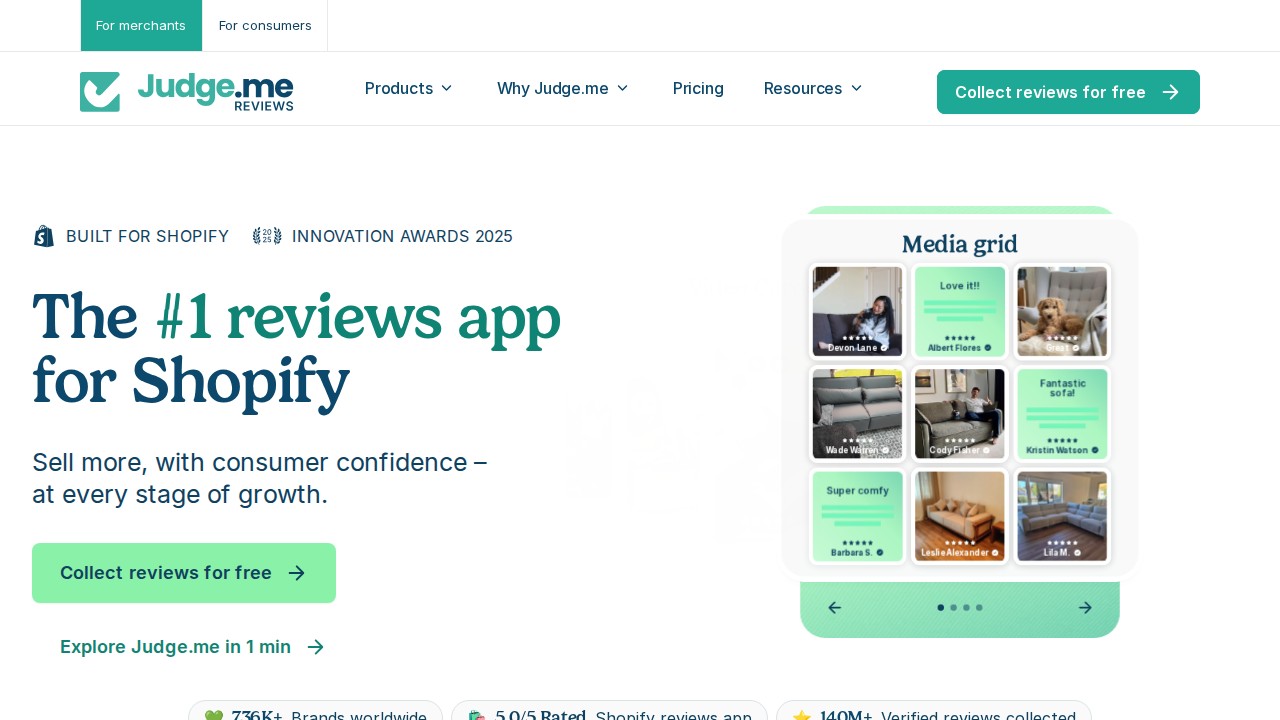
Judge.me is the clear fit for a Shopify store that wants a focused review app with a predictable price. Its free plan and $15 monthly paid plan are easy to understand, and the platform centers on unlimited product and store review collection, photo and video reviews, widgets, AI summaries, reply suggestions, and commerce syndication.
That price model is especially relevant for a store that is comparing REVIEWS.io’s invite-based plan tiers with a fixed-cost product. When monthly orders rise, a team may prefer a tool where the review program is not tied to a growing invite allowance. Judge.me is also Shopify-first, which makes sense if your store, product pages, product catalog, and review workflow all live inside Shopify.
There is a tradeoff. Judge.me is a product and store review app, not a multi-location reputation suite or a broad public-review aggregator. If Google Seller Ratings, company reviews, surveys, third-party reputation work, and product UGC all need to live in one more expansive system, REVIEWS.io may still be the better fit.
| What Judge.me adds | Why it may suit a REVIEWS.io user |
|---|---|
| Free plan and $15 monthly plan | Keep costs easy to forecast as review volume grows. |
| Unlimited product and store review collection | Focus on ongoing Shopify review requests without invite caps. |
| 16+ widgets | Display written, photo, and video review content in several storefront formats. |
| Google and commerce syndication | Extend ratings and reviews to places where shoppers compare products. |
| Shopify-first workflow | Keep collection, display, and catalog work close to the platform where the store runs. |
Choose Judge.me if Shopify product reviews are the main job and you want a clear, fixed-price option. It is one of the best value choices on this list, but it does not try to cover every review-operation use case.
3. Okendo: Best for DTC customer marketing around reviews
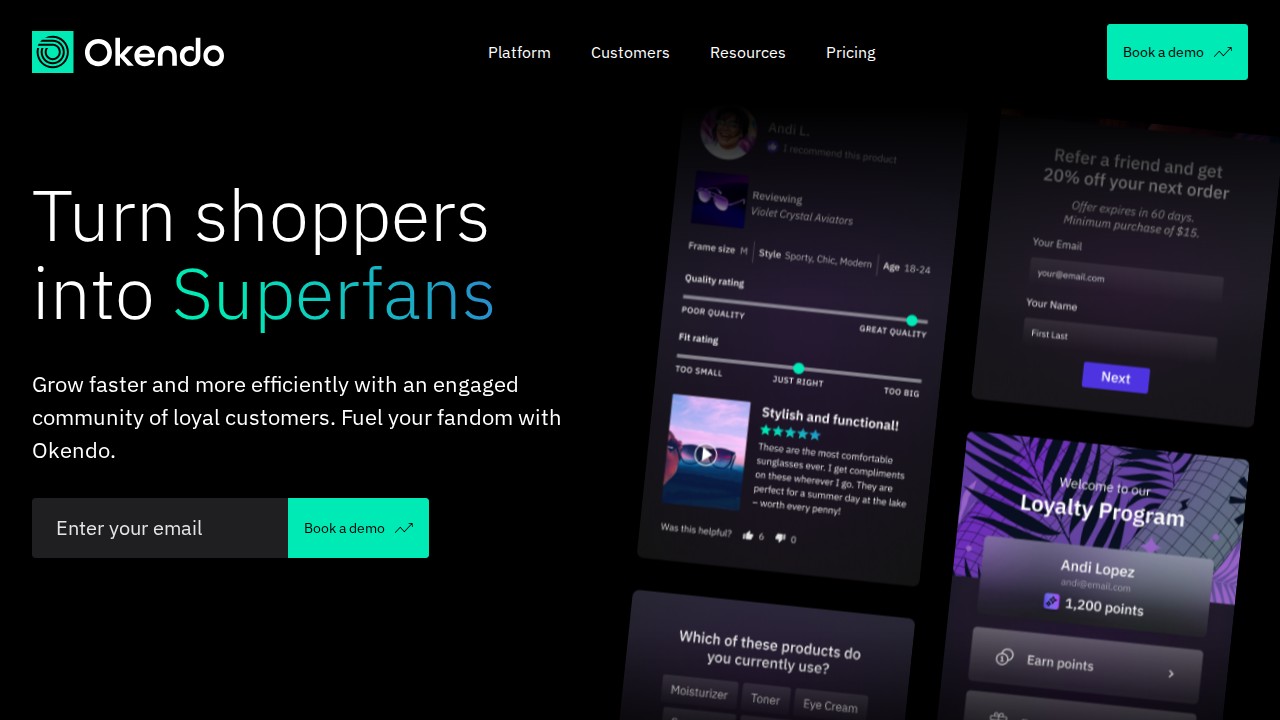
Okendo is a good alternative for a growing Shopify brand that sees reviews as part of customer marketing, not a standalone collection job. In addition to reviews, it offers loyalty, quizzes, referrals, and surveys. That is useful when the same team is responsible for product discovery, repeat purchase, customer feedback, and advocacy.
The platform’s review product works alongside Google, TikTok Shop, Klaviyo, and Bazaarvoice connections. A brand can use review content on product pages, enrich it with attributes, and connect it to a wider customer program. For a DTC team that wants customers to move from a product quiz to a purchase, then from a review into a loyalty or referral relationship, that connected setup is the appeal.
REVIEWS.io already includes surveys and can add a loyalty product through its broader company group. The choice here comes down to operating model. Okendo is strongest when the core stack is Shopify and the brand wants one customer-marketing platform to handle reviews, loyalty, quizzes, referrals, and surveys.
| What Okendo adds | Why it may suit a REVIEWS.io user |
|---|---|
| Reviews, loyalty, quizzes, referrals, and surveys | Run several customer-marketing programs from one vendor. |
| Shopify focus | Keep review collection close to the commerce platform and storefront data. |
| Attribute-rich feedback | Ask for details that help shoppers compare fit, quality, or product experience. |
| Google, TikTok Shop, Klaviyo, and Bazaarvoice connections | Send review and UGC activity to important commerce and marketing channels. |
| Plans from $19 monthly | Test a broader DTC setup without starting at enterprise-only pricing. |
Choose Okendo if your review program needs to work with more than review requests and widgets. It makes less sense if your priority is public-review aggregation across many sources or a multi-location reputation desk.
4. Stamped: Best for reviews tied to lifecycle and loyalty work
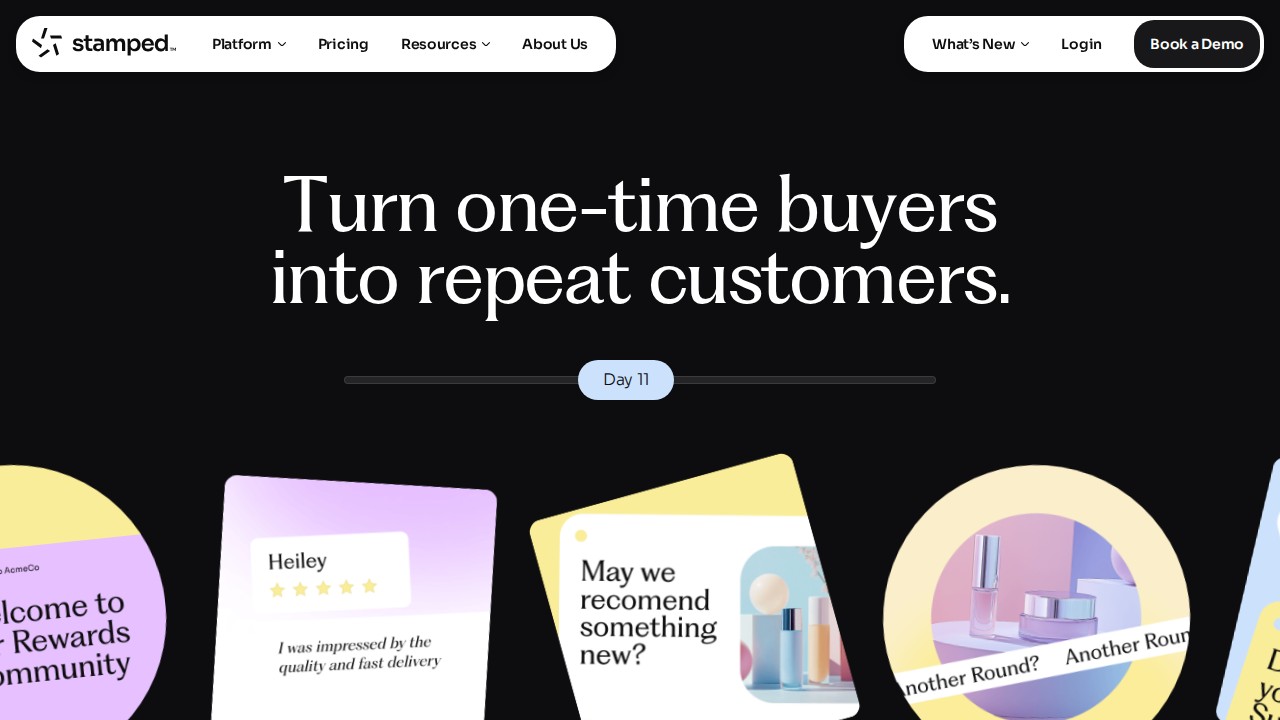
Stamped is worth a look when the review program is becoming part of a larger post-purchase operation. Its current site groups Reviews, Loyalty, and Lifecycle together, with the stated goal of helping Shopify brands turn one-time buyers into repeat customers. That gives it a different center of gravity from a review platform that begins and ends with collection and on-site display.
The Reviews product can collect photo and video feedback, support product questions, and provide social proof on storefront pages. The bigger reason to compare Stamped, though, is the connection to lifecycle programs and rewards. A team may want review activity to inform the next email, a replenishment campaign, a reward offer, or a more tailored post-purchase message.
Stamped also lists integrations with Google, Meta, Klaviyo, Attentive, Shopify, and more than 50 other tools. Its public homepage is demo-led rather than price-led, so I would treat the commercial conversation as part of the evaluation. Ask which parts of Reviews, Loyalty, and Lifecycle are included in the plan you are actually considering.
| What Stamped adds | Why it may suit a REVIEWS.io user |
|---|---|
| Reviews, Loyalty, and Lifecycle products | Connect feedback to retention activities rather than keeping it in a separate review program. |
| Photo and video review collection | Gather richer product proof for storefront pages and campaigns. |
| Loyalty connection | Reward and engage customers after they leave useful feedback. |
| Lifecycle automation focus | Use customer behavior and post-purchase timing to guide follow-up work. |
| 50+ integrations | Connect review and retention activity to a wider commerce stack. |
Choose Stamped if a review is only one event in a bigger retention workflow. Teams that want transparent self-serve pricing should ask for a full quote early, and teams with public proof across several sources may find Bragly’s aggregation model more useful.
5. ReviewTrackers: Best for multi-location reputation operations
ReviewTrackers fits a different type of buyer. It is built for teams that need to manage customer feedback across locations, protect local visibility, route issues to the right people, and use review trends to improve operations. That can include retail groups, healthcare organizations, hospitality teams, service businesses, franchises, and companies with many local customer touchpoints.
The platform combines review collection, reputation management, customer-experience analytics, competitive market analysis, local listings, and website review widgets. The value is not just getting a new review. It is understanding where a customer issue occurred, who can resolve it, and how the pattern changes across regions or locations.
REVIEWS.io has a Reputation Manager and offers company reviews, so it can be a good choice for businesses that want e-commerce reviews and reputation work in one platform. ReviewTrackers is a better short-list candidate when local operations, location data, and customer-experience programs are the dominant concern.
| What ReviewTrackers adds | Why it may suit a REVIEWS.io user |
|---|---|
| Location-focused reputation work | Manage customer feedback in the context of regional teams and local operations. |
| Customer-experience analytics | Find themes that point to a service, delivery, support, or operational issue. |
| Local listings management | Help customers find accurate business information across the web. |
| Competitive analysis | Compare local reputation signals against the markets where you compete. |
| Review routing and response operations | Send the right issue to the right team instead of leaving it in a review inbox. |
Choose ReviewTrackers if reviews are operational signals across a location network. It is not the first choice for a Shopify brand that only needs product-page UGC and review collection.
How to choose a REVIEWS.io alternative
Start with the evidence you already have, not the platform you want to buy. Export a sample of recent reviews and note where they came from. Then look at the place where each review should create value. A product-page review, an agency client widget, a local-service complaint, and a loyalty trigger are four different jobs.
| Ask this question | The tool that is likely to fit |
|---|---|
| Are my best reviews spread across public sources, direct collection, and client work? | Bragly |
| Do I run a Shopify store and mainly need unlimited product and store review collection at a fixed price? | Judge.me |
| Do reviews need to connect with loyalty, quizzes, referrals, and surveys? | Okendo |
| Do I want reviews, loyalty, and lifecycle programs under one vendor? | Stamped |
| Do several locations need review routing, listing accuracy, and customer-experience analysis? | ReviewTrackers |
Before moving a full history, run a small migration test. Import a sample with ratings, dates, customer names, product associations, media, and replies. Then rebuild one invitation flow and one visible widget. The test tells you more than a feature checklist because it exposes what actually changes for your team and your customers.
Also compare the price trigger that matters in your current model. For some teams, it is invite volume. For others, it is order volume, domains, locations, users, or the number of products and integrations. Ask that question before you sign, not after a successful collection campaign pushes you into a new tier.
Final thoughts
REVIEWS.io remains a strong option for e-commerce teams that want product and company reviews, visual UGC, surveys, Seller Ratings, and reputation features in a single platform. The right alternative depends on the work that happens next.
Pick Bragly when your customer proof is fragmented across public sources and needs a shared home. Pick Judge.me for a fixed-price Shopify review program. Pick Okendo or Stamped when reviews need to participate in a broader DTC customer-marketing or retention strategy. Pick ReviewTrackers when location-level reputation operations are the real job.
The most useful next step is simple: choose the one workflow that currently takes too much manual effort, then make every demo or free trial prove that it can handle that workflow with your own sample reviews.
Frequently asked questions
What is the best REVIEWS.io alternative overall?
Bragly is the strongest overall option for teams that need to gather public reviews from many sources, collect new text and video feedback, and display it across a website. The best choice can change if your work is Shopify-only, loyalty-led, or location-focused.
Is there a free alternative to REVIEWS.io?
Yes. Bragly has a free plan up to 100 reviews, and Judge.me has a free Shopify plan. The best free option depends on where your reviews live and where you need to display them.
Which REVIEWS.io alternative is best for Shopify stores?
Judge.me is the best fit for Shopify stores that want unlimited product and store review collection at a fixed price. Okendo is a better fit when Shopify reviews must connect to loyalty, quizzes, referrals, and surveys.
Which option is best if reviews are already spread across public platforms?
Bragly is built for this situation. It brings reviews from 47+ public sources into one workspace, then lets a team add new submissions and publish the right proof in the right website format.
Can I migrate existing reviews from REVIEWS.io?
Usually, yes. Before making a full move, export a sample and verify that ratings, dates, customer details, product associations, review media, and replies land correctly in the new system. Rebuild one invitation and one widget before committing the full review history.